The garden bird year has a rhythm. Seeds and peanuts run 1 November to 30 April and pause over summer; suet and mealworms are fine year-round. Nest boxes go up in autumn or by mid-February. Don’t cut hedges March to August. Clean feeders weekly, always. Below is the whole year, month by month.
Feeding and caring for garden birds isn’t the same job all year. The food changes, the priorities shift between food and water, and there are dates — some legal — that catch people out.
This is the whole year in one place. Bookmark it, or take the couple of jobs that apply to whatever month you’re in.
The four things that apply every month
- Clean feeders at least weekly, and move them to a fresh spot
- Only offer water if you can change it daily
- Suet, fat balls and mealworms are approved year-round
- Never cut a hedge with an active nest in it
January
The hard month. Natural food is nearly gone, cold bites, and birds are under real pressure.
- Full feeding — seeds, peanuts, suet, sunflower hearts. It’s inside the main season
- Food out at first light and again mid-afternoon on cold days
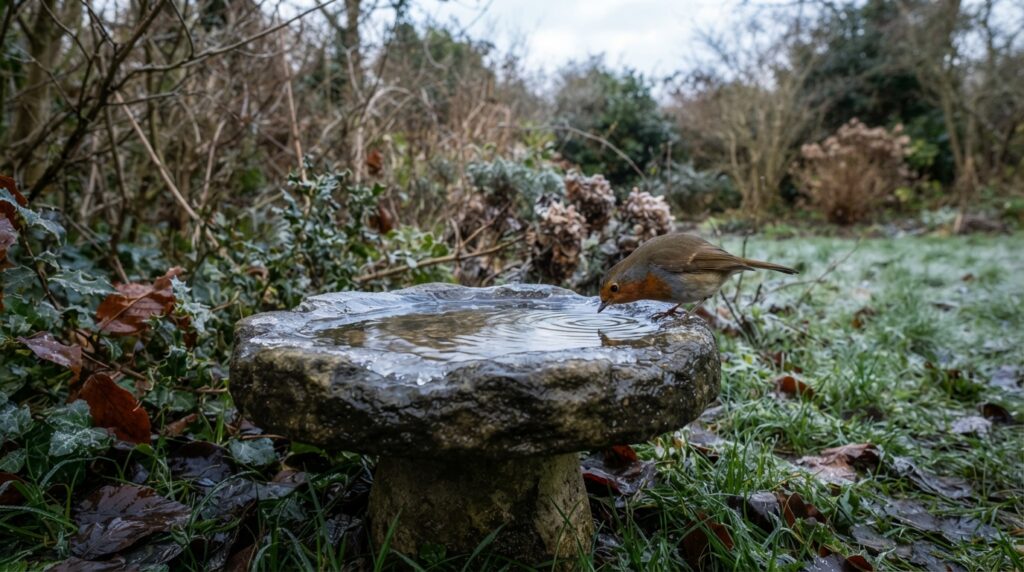
- Keep water unfrozen — warm water and a floating ball, never salt or antifreeze
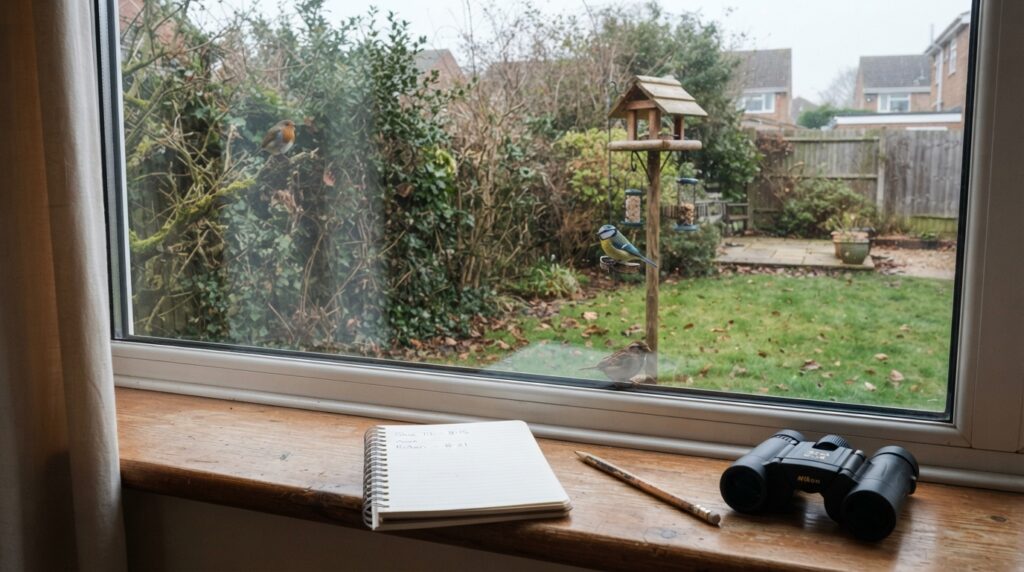
- Take part in the RSPB Big Garden Birdwatch, held in late January
- Watch for winter visitors — redwings, fieldfares, bramblings, siskins
Guides: freezing weather, Big Garden Birdwatch, winter visitors.
February
Often the hardest of all — natural seed is exhausted and it’s still cold, but the first signs of spring appear.
- Keep full winter feeding going
- Siskins arrive at nyjer feeders as their natural food runs out
- Song picks up — great tits and robins are singing
- Get nest boxes up by mid-month if you haven’t already — this is the deadline for early nesters
- Clean out any old nest boxes now, before the season, if you didn’t in autumn
Guides: nest boxes, the dawn chorus.
March
The season turns. Breeding begins and the rules change.
- Continue feeding — birds are pairing up and need condition for breeding
- Stop cutting hedges — nesting season runs March to August, and disturbing an active nest is an offence
- First summer migrants return — chiffchaffs, then early swallows
- Offer mealworms as adults start feeding chicks on invertebrates
- Leave last year’s seed heads standing a little longer for early finches
Guides: nesting season.
April
Peak breeding. The last full-feeding month before the summer pause.
- Seeds and peanuts fine until the end of the month
- Mealworms and suet especially valuable — parents are working flat out
- Boxes should be occupied; leave them completely alone now
- Blue tits and great tits timing their single brood to the caterpillar peak
- Stop using insecticides — caterpillars are what the chicks eat
- Watch for fledglings towards the end of the month; most on the ground don’t need rescuing
Guides: found a baby bird, nest box timeline.
May
The changeover. From 1 May, current RSPB guidance pauses seeds and peanuts until 31 October. Suet, fat balls and mealworms in small amounts stay fine year-round. This is genuinely contested — several bird food retailers disagree — so read our seasonal feeding guide and decide for yourself.
- Pause seeds and peanuts (or continue if you’ve weighed it and chosen to)
- Water becomes the priority as the weather warms — several shallow dishes, changed daily
- Gardens full of fledglings; expect scruffy young birds everywhere
- Swifts return, last of the migrants, screaming over rooftops
- Keep hedges uncut
June
Water, not food. Natural food is abundant and the pause is on.
- Keep water topped up and clean in the warmth
- Small amounts of suet and mealworms are still useful to hard-working parents
- Second broods underway for robins, blackbirds and sparrows
- Hedges still off-limits
- Leave a dry patch of bare soil for sparrows to dust bathe in
July
The quiet month. Gardens go noticeably silent — this is normal.
- Birds are moulting and staying in cover; the quiet isn’t a problem
- Keep water going through summer heat — this is when it matters most
- In a heatwave, water a patch of lawn so blackbirds can reach worms in baked ground
- Reduce or stop suet in hot weather — it goes rancid and smears feathers
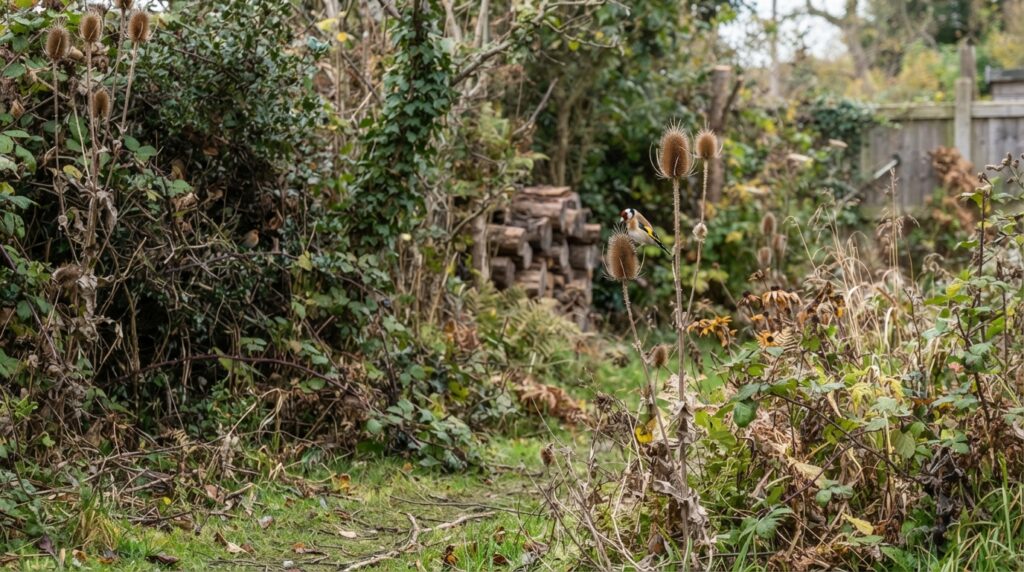
- Leave seed heads to form for autumn finches
Guides: heatwave and drought, moulting and the summer quiet.
August
Still quiet, still moulting. The first migrants start to leave.
- Swifts depart — often by the first week, barely three months after arriving
- Keep water available; heat is often at its peak
- Bald-headed blackbirds and starlings appear — it’s moult, not illness
- Hedge-cutting season technically ends late in the month, but check very carefully for late nests first
Guides: migration.
September
Preparation month. The garden starts winding towards winter.
- Clean out old nest boxes now — the season is 1 September to 31 January
- Put up new nest boxes; autumn beats spring, as birds roost in them over winter
- Leave seed heads and borders standing — don’t cut back
- Swallows and martins gather and depart
- Deep-clean feeders ready for the November restart
Guides: autumn checklist.
October
The changeover approaches. Winter visitors begin arriving.
- Redwings and fieldfares arrive from Scandinavia and Iceland
- Buy and store bird food before the November rush and any cold-snap price spikes
- Sort out water and check the bird bath for winter
- Clear leaves off lawns and paths, but leave them in borders and under hedges
- Leave berries on shrubs — hawthorn, rowan, pyracantha, ivy
Guides: raking leaves, autumn checklist.
November
The main feeding season restarts on 1 November. Seeds and peanuts go back out alongside suet and mealworms. Resume weekly cleaning and moving feeders if you’d eased off over summer.
- Full feeding resumes
- Continental blackbirds and starlings swell garden numbers
- Bramblings appear among the chaffinches
- Put fruit out for thrushes in cold spells — windfall apples on the ground
- Check nest boxes are secure for winter roosting
December
Deep winter feeding, and the festive extras.
- Full feeding, food out early and late on cold days
- Safe Christmas leftovers welcome — unsalted potato, mild cheese, soft fruit. Not mince pies, chocolate or anything salted
- Stake the old Christmas tree by a feeder for instant winter cover
- Keep water unfrozen
- Going away? Don’t overfill; deal with the water; ask a neighbour in a hard frost
Guides: Christmas leftovers, reusing the Christmas tree, going away.
The four dates worth writing down
| Date | What changes |
|---|---|
| 1 May | Pause seeds and peanuts (current guidance). Water becomes priority |
| 1 November | Main feeding season restarts — seeds and peanuts back out |
| 1 Sept – 31 Jan | The only window to clean out nest boxes |
| March – August | Nesting season — don’t cut hedges with active nests |
The things that never change
Whatever the month:
- Clean feeders at least weekly and move them to a fresh spot — the single most important habit, given what disease has done to greenfinch numbers
- Only offer water if you can change it daily
- Good quality food — sunflower hearts over padded mixes, bird-grade peanuts only, never netting
- Sensible placement — 2m from cover, and either under 1m or over 10m from glass
- Habitat helps more than feeders — hedges, native planting, no insecticides, standing seed heads, leaf litter, a log pile
Our guide on whether feeders are good or bad covers why the habits matter as much as the feeding.
Common questions
What’s the one date that matters most?
Arguably 1 May and 1 November — the start and end of the seed and peanut feeding season under current guidance. Suet and mealworms run year-round regardless.
When should I put up a nest box?
Autumn is best, as birds roost in boxes over winter. Mid-February is the practical deadline for early nesters.
When can I cut my hedge?
Outside the nesting season, roughly September to February, and only after checking carefully that no nest is active. It’s an offence to damage one.
Why is my garden silent in July?
Birds are moulting and natural food is abundant, so they’re quiet and stay in cover. Normal every year.
Do I really have to clean feeders every week all year?
Yes — it’s the current standard whenever a feeder is in use, and disease risk actually peaks in the warmer months.
What if I only do a few of these things?
Weekly cleaning, good food, water changed daily, and no flat feeders carry most of the benefit. Everything else is refinement.
Related guides
- When to feed garden birds: the new UK guidance explained
- Getting your garden ready for winter birds: an autumn checklist
- When to put up a nest box (and exactly where to site it)
- The Big Garden Birdwatch: how to take part
Sources: RSPB feeding and hygiene guidance (April 2026); RSPB nest box guidance; British Trust for Ornithology seasonal FAQs and migration data; Wildlife and Countryside Act 1981.
Compare current prices on bird food and feeders at Amazon UK. Prices and stock change often, so it is worth checking before you commit.
Browse bird food →