Affiliate disclosure: some links on this page go to Amazon. If you buy through one we may earn a small commission, at no extra cost to you. Full disclosure.
Autumn or early winter is the best time to put up a nest box, and you want it in place by mid-February at the very latest. Birds prospect for nest sites months in advance, and boxes that have weathered in over winter are more likely to be used than ones that appeared last week.
Three things determine whether it gets used: the hole size, the direction it faces, and the height. Get those right and the rest is largely luck.
The essentials
- When to install: autumn/winter ideally, by mid-February at the latest
- Direction: between north and east
- Height: 2-4m for tits, 2-4m for sparrows, 1-2m hidden in cover for robins
- Hole size: 25mm blue tit, 28mm great tit, 32mm house sparrow, open front for robins
- Cleaning: September to January only — it’s an offence at other times
When to put one up
Best: September to December. Boxes put up in autumn get used as winter roost sites, which means birds already know they exist when the breeding season arrives. A box a blue tit has spent cold January nights in is a box it may well nest in come April.
Acceptable: January to mid-February. National Nest Box Week runs from 14 February each year, and that’s a sensible deadline — most garden birds start prospecting seriously from late February.
Late: March onwards. Not pointless, but you’re competing with birds that have already chosen. A box put up in April may sit empty for a season and then be occupied the next year. That’s normal — don’t take it down.
The hole size table
This is the single most consequential decision, because it determines which species can physically get in.
| Hole diameter | Species | Height to fix |
|---|---|---|
| 25mm | Blue tit, coal tit, marsh tit | 2-4m |
| 28mm | Great tit, tree sparrow, pied flycatcher | 2-4m |
| 32mm | House sparrow, nuthatch | 2-4m |
| 45mm | Starling | 2.5m+ |
| Open front | Robin, wren, pied wagtail | Below 2m, well hidden in vegetation |
| Open front (larger) | Spotted flycatcher | 2-4m, with a clear outlook |
Note that a larger hole doesn’t exclude smaller birds — it just means bigger, more dominant species get first refusal. If you want blue tits specifically, buy 25mm.
Robins and wrens need something different
Neither will use a standard hole-fronted box. They need an open-fronted design, sited low — usually under 2m — and, crucially, well hidden in dense vegetation such as ivy, climbers or a thick shrub. An open-fronted box on a bare wall is an invitation to predators and will almost certainly be ignored.
Which direction should it face?
Between north and east. This is standard RSPB advice and there’s clear reasoning behind it:
- Avoids the strongest afternoon sun — a south-facing box in a June heatwave can become lethally hot for chicks
- Avoids the wettest prevailing winds, which in most of the UK come from the south-west
Some shade from nearby foliage helps too. If your only option faces south, site it somewhere shaded for part of the day.
Fixing it up properly
- Tilt very slightly forward so rain runs off the front rather than in through the hole
- Clear flight path to the entrance — no dense branches immediately in front
- No perch below the hole. Boxes sold with a little perch are worse, not better. Birds don’t need one and it gives predators something to grip
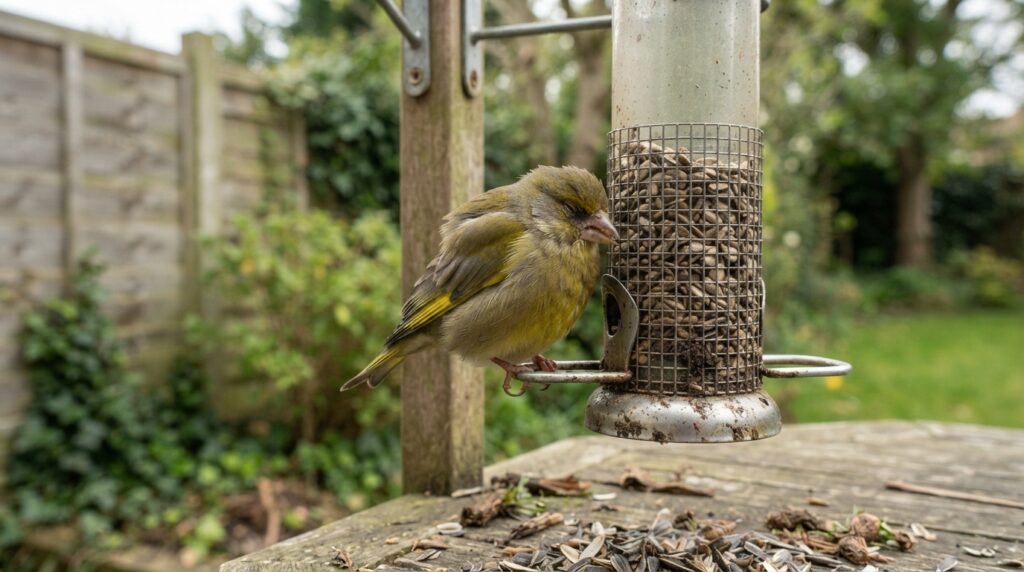
- Away from feeders. Nesting birds don’t want constant traffic outside the entrance
- Out of cat reach — nothing directly below that a cat can climb or launch from
- Space multiple boxes out. Most small birds are territorial; two boxes on the same tree usually means one goes unused
Fixing to a tree without damaging it
Use a strap or wire around the trunk with a section of hosepipe or rubber to protect the bark, rather than driving nails in. If you do use a fixing, aluminium nails are preferable — they won’t damage a chainsaw if the tree is ever felled, which is a real consideration for arborists.
Check straps annually and loosen as the tree grows.
The legal position
Under the Wildlife and Countryside Act 1981, it is an offence to intentionally take, damage or destroy the nest of any wild bird while it is in use or being built, or to intentionally disturb nesting birds.
In practice: don’t open, move, inspect or clean a nest box during the breeding season (roughly March to August). If you find birds have started nesting, leave the box entirely alone until the young have fledged.
Cleaning: September to January only
Old nesting material harbours parasites — fleas, mites and their eggs — which will affect the following year’s brood.
When: between 1 September and 31 January, once you’re certain the box is empty.
How:
- Check it’s unoccupied before opening
- Remove old nesting material and dispose of it
- Scald the inside with boiling water to kill parasites — this is the recommended method
- Let it dry completely before closing
- Don’t use insecticides, flea powders or chemical cleaners
You can add a small handful of clean wood shavings — not straw or hay — afterwards, which encourages winter roosting.
If you find unhatched eggs, note that these may only legally be removed and destroyed between September and January, and it’s an offence to keep them.
Why isn’t my nest box being used?
Common and usually fixable:
- Put up too late. Give it a full year before judging
- Wrong direction — south-facing boxes get too hot
- Too exposed, or too close to a feeder
- Wrong hole size for the species present in your area
- Too many boxes too close together
- Robin box not hidden — this one catches people out constantly
- No suitable food nearby — birds nest where they can feed chicks, which for tits means caterpillars, which means trees and no insecticides
- Simply unlucky. Only a proportion of boxes get used in any given year
Common questions
Is it too late to put up a box in spring?
Not pointless, but you’ve likely missed the main selection period. Put it up anyway — it may be used as a roost this winter and nested in next year.
Should I put nesting material inside?
No. Birds build their own nests and prefer to. A small amount of clean wood shavings for insulation is fine; straw, hay or cotton wool are not — they hold damp and can tangle.
Can I use a camera nest box?
Yes, and they’re a good way to watch without disturbance. Install and test everything well before the breeding season — you can’t be adjusting cameras once birds are nesting.
Birds started nesting then abandoned it. Why?
Disturbance, predation, weather, or a food shortage. Don’t investigate during the season. Clean it out in autumn and leave it up.
How long do nest boxes last?
A well-made wooden box treated with a water-based, bird-safe preservative on the outside only should last several years. Replace when the wood softens or the roof leaks.
Can I move a box that’s not being used?
Yes, outside the breeding season. Try a different aspect, height, or a quieter part of the garden.
Related guides
- How to attract blue tits to your garden
- What do robins eat? Feeding Britain’s favourite garden bird
- Best plants to attract birds to a UK garden
- I’ve found a baby bird — what should I do?
Sources: RSPB nest box guidance; British Trust for Ornithology Nest Box Challenge and National Nest Box Week; Wildlife and Countryside Act 1981.
Compare nest boxes at Amazon UK. Prices and stock change often, so it is worth checking before you commit.
Browse nest boxes →