If you’ve found a bird in your garden that looks unwell — fluffed up, lethargic, struggling to swallow — this page explains what you’re probably looking at and what to do about it.
The short version: stop feeding, clean everything thoroughly, and report the sighting. Details below.
What to do right now
- Stop putting out food — temporarily, until the birds disperse
- Take down and deep-clean all feeders and bird baths
- Clear the ground beneath feeders of old food and droppings
- Report it to Garden Wildlife Health — the data genuinely matters
- No risk to you, your children or your pets from trichomonosis
What to look for
A bird with trichomonosis typically shows several of these:
- Fluffed-up appearance — feathers puffed out, looking round and hunched
- Lethargy — sitting still for long periods, not reacting normally to disturbance
- Difficulty swallowing — repeated swallowing motions, or food dropping from the beak
- Drooling or regurgitating
- Wet, matted feathers around the beak and on the chest
- Laboured breathing, sometimes with the beak held open
- Reluctance to fly, or flying only short distances when approached
- Visible thinness despite sitting at a full feeder
The last point is the cruel part. An infected bird will sit at a feeder surrounded by food it physically cannot swallow.
What trichomonosis is
It’s caused by a microscopic parasite, Trichomonas gallinae, which infects the mouth, throat and upper digestive tract. It produces lesions that progressively block the throat, making it harder and harder for the bird to eat and breathe. Affected birds usually die of starvation.
It spreads through saliva and regurgitated food — so a contaminated feeder, contaminated drinking water, or an adult bird regurgitating food to feed its chicks are all routes of transmission.
The parasite survives longer in warm, damp conditions, which is why outbreaks peak roughly between July and October.
There is no risk to humans, cats or dogs from trichomonosis. The parasite doesn’t infect mammals. You don’t need to worry about your family or pets on that count — though basic hygiene when handling anything a wild bird has touched is always sensible.
Which birds are affected
Finches are worst hit, because they favour seeds and peanuts and gather in flocks at feeders.
- Greenfinches — the most severely affected. Numbers down around 67% since 1979, over two million birds lost, now on the UK Red List of conservation concern
- Chaffinches — significantly affected, with declines linked to reduced adult survival
- Bullfinches — there is growing concern that a rapid decline may now be underway
- Pigeons and doves — the disease has long been known in these species
- House sparrows and other garden birds — can be affected, though less commonly
What to do
1. Stop feeding
Take the food away. Counterintuitive when a bird is visibly starving, but the feeder is what’s concentrating birds together and spreading the parasite. Continuing to feed makes the outbreak worse.
Once birds disperse and find food elsewhere, transmission slows.
2. Deep-clean everything
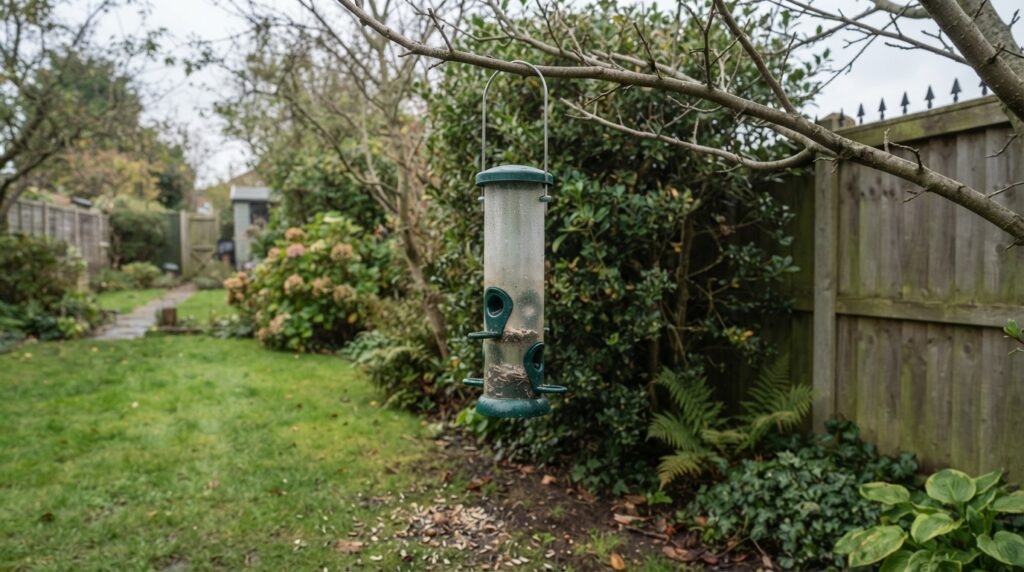
Take down all feeders and bird baths. Empty them completely — bag and bin the food rather than tipping it on the ground.
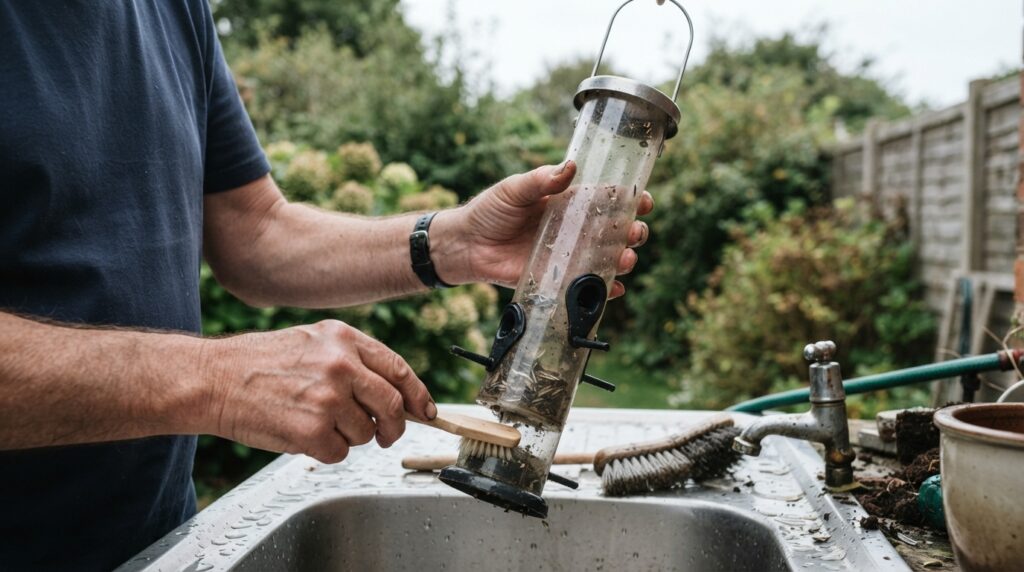
Wash in hot soapy water, scrub thoroughly including ports and perches, then disinfect with a non-toxic disinfectant such as Ark-Klens or a mild 5% bleach solution. Rinse well and dry completely.
Our cleaning guide covers the method in full.
3. Clear the ground
Rake or sweep up accumulated seed husks, dropped food and droppings from beneath where the feeders were. This is contaminated material and leaving it defeats the point of cleaning the feeders.
4. Empty and clean water sources
The parasite survives in water. Bird baths need emptying, scrubbing and disinfecting alongside the feeders.
5. Report it
This genuinely matters. Garden Wildlife Health — a collaboration involving the Zoological Society of London, the BTO, the RSPB and Froglife — collects reports of sick and dead garden wildlife across Great Britain. That data is what tracks outbreaks and informs research and guidance.
Reports can be submitted online at gardenwildlifehealth.org, and in some cases they may ask you to submit a specimen for examination.
The 2026 guidance change came out of exactly this kind of accumulated evidence. Reporting a sick bird in your garden is a small contribution to a body of data that has already changed national advice.
Can a sick bird be treated?
Realistically, no — not in the wild. There’s no practical way to treat an infected bird in a garden setting, and by the time symptoms are obvious the disease is usually well advanced.
If you find a bird that’s clearly suffering and can be safely contained, a wildlife rescue centre or a vet may be able to help, though the outlook is generally poor. Don’t attempt to catch a bird that can still fly reasonably well — the stress causes real harm and you’re unlikely to succeed.
Where to get advice:
- England and Wales: RSPCA
- Scotland: Scottish SPCA
- Northern Ireland: USPCA
- Your nearest independent wildlife rescue centre
Handling a dead bird
If you find a dead bird in the garden:
- Wear disposable gloves, or use an inverted plastic bag over your hand
- Pick the bird up and turn the bag the right way out around it
- Double-bag it
- Dispose of it in your household waste bin
- Wash your hands thoroughly with soap and water
Consider reporting it to Garden Wildlife Health before disposal, in case they’d like a specimen.
If you find several dead birds together, or dead birds of species like waterfowl, gulls or birds of prey, this may be a notifiable disease matter rather than trichomonosis. In Great Britain, report findings of dead wild birds to Defra’s helpline; do not handle them.
When can I start feeding again?
There’s no single fixed answer, and guidance here is less precise than most people would like.
The general approach is to stop for a period of a few weeks, keep watching, and resume only once you’re no longer seeing sick birds in the garden. When you do resume, start with smaller quantities, keep to the weekly cleaning schedule, and move feeders regularly.
If sick birds reappear, stop again.
Bear in mind the seasonal guidance as well — if it’s between 1 May and 31 October, seeds and peanuts should be paused anyway. See our seasonal feeding guide.
Other things it might be
Not every unwell bird has trichomonosis.
Avian pox
Wart-like growths, usually around the head, eyes and beak, sometimes on the legs. Most commonly seen in great tits in the UK. Spread by biting insects and direct contact. Some birds recover.
Salmonellosis
Causes lethargy and fluffed-up appearance similar to trichomonosis, often with diarrhoea. Spread through contaminated food and droppings — and unlike trichomonosis, salmonella can affect humans, so hygiene precautions matter.
Finch conjunctivitis
Swollen, crusted or closed eyes. Birds become effectively blind and vulnerable.
Simply young or moulting
Worth ruling out. Recently fledged birds look scruffy and sit still for long periods, and moulting adults in late summer can look distinctly ragged without being ill. Neither shows the swallowing difficulty or drooling that characterises trichomonosis.
Preventing it
You can’t eliminate the risk, but you can reduce it considerably:
- Clean feeders at least weekly, and move them to a fresh spot each time
- Only offer water if you can change it daily
- Don’t use flat-surfaced feeders — bird tables, window feeders and trays are where regurgitated food collects
- Spread multiple feeders out rather than clustering them
- Feed in moderation, so food is eaten within a day or two rather than sitting
- Follow the seasonal guidance on pausing seeds and peanuts from 1 May to 31 October
- Grow bird-friendly plants — natural food carries none of the transmission risk
Common questions
Can I catch anything from a sick bird?
Not trichomonosis — it doesn’t infect mammals. Salmonella can affect humans, so wear gloves and wash your hands after handling feeders or dead birds.
Will my cat get ill from catching an infected bird?
Not from trichomonosis. Standard advice about cats and wildlife applies as usual.
Should I stop feeding permanently?
No. Feeding remains beneficial when done safely and at appropriate times of year. The point is to feed hygienically and seasonally, not to give up.
Am I responsible for this?
No. This disease is widespread across the UK and is not the result of anything you’ve done. What you can do — and the reason this guidance exists — is reduce transmission from here.
Is it worth reporting if it’s just one bird?
Yes. Individual reports build the national picture. The evidence review behind the 2026 guidance change was built on exactly this kind of accumulated data.
Related guides
- How to clean a bird feeder — and why it now matters more
- When to feed garden birds: the new UK guidance explained
- Types of bird feeder: which one should you actually buy?
Sources: Garden Wildlife Health (ZSL, BTO, RSPB, Froglife); RSPB feeding and hygiene guidance (April 2026); British Trust for Ornithology research on finch trichomonosis; RSPB Big Garden Birdwatch population trends.
This page carries no product links. If you’ve arrived here because you’ve found a sick or dying bird, you need information, not a shopping list.
Compare hanging bird feeders at Amazon UK. Prices and stock change often, so it is worth checking before you commit.
Browse bird feeders →