Most small brown garden birds separate out on bill shape and behaviour, not colour. A thick conical bill in a noisy group is a house sparrow; a thin bill and grey head shuffling alone under a bush is a dunnock; tiny with the tail cocked upright is a wren.
Brown birds are the hardest identification problem in any UK garden. Birdwatchers have a nickname for them — LBJs, “little brown jobs” — which tells you it isn’t just beginners who find them difficult.
The good news is that once you stop looking at colour and start looking at bill shape and behaviour, most of them separate out quickly.
The quick test
- Thick conical bill, in a noisy group → House Sparrow
- Thin bill, grey head, shuffling alone under a bush → Dunnock
- Tiny, tail cocked upright, mouse-like → Wren
- Blackbird-sized, dark brown → female Blackbird
- Two white wing bars → female Chaffinch
- Cream breast with bold arrowhead spots → Song Thrush
Why brown is so hard
Three reasons, and understanding them is half the battle.
Brown is camouflage, so lots of unrelated birds are brown. Female birds especially — a bird sitting on eggs benefits enormously from being invisible. So female blackbirds, female chaffinches, female house sparrows and female blackcaps are all brownish, despite the males being wildly different from each other.
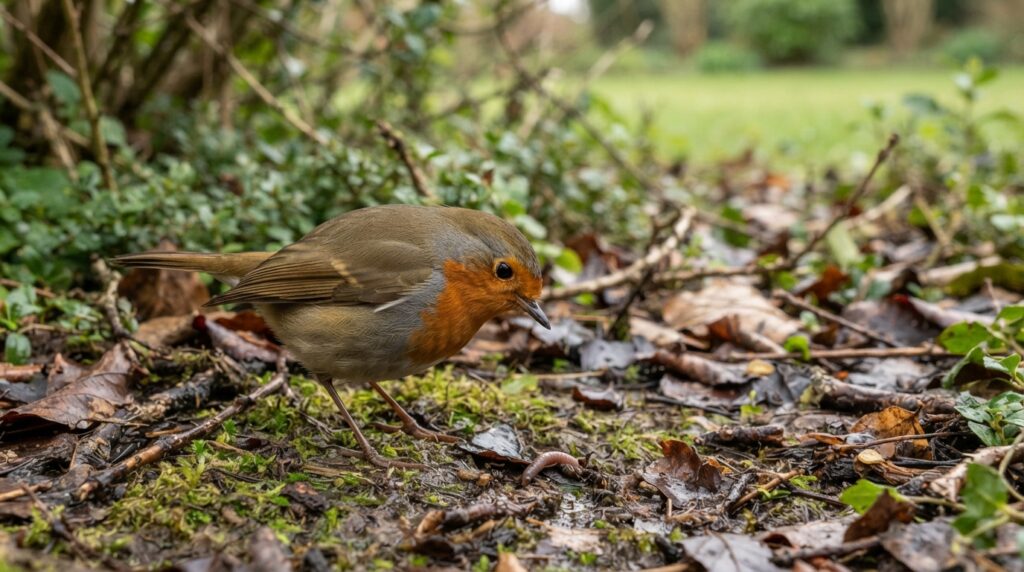
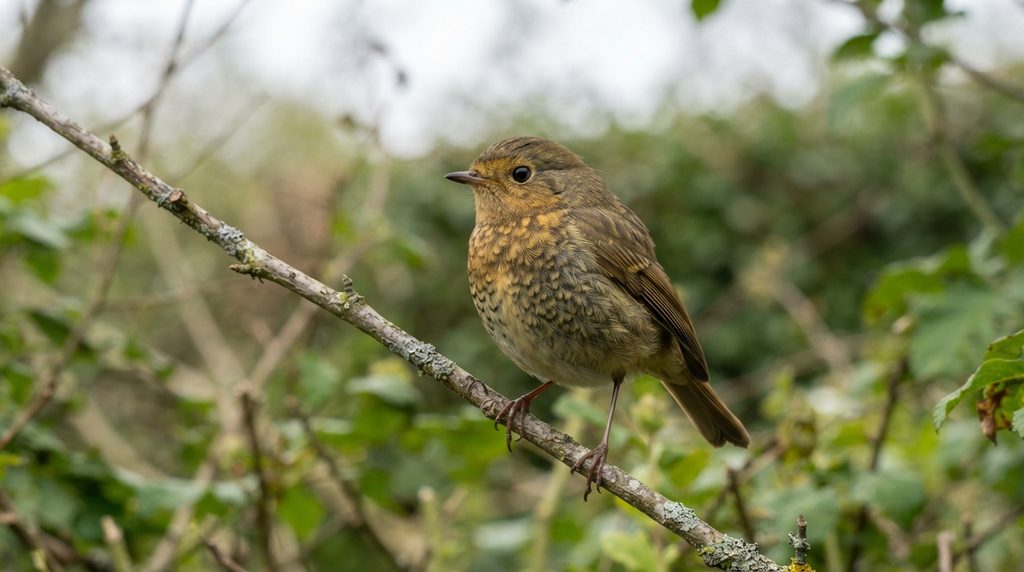
Juveniles are usually brown too, for the same reason. A young robin has no red breast at all — it’s brown and spotted. Young starlings are a dull uniform brown. Young blackbirds are warm brown and mottled.
Light changes everything. The same bird looks grey-brown on an overcast morning and warm rufous in low evening sun.
So: don’t lead with colour. Lead with size, bill and behaviour.
The main candidates
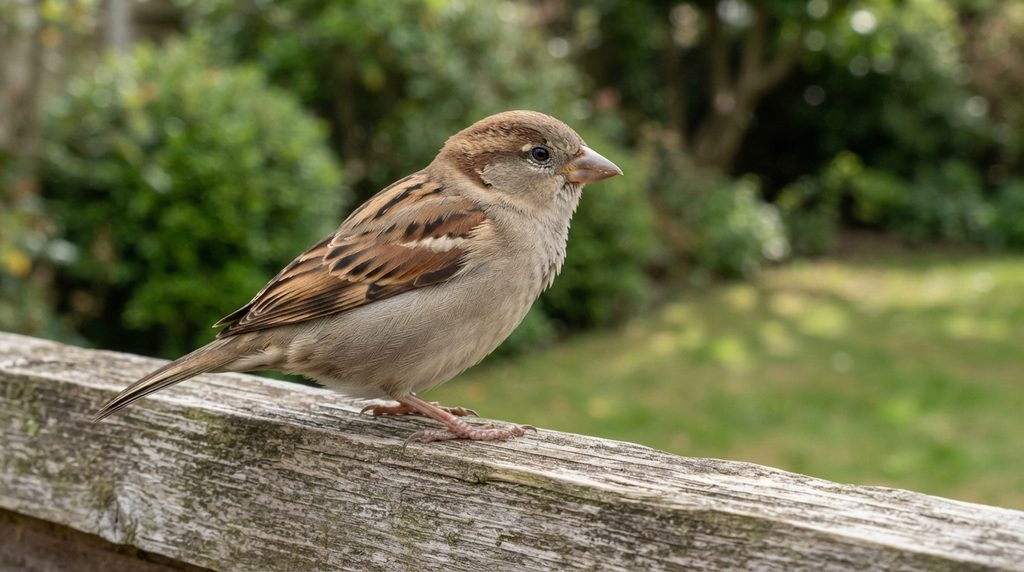
House Sparrow
Size: About 14cm — the reference point everyone uses for “sparrow-sized”.
Bill: Thick, short and conical. A seed-cracking bill.
Male: Grey cap, black bib on the throat and chest, chestnut-and-white wing markings, streaky brown back.
Female: Much plainer. Buff-brown all over, streaky back, a pale stripe behind the eye, and no bib. This is the one people struggle with — the male is distinctive, the female is a textbook LBJ.
Behaviour — the giveaway: Sparrows are almost never alone. They arrive as a chattering group, feed noisily and sociably, and leave together. If you’re looking at a small brown bird that is one of six or eight, it’s very likely a house sparrow.
Dunnock
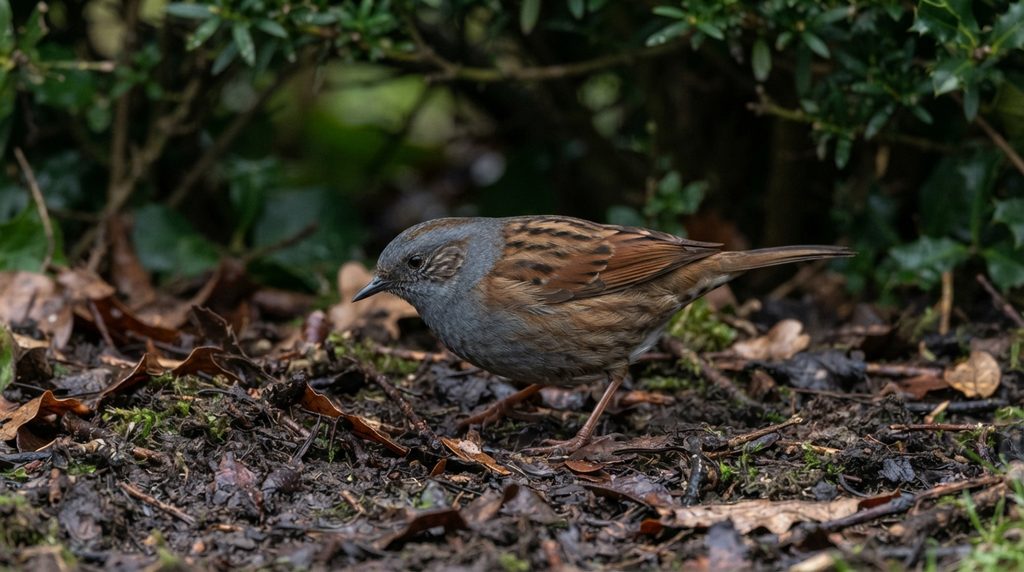
The bird most often mistaken for a female house sparrow, and the one most people have in their garden without knowing it. Sometimes still called a “hedge sparrow”, which doesn’t help — it isn’t a sparrow at all.
Size: Similar to a house sparrow, slightly slimmer.
Bill: Thin and pointed. An insect-eater’s bill. This is the single most reliable difference from a sparrow.
Plumage: Streaky brown back — sparrow-like — but with a distinctly slate-grey head, throat and breast. Once you’ve noticed the grey, you won’t unsee it.
Behaviour — the giveaway: Dunnocks are solitary and quiet. They shuffle nervously along the ground, keeping close to hedges and shrubs, often described as creeping or mouse-like. Where sparrows are loud and gregarious, a dunnock works alone under a bush.
Wren
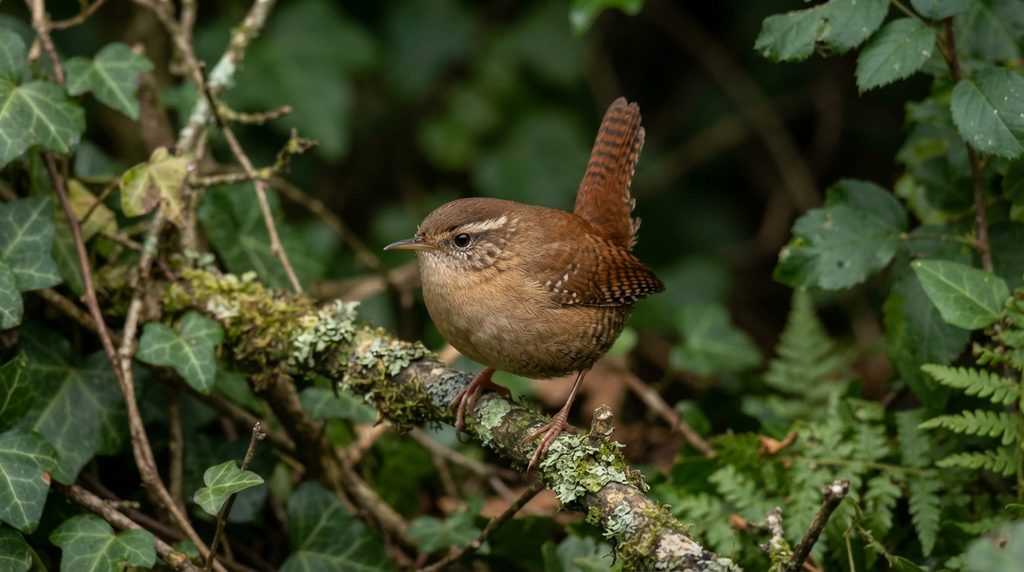
Size: Tiny — around 9-10cm and about the weight of a £1 coin. Noticeably smaller than everything else here.
Plumage: Rich rufous-brown, finely barred on the wings and tail, with a pale stripe over the eye.
The giveaway: The tail. A wren holds its short tail cocked upright, almost vertical. Nothing else in a British garden does this.
Behaviour: Moves through undergrowth like a mouse — low, fast, disappearing into cover. Rarely uses feeders.
The sound: Astonishingly loud for the size. A wren’s song is a rapid, explosive trill that seems physically impossible from a bird that small. Often the first sign one is present.
Worth knowing: the wren is generally considered the UK’s most numerous breeding bird, despite being easy to miss entirely.
Female Blackbird
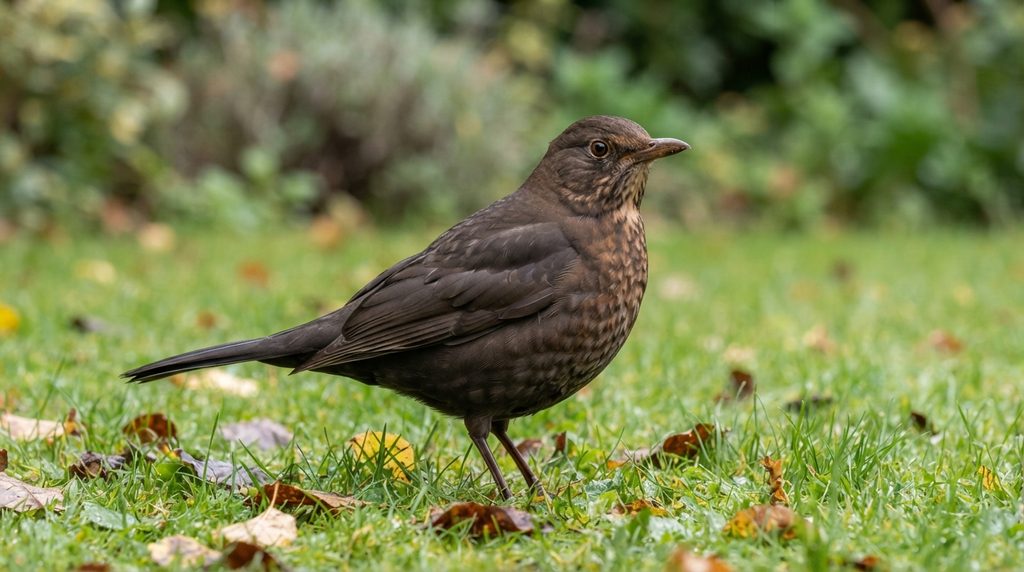
Confuses people because it’s a blackbird that isn’t black.
Size: About 25cm — considerably bigger than everything above. If it’s clearly larger than a sparrow, this is a strong candidate.
Plumage: Dark brown overall, sometimes with a paler, faintly mottled throat. Bill is dark, or yellowish with a dark tip.
Behaviour: Ground feeder. Runs a few paces, stops, tilts its head to listen, runs again. Turns over leaf litter noisily.
More in our blackbird guide.
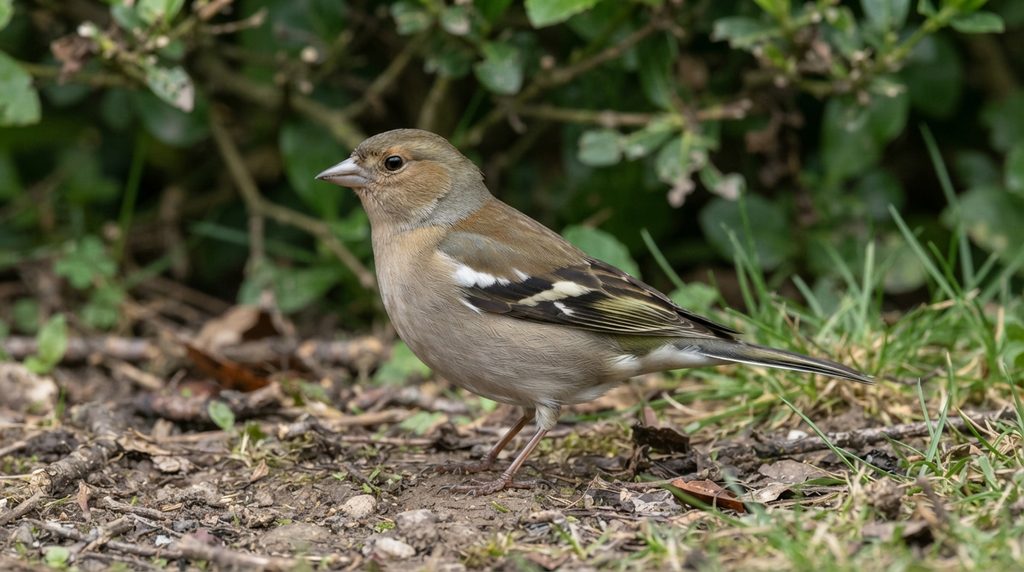
Female Chaffinch
Size: Sparrow-sized.
Plumage: Buff-grey-brown, plain compared to the male’s blue-grey crown and pink breast.
The giveaway: Two clear white wing bars on each wing, present on both sexes. Nothing else here has them. Also shows white outer tail feathers in flight.
Behaviour: Often feeds on the ground beneath feeders rather than on them.
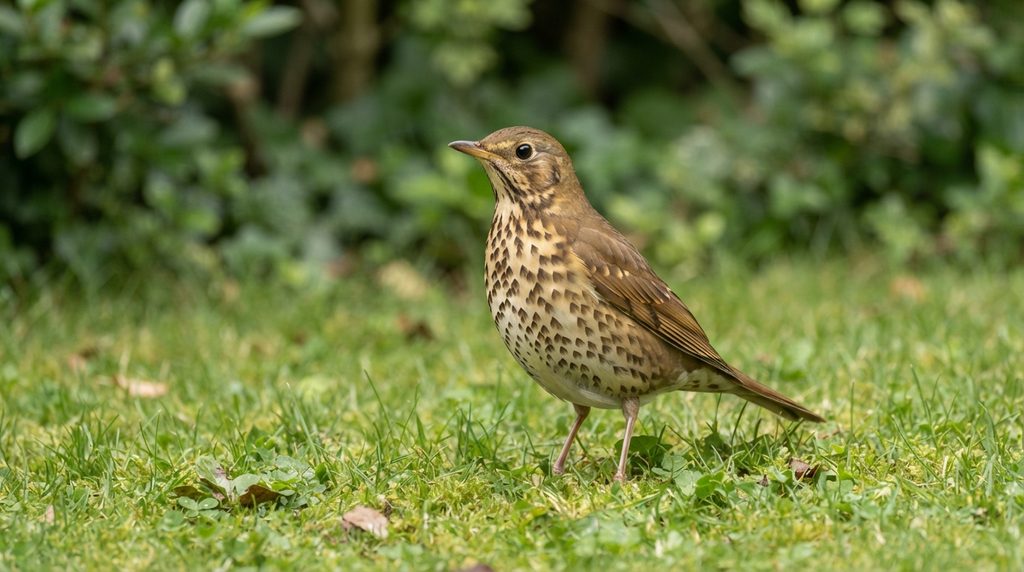
Song Thrush
Size: Around 23cm — blackbird-ish but slimmer.
Plumage: Warm brown above, with a cream or buff breast covered in bold dark spots shaped like arrowheads or inverted Vs, spread relatively sparsely.
Behaviour: Ground feeder. Famously smashes snail shells against a stone — if you find a rock surrounded by broken shells, that’s a song thrush “anvil”.
Song: Distinctive because it repeats each phrase two or three times before moving on.
Female House Sparrow vs Dunnock — the classic confusion
Worth its own section because it accounts for more misidentification than anything else on this list.
| Female House Sparrow | Dunnock | |
|---|---|---|
| Bill | Thick, conical, seed-cracking | Thin, fine, pointed |
| Head | Buff-brown, pale eye stripe | Slate-grey |
| Breast | Plain buff | Grey |
| Company | In a group, always | Alone |
| Manner | Bold, noisy, sociable | Quiet, furtive, shuffling |
| Where | Feeders, roofs, open ground | Under hedges and shrubs |
If you can only check one thing, check the bill.
Full comparison
| Bird | Size | Bill | Key feature | Usually seen |
|---|---|---|---|---|
| House Sparrow | 14cm | Thick, conical | Male has black bib; always in groups | Feeders, roofs |
| Dunnock | 14cm | Thin, fine | Grey head and breast; alone | Under bushes |
| Wren | 9-10cm | Thin, fine | Tail cocked upright; very loud | Undergrowth |
| Female Blackbird | 25cm | Long, strong | Much larger; dark brown | Lawns, leaf litter |
| Female Chaffinch | 14cm | Conical | Two white wing bars | Ground below feeders |
| Song Thrush | 23cm | Long, strong | Arrowhead spots on cream breast | Lawns, borders |
Juveniles complicate everything
From late spring onwards, gardens fill with young birds that look nothing like their parents. If you’re stuck in June or July, this is often why.
- Juvenile Robin — brown, heavily mottled, no red breast at all. Recognisable by the upright robin posture and stumpy tail when newly fledged. Frequently mistaken for a dunnock
- Juvenile Starling — plain dull grey-brown all over, no iridescence, no spots. Often seen following adults and demanding food. Looks like a completely different species
- Juvenile Blackbird — warm brown, spotted, more rufous than a female
- Juvenile House Sparrow — like the female but even plainer
A useful giveaway for any recently fledged bird: a yellow gape at the base of the beak, and often wing-fluttering behaviour aimed at a nearby parent.
Use sound
Once you can’t separate two birds visually, sound often settles it — and unlike plumage, it doesn’t change with the light.
- House Sparrow — persistent, unmusical chirping from a group
- Dunnock — a thin, high, slightly scratchy warble, often from inside a hedge
- Wren — an explosive, rapid trill, absurdly loud
- Blackbird — rich, fluty, unhurried; also a loud clattering alarm call
- Song Thrush — clear, bell-like phrases, each repeated two or three times
- Chaffinch — an accelerating descending phrase, often likened to a fast bowler’s run-up
The Merlin Bird ID app handles UK species well and can identify birds from recorded sound — genuinely useful if you’re stuck.
Common questions
What’s the small brown bird hopping under my hedge alone?
Almost certainly a dunnock. The solitary, shuffling, hedge-bottom behaviour is characteristic, and the thin bill and grey head confirm it.
What’s the tiny brown bird with its tail sticking up?
A wren. Nothing else in a British garden holds its tail cocked vertically like that.
Why are there so many brown birds in summer?
Juveniles. From May onwards gardens fill with young birds in drab brown plumage, which they moult out of later in the year.
Is a hedge sparrow the same as a house sparrow?
No — “hedge sparrow” is an old name for the dunnock, which is a completely different family. It’s a confusing legacy name and best avoided.
How do I get a better look?
Watch from indoors and stay still. A window is the best hide you own. Note behaviour before markings — you’ll often identify a bird by how it moves before you can see it clearly.
Related guides
- Common garden birds in the UK: how to identify your visitors
- Black birds in your garden: crow, rook, jackdaw or something else?
- What do robins eat? Feeding Britain’s favourite garden bird
- Why have the birds stopped coming to my feeder?
Sources: RSPB bird identifier; British Trust for Ornithology; Woodland Trust identification guides; The Wildlife Trusts.
Compare current prices on bird food and feeders at Amazon UK. Prices and stock change often, so it is worth checking before you commit.
Browse bird food →