Affiliate disclosure: some links on this page go to Amazon. If you buy through one we may earn a small commission, at no extra cost to you. Full disclosure.
You’ve filled the feeder, you’ve waited, and nothing. Or worse — the birds were there last month and now they’re not.
It’s a genuinely common problem with a manageable list of causes. Below are the eight most likely explanations, roughly in the order worth checking, plus a first question that catches out a lot of people.
Check these first
- What month is it? Quiet feeders in July and August are usually normal
- How new is the feeder? Birds can take weeks to find and trust a new one
- How clean is it? Birds actively avoid contaminated feeders
- Is the food fresh? Damp or stale seed gets ignored
- Is there cover nearby? Feeders in open ground feel dangerous
Start here: what time of year is it?
Before troubleshooting anything, check the calendar. There are two entirely normal seasonal explanations that account for a large share of “the birds have vanished” worries.
Late summer: the moult
Gardens go quiet in July and August most years. After the breeding season, birds moult — replacing worn feathers — which is energetically demanding and leaves them less able to fly well. They keep to cover, sing less, and visit feeders less. It looks like they’ve gone. They haven’t.
Natural food is also at its most abundant in late summer, which reduces the appeal of a feeder considerably.
Autumn: a good seed year
If there’s been a heavy crop of beech mast, acorns, hawthorn or rowan berries, feeders empty out. Birds are simply eating better food elsewhere. This can last for weeks and is nothing to worry about.
Also worth knowing: current RSPB guidance recommends pausing seed and peanut feeding between 1 May and 31 October. If you’ve followed it, a quieter garden through those months is expected rather than a problem. See our seasonal feeding guide.
1. The feeder is new
The single most common reason, and the easiest to fix: patience.
Birds find food by watching each other and by exploring familiar routes. A brand-new object in a garden they’ve never fed in can take anywhere from a few days to several weeks to be discovered and trusted. Three to four weeks is entirely normal. Some people report longer.
What helps:
- Put it where birds already go — near a shrub or tree they use, not in the middle of the lawn
- Scatter a small amount of seed on the ground nearby initially to draw attention
- Don’t keep moving it while you’re waiting. Give one position a proper chance
- Sunflower hearts are the most reliable “first food” — almost every garden bird takes them
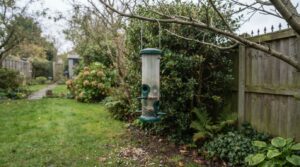
2. It’s in the wrong place
Position matters more than most people expect, and both extremes cause problems.
Too exposed — a feeder in open ground with no cover within reach feels dangerous. Small birds want an escape route within a couple of seconds’ flight.
Too enclosed — a feeder tucked right up against a dense hedge is an ambush point. Cats can wait in the cover and birds know it.
The workable middle is roughly two metres from cover — close enough to bolt for safety, far enough to see a predator coming.
Other placement points:
- Height: around 1.5m keeps it away from cats and gives you a decent view
- Not directly under branches birds roost on — droppings contaminate the food below
- Some shelter from prevailing wind and rain keeps seed dry
- Away from windows, or very close to them — the dangerous distance is the middle ground, where birds build up speed before striking the glass. Within about 1m or beyond about 10m is safer
3. The food isn’t good enough
Birds are pickier than they get credit for.
Stale or damp seed loses its appeal quickly and can grow mould, which is actively harmful. If seed has been sitting in a wet feeder for weeks, it needs throwing out, not topping up.
Cheap mixes are the bigger issue. Budget seed mixes are frequently padded with wheat, barley and split peas — cheap bulk that most garden birds simply won’t eat. Birds pick out the few sunflower seeds and flick the rest onto the ground, where it rots and attracts rodents. It looks like the feeder is being used; actually most of it is being wasted.
Wrong food for the birds you have — nyjer seed needs goldfinches and a specialist feeder. Whole peanuts need a mesh feeder. Putting out the wrong thing in the wrong feeder gets ignored.
Our bird food guide covers which foods suit which species.
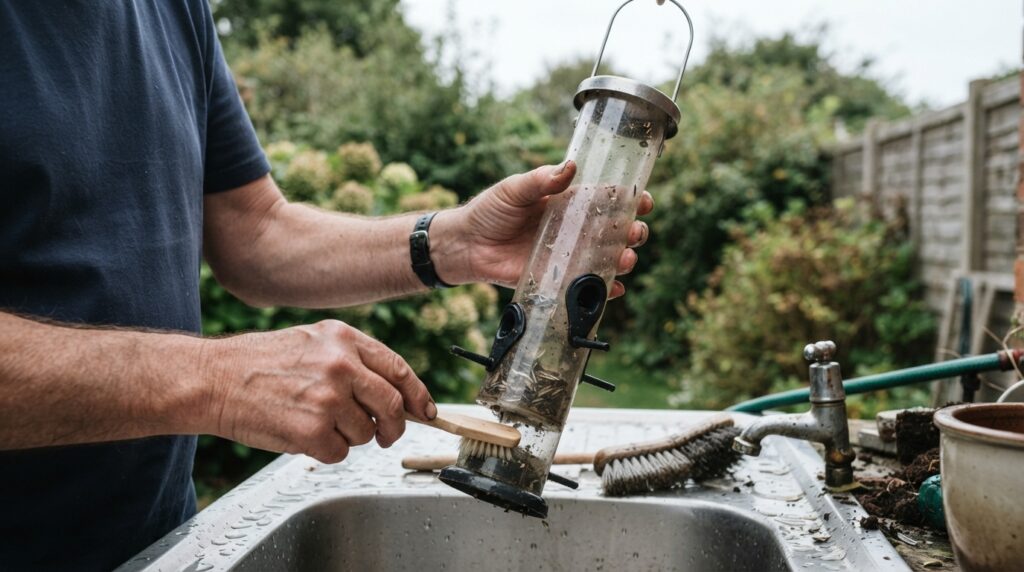
4. The feeder needs cleaning
Birds avoid dirty feeders. Beyond the disease risk to them, mouldy residue and caked-on old seed make a feeder genuinely unappealing.
Current guidance is to clean feeders at least weekly — hot soapy water, a non-toxic disinfectant, rinse and dry thoroughly. Then move the feeder to a different spot so contaminated debris doesn’t build up underneath.
If your feeder hasn’t been cleaned in months, that alone could be the answer. Our cleaning guide covers the method.
5. There’s a predator about
Cats are the most common cause of a suddenly abandoned feeder. A cat that regularly patrols beneath it will clear the garden. Birds learn fast and stay away.
What helps: raise the feeder height, use a pole with a baffle, add prickly planting at the base, and keep the ground beneath clear so there’s nowhere to lurk.
Sparrowhawks are the other one. A sparrowhawk that has learned your feeder is a reliable hunting spot will work it repeatedly. After a strike, the garden can stay empty for days.
This is unsettling to watch but it’s natural predation, and sparrowhawks are protected. Feeders near cover give small birds a better chance of escaping. The birds generally return within a week or so.
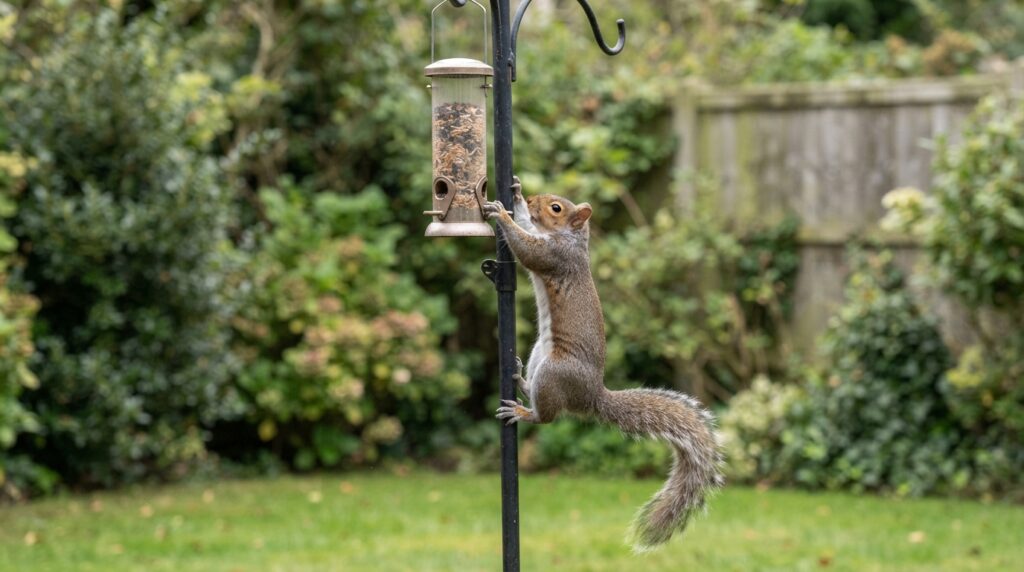
6. Squirrels have taken over
Grey squirrels don’t just eat the food — they physically dominate the feeder, empty it in a session, and deter smaller birds from approaching. If you’re refilling far more often than seems reasonable, that’s usually the explanation.
Full detail in our guide to stopping squirrels, but the short version is exclusion: baffles, correct distance from launch points, and caged or weight-activated feeders.
7. Something changed nearby
Birds are territorial and habitual, and local changes have knock-on effects that aren’t always obvious from your garden:
- A tree or mature hedge removed nearby — cover and nesting sites gone
- Building work, scaffolding, or persistent noise
- A neighbour who fed birds has stopped, or started — either can redistribute where birds go
- A new fence or extension changing flight lines
- A new cat in the area
8. There are fewer birds locally
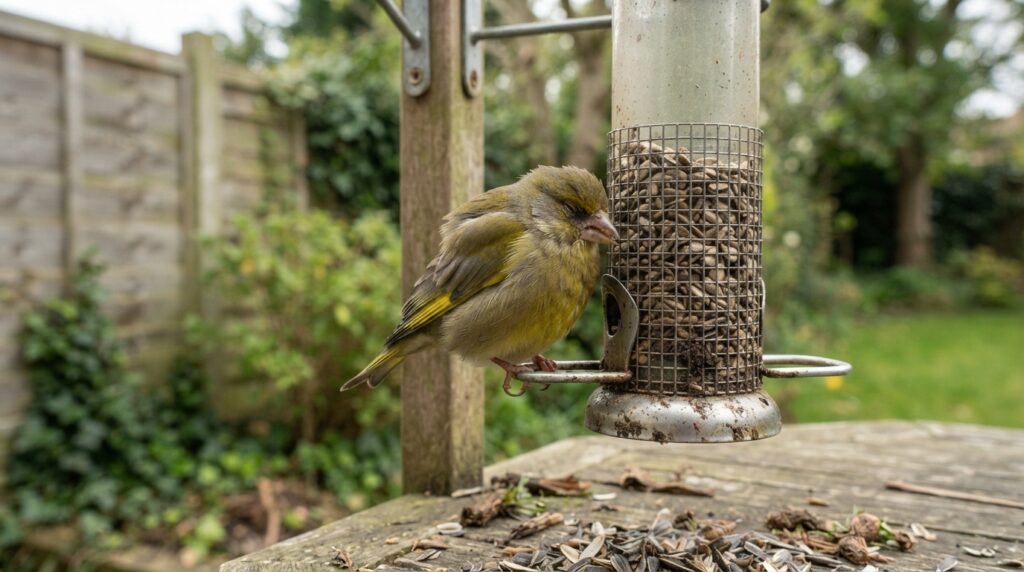
The hardest one to hear, but worth being honest about. Several familiar garden species have declined substantially — house sparrows are down sharply since the 1970s, starlings are Red Listed, and greenfinches have fallen by around two-thirds since 1979, largely due to disease.
If your garden has been quieter year on year rather than suddenly, this may be part of it. Taking part in the RSPB’s Big Garden Birdwatch each January is a genuinely useful way to contribute to tracking it.
When it’s a disease signal
Watch for this. If you’re seeing birds that look fluffed up and lethargic, are struggling to swallow, are drooling or regurgitating, or seem reluctant to fly — that may be trichomonosis, and other birds staying away could be a consequence rather than a coincidence.
Stop feeding, clean everything thoroughly, and see our guide to sick birds at the feeder.
The checklist
Work through in this order:
- Check the month. July–August quiet is normal. May–October you may be pausing seed anyway
- How long has the feeder been up? Under a month — wait
- Empty and inspect the food. Damp, mouldy, mostly untouched filler grain? Replace it
- Clean the feeder properly and move it to a new spot
- Assess the position — about 2m from cover, roughly 1.5m up
- Watch for 20 minutes at first light. Cats and sparrowhawks reveal themselves
- Switch to sunflower hearts as a reliable baseline food
- Give it three weeks before changing anything else
Change one thing at a time. Changing five things at once means you’ll never know what worked.
Common questions
How long should I wait before giving up?
At least a month with a new feeder in a settled position, using sunflower hearts. Most gardens see visitors well within that.
Should I stop refilling if nothing is eating it?
Don’t keep topping up food that’s going stale — take it down, clean it, and put out a smaller quantity of fresh food. Little and often beats a full feeder rotting slowly.
Do birds remember feeders?
Yes. Birds return to reliable food sources and pass that knowledge around a local population. Which is also why consistency matters more than quantity.
Will a bird bath help?
Often more than food, particularly in summer and freezing weather. But only offer water if you can change it daily with fresh tap water — the current guidance is firm on this, because standing water spreads disease.
My neighbour’s feeder is busy and mine isn’t. Why?
Usually position, food quality, or simply that theirs has been established longer. Birds concentrate where they already feel safe.
Related guides
- How to clean a bird feeder — and why it now matters more
- Best bird food for winter: what to put out and what to skip
- How to stop squirrels raiding your bird feeder
- When to feed garden birds: the new UK guidance explained
Sources: RSPB feeding and hygiene guidance (2026); British Trust for Ornithology garden bird research; RSPB Big Garden Birdwatch population trends.
Compare hanging bird feeders at Amazon UK. Prices and stock change often, so it is worth checking before you commit.
Browse bird feeders →