Affiliate disclosure: some links on this page go to Amazon. If you buy through one we may earn a small commission, at no extra cost to you. It never affects what we recommend. Full disclosure.
If you only read one paragraph: from 1 November to 30 April, you can offer garden birds the full range of foods, including seeds and peanuts. From 1 May to 31 October, pause the seeds and peanuts — but small amounts of suet, fat balls and mealworms are fine all year round.
That is a significant change from what most of us have been doing for decades, and it caught a lot of people by surprise when the RSPB announced it in April 2026. This guide explains what changed, why, and what it means in practice month by month — including the parts where knowledgeable people disagree.
The short version
- 1 Nov – 30 Apr: full range of foods, including seeds and peanuts
- 1 May – 31 Oct: pause seeds and peanuts; small amounts of suet, fat balls and mealworms are still fine
- All year: clean feeders at least weekly and move them to a fresh spot each time
- All year: only offer water if you can change it daily
- All year: avoid flat-surfaced feeders — bird tables, window feeders and trays
What changed, and when
In April 2026 the RSPB published new feeding guidance alongside that year’s Big Garden Birdwatch results. It followed a structured review of the scientific evidence, led by the RSPB with input from the British Trust for Ornithology (BTO) and the Institute of Zoology, and overseen by a steering group covering ecology, wildlife disease and conservation science.
The RSPB’s summary of the new position is four words: feed seasonally, feed safely.
Before this, the standard advice was essentially “feed all year, keep the feeders clean.” The change is not a small tweak. It asks people to take down the feeders that most of us rely on for roughly half the year, and it retires the bird table — a fixture of British gardens for generations — altogether.
Why: trichomonosis
The driver is a parasitic disease called trichomonosis, caused by Trichomonas gallinae.
The parasite affects a bird’s mouth, throat and upper digestive tract. It causes lesions that make swallowing and breathing progressively harder, and infected birds typically die of starvation. It poses no risk to humans, cats or dogs.
It spreads through saliva and regurgitated food — so contaminated feeders, contaminated water, and adult birds feeding regurgitated food to their chicks are all transmission routes. Anywhere birds gather in numbers and share a food source is, in effect, a place for the parasite to move between individuals.
The greenfinch numbers
The clearest evidence of the damage is what has happened to greenfinches. When the Big Garden Birdwatch began in 1979, the greenfinch ranked seventh among the most commonly recorded garden birds. In the most recent count it sat at eighteenth.
Average numbers recorded have fallen by around 67% over that period — a loss of more than two million birds. Wider UK surveys show a decline of over 65% since the mid-1990s, with the sharpest drop following the arrival of this strain of trichomonosis. Greenfinches are now on the UK Red List of conservation concern.
Chaffinches have been badly affected too, and there is growing concern that bullfinches are now following the same pattern.
Why finches specifically
Two reasons. Finches strongly prefer seeds and peanuts, which is exactly what most of us put out. And they flock — greenfinches in particular gather in numbers at a feeder, which is precisely the condition the parasite needs.
By contrast, finches rarely eat suet, fat balls or mealworms. That is why those foods stay on the approved list all year: not because they are magically clean, but because the species most at risk generally ignore them.
Why the pause covers summer, not winter
This is the part that confuses people most. Surely birds need help more in the cold?
Two things are going on.
First, the disease risk is seasonal. Research indicates trichomonosis outbreaks peak roughly between July and October. The parasite survives longer in the environment in warmer conditions, and transmission rates rise accordingly.
Second, natural food is more available. Between May and October, seeds, insects, fruit and berries are at their most abundant. The RSPB’s position is that there is enough natural food available during this window for birds to adapt to feeders coming down, and that it will monitor the situation and revise the advice if food shortages emerge.
It’s a calendar, not a thermometer. The dates are based on when outbreaks occur, not on temperature. A cold snap in August does not make it safe to put seeds back out, and a warm spell in April does not mean you should take them in early.
Month by month
| Month | Seeds & peanuts | Also offer | Worth knowing |
|---|---|---|---|
| January | Yes | Suet, fat balls, mealworms | Peak demand. Big Garden Birdwatch month |
| February | Yes | Suet, fat balls, mealworms | Often the hardest month — natural food stores exhausted |
| March | Yes | Suet, fat balls, mealworms | Early nesting begins; leave out nesting material |
| April | Yes, until 30 April | Suet, fat balls, mealworms | Start planning the changeover |
| May | Pause from 1 May | Small amounts of suet, fat balls, mealworms | Peak nesting. Mealworms support chick-rearing |
| June | No | Small amounts of suet, fat balls, mealworms | Fledglings appear. Water matters more than food |
| July | No | Small amounts of suet, fat balls, mealworms | Disease risk climbing. Gardens go quiet — birds are moulting |
| August | No | Small amounts of suet, fat balls, mealworms | Highest-risk period. Fat can go rancid in heat — small quantities only |
| September | No | Small amounts of suet, fat balls, mealworms | Natural food still plentiful |
| October | No, until 31 October | Small amounts of suet, fat balls, mealworms | Deep-clean feeders ready for November |
| November | Resume from 1 Nov | Suet, fat balls, mealworms | Winter visitors arriving — redwings, fieldfares, bramblings |
| December | Yes | Suet, fat balls, mealworms | Cold nights; high-fat foods matter most |
What you can still feed all year
Suet and fat balls
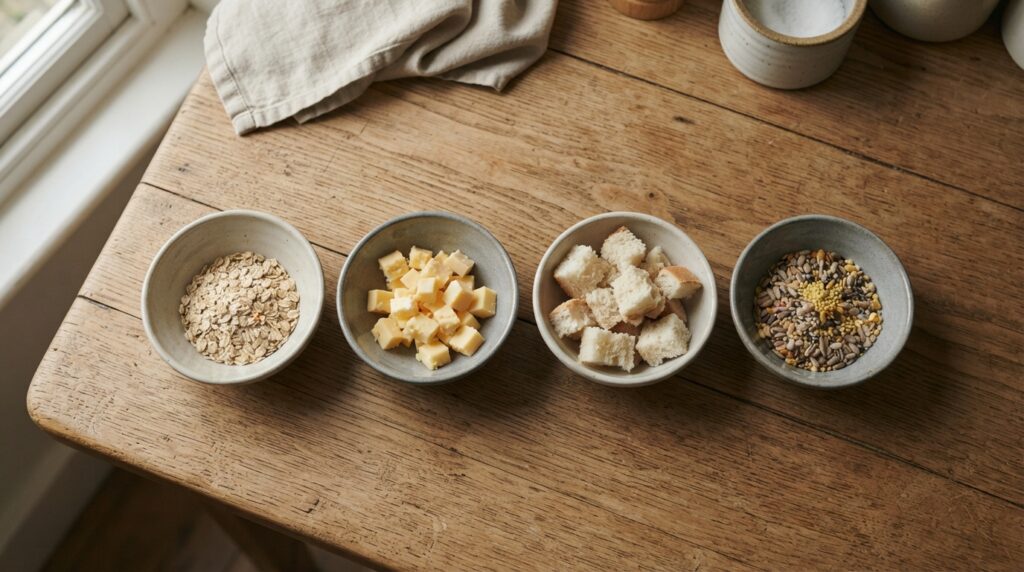
The highest-calorie option available and safe year-round. Tits, starlings and woodpeckers take them readily.
One important warning: never buy fat balls sold in plastic netting, and never leave them in it. Birds regularly get beaks and feet caught, which can cause serious injury. Always use a proper suet cage feeder.
In hot weather, fat can go rancid quickly. Put out smaller quantities and check them more often — that’s a food freshness issue rather than a disease one, but it matters.
Mealworms
High in protein and particularly valuable during the breeding season, when research has associated mealworm provision with improved chick survival. Robins and blackbirds are enthusiastic takers.
Offer them in a small dish and make sure they’re eaten or cleared away by dusk. Dried mealworms are far more practical than live ones for most people.
What about water?
Water is genuinely important all year, and often more valuable than food in summer. But the same hygiene logic applies — the parasite survives in water, so a shared bird bath can spread it just as a feeder can.
The current guidance is blunt: only offer water if you can change it every day. Use tap water, and clean the bath itself weekly. If you can’t commit to daily changes, it’s better not to offer it.
The hygiene rules that came with the change
The seasonal pause got the headlines, but the hygiene requirements were tightened at the same time and arguably matter just as much.
- Clean feeders at least once a week. Hot soapy water, then a non-toxic disinfectant — Ark-Klens or a mild 5% bleach solution. Rinse and dry thoroughly before refilling.
- Move feeders to a different spot after each clean. This is the instruction most people miss. It prevents contaminated debris building up in one place underneath.
- Clear away old food and droppings from beneath the feeders.
- Spread feeders out if you have more than one, to reduce crowding and mixing between species.
- Don’t place feeders under roosting spots such as tree branches.
- Feed in moderation. Adjust quantities to demand. Seeds and peanuts should be eaten within one to two days; suet can stay out up to seven.
We’ve covered the practical method in detail in our guide to cleaning bird feeders.
The bird table question
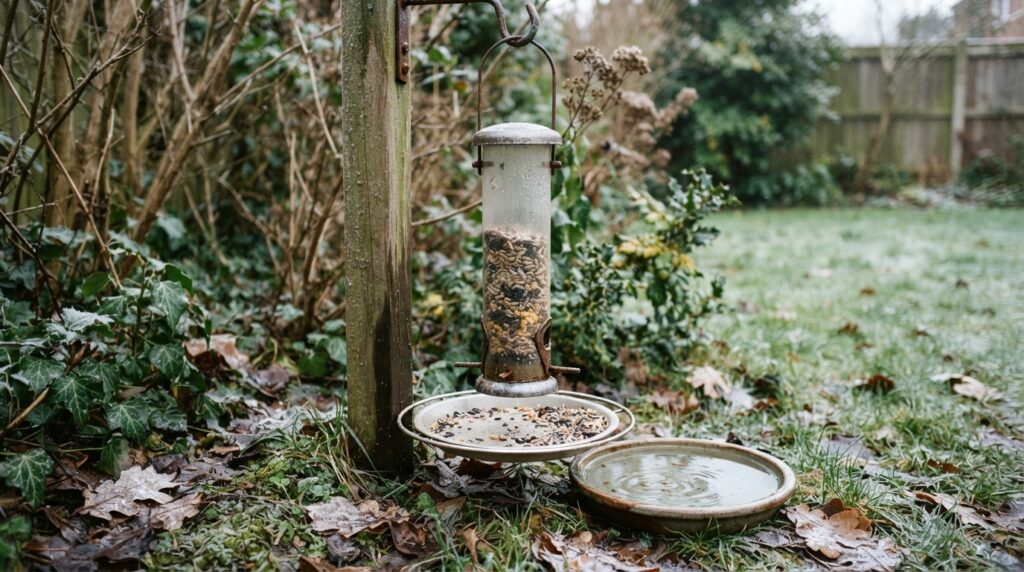
Alongside the seasonal change, the RSPB now advises against feeders with flat surfaces entirely. That includes bird tables, window feeders, ground feeding stations, and the seed-catching trays fitted beneath some hanging feeders.
The reasoning is specific: a bird with trichomonosis struggles to swallow and regurgitates contaminated food. On a flat surface, that food sits there and is then picked up by healthy birds. Even daily cleaning doesn’t reliably prevent it, because the transmission can happen between cleans.
The RSPB removed flat-surface feeders from sale in December 2024 as a precautionary measure, ahead of the full guidance.
For a lot of people this is the hardest part to accept — the bird table is a fixture, often inherited, often the centrepiece of the garden. But it’s the clearest single recommendation to come out of the review. Our guide to feeder types covers what to use instead.
Not everyone agrees
It would be misleading to present this as settled. There is genuine, informed disagreement, and you deserve to know about it.
Several independent UK bird food retailers have publicly disagreed with parts of the guidance, and their central objection is worth taking seriously: the May–October pause covers the entire breeding season.
April through July is when most garden birds are nesting and raising young. Parent birds are burning energy at an extraordinary rate, and the availability of reliable, high-quality food in their territory affects how many chicks survive. The argument that natural food is sufficient during this window sits uncomfortably alongside what we know about the wider state of the UK’s insect populations and habitat.
The counter-argument is that the disease evidence is strong, that the review was thorough and independently overseen, and that a temporary reduction in supplementary feeding is a smaller cost than continued finch decline.
The RSPB itself has been reasonably candid that the picture is mixed — that there are clear benefits to feeding, real risks, and plenty that isn’t fully understood. It has said it will monitor how birds respond and may refine the advice.
Our position: the RSPB guidance is the current official advice from the organisation best placed to give it, backed by a proper evidence review, and following it is a reasonable default. But it isn’t the last word, and anyone telling you this is entirely settled science is overstating it.
What to do instead in summer
If you want to help birds between May and October without a feeder, the most useful thing is to grow food for them. Plants carry none of the transmission risk that shared feeders do.
- Sunflowers — seed heads left standing feed finches directly
- Teasel — a goldfinch favourite
- Ivy — late berries plus excellent nesting cover
- Native berry shrubs — hawthorn, holly, rowan, elder
- Avoiding insecticides — probably the single highest-impact thing you can do, since most garden birds feed insects to their chicks
Common questions
Will the birds starve if I stop feeding in May?
The RSPB’s assessment is no — natural food is at its peak during this window, and it expects birds to adapt. It has said it will monitor and revise if problems emerge. You’re also not stopping entirely: suet, fat balls and mealworms stay available.
Do I have to follow this?
It’s guidance, not law. But it comes from a substantial evidence review and reflects real declines in real bird populations. If you feed birds because you care about them, it’s worth taking seriously.
What if I’ve already got a bird table?
The advice is to stop using it for feeding. Some people repurpose theirs as a plant stand or a (daily-changed) water station. That’s a personal call — but the disease reasoning behind the recommendation is specific and well-evidenced.
I’ve seen a sick bird — what should I do?
Stop feeding temporarily, clean everything thoroughly, and report it. See our guide to sick birds at the feeder for the full process.
Does this apply to hummingbird feeders or other countries?
No. This is UK-specific guidance responding to UK disease patterns and UK species. Advice elsewhere differs — North American guidance, for example, addresses different diseases and a different set of birds.
Related guides
- How to clean a bird feeder — and why it now matters more
- Types of bird feeder: which one should you actually buy?
- Best bird food for winter: what to put out and what to skip
- Common garden birds in the UK: how to identify your visitors
Sources: RSPB, Feed Safely, Feed Seasonally guidance (April 2026); RSPB Big Garden Birdwatch 2026 results; British Trust for Ornithology, seasonal feeding FAQs; Royal Horticultural Society, bird feeding update. Guidance current at time of writing — we update this page when the advice changes.
Compare sunflower hearts and suet at Amazon UK. Prices and stock change often, so it is worth checking before you commit.
Browse bird food →