Affiliate disclosure: some links on this page go to Amazon. If you buy through one we may earn a small commission, at no extra cost to you. Full disclosure.
The RSPB’s Big Garden Birdwatch is the world’s largest garden wildlife survey. It takes one hour, it happens over the last weekend of January, and the most recent count drew over 650,000 participants recording more than nine million birds.
There’s one counting rule that catches almost everybody out, and it’s worth understanding before you start: you record the highest number of each species seen at any one time — not the total number of visits.
How it works
- When: the last weekend of January (check the RSPB site for this year’s exact dates)
- How long: one hour, any time across the weekend
- Where: your garden, balcony, or a local park
- What to record: the most of each species seen at the same time
- Cost: free
The counting rule explained
This is where people go wrong, and it materially affects the data.
You record the maximum number of each species visible simultaneously.
So if a blue tit visits, leaves, and another (or the same one) returns eight times over the hour — you record 1, not 8. If at one moment you see three blue tits on the feeder together, you record 3.
The reason is straightforward: there’s no way to tell whether you’re seeing the same bird returning or different individuals. Counting simultaneous sightings avoids inflating the numbers.
Practical tip: keep a tally sheet with a line per species, and update the number only when you see more at once than you’d previously recorded. Start at zero, and revise upward through the hour.
What else to know
- Only count birds that land in your garden or space. Birds flying over don’t count — a passing gull or a heron overhead isn’t a garden visitor
- Count birds in the garden itself, not those on a neighbour’s roof or in the street
- Birds in trees or on fences within your garden do count — they don’t need to be at the feeder
- Record zero counts too. If you see no house sparrows, that’s genuinely useful data. The survey’s value comes partly from absences
Why it matters
This isn’t just a pleasant hour. The Birdwatch has been running since 1979 and now represents one of the longest continuous datasets on UK garden birds anywhere.
Its findings have driven real conclusions. The greenfinch decline — down around 67% since the survey began, over two million birds, now on the UK Red List — was tracked substantially through this data, and that evidence contributed to the RSPB’s 2026 change in feeding guidance. House sparrow and starling declines have been similarly documented.
A single hour from one garden is a small contribution. Hundreds of thousands of them is a national picture nobody could gather any other way.
Preparing in the weeks beforehand
Not about attracting unusual birds for the day — it’s about making your garden a place birds already use, so the count reflects something real.
Start two to three weeks ahead. Birds need time to establish a feeding routine.
- Feed consistently. January falls inside the 1 November to 30 April window when seeds and peanuts are recommended, so the full range is available
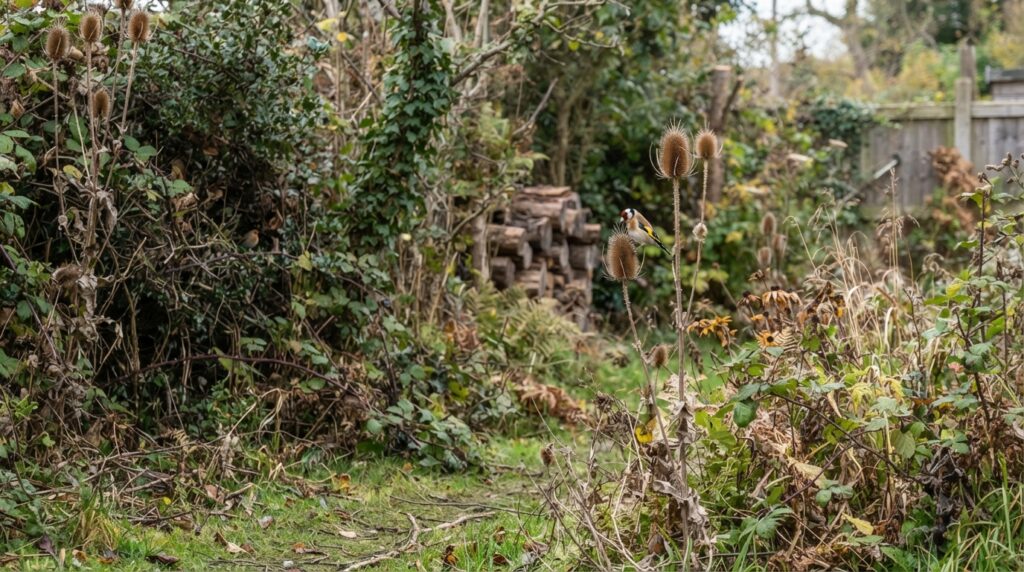
- Offer variety — sunflower hearts, suet, peanuts in a mesh feeder, nyjer if you’re after goldfinches. Different foods bring different species
- Add a second or third feeder, spaced apart. This reduces crowding and increases the range of birds using the garden at once
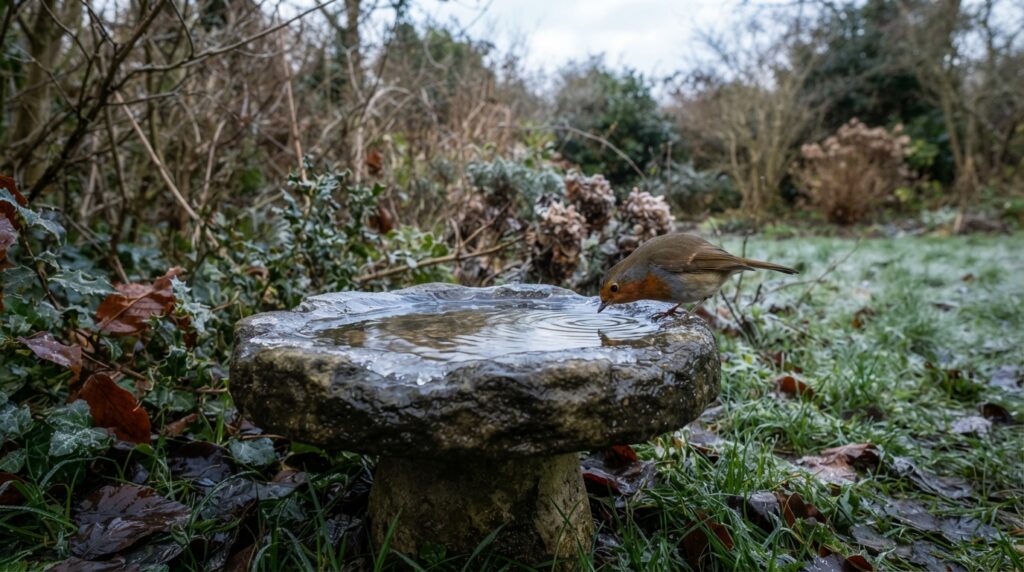
- Provide water — often scarce in a January frost, and changed daily with fresh tap water
- Clean feeders weekly and move them to a fresh spot each time. Birds avoid dirty feeders, and hygiene matters most when feeders are busiest
- Leave seed heads standing if you have them — finches feed on them through winter
Choosing your hour
You can count at any point across the weekend. A few things genuinely help:
- Early morning is usually busiest — birds feed heavily after a long, cold night
- Mid-afternoon is a decent second choice, as birds feed up before roosting
- Avoid gusty or heavy rain if you can choose. Birds shelter and activity drops
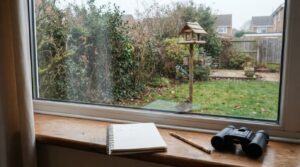
- Watch from indoors. A window is the best hide you own, and your presence outside will keep birds away
- Top up feeders the evening before, not during the hour
What you’ll likely see
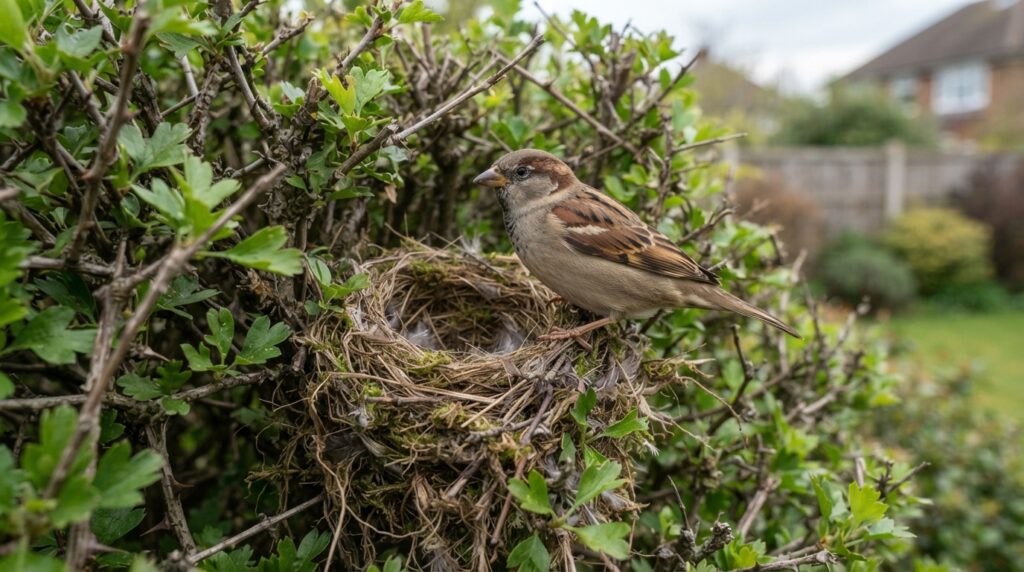
Based on recent Birdwatch results, the most commonly recorded species are house sparrow, blue tit, starling, woodpigeon and blackbird, followed by great tit, robin, goldfinch, magpie and long-tailed tit.
January is also when winter visitors turn up — redwings and fieldfares (Scandinavian thrushes, often drawn to windfall fruit in hard weather), bramblings (chaffinch-like, with an orange breast and white rump), and blackcaps, which increasingly overwinter in UK gardens.
Our identification guide covers all of these, and the brown bird guide handles the harder ones.
If you’re not sure what you saw
Perfectly normal, and it doesn’t disqualify you.
- Only record what you’re confident about. A wrong identification is worse for the data than an omission
- Note details — size, bill shape, behaviour, markings — and identify afterwards
- Take a photo if you can, even a poor one
- The Merlin Bird ID app handles UK species well and can identify birds from sound
- The RSPB provides a counting sheet with the common species illustrated, which is genuinely helpful if you’re new to it
Submitting your count
Register on the RSPB website beforehand, then submit online after your hour. Results are usually submitted within a couple of weeks of the weekend — check the current deadline on their site.
National results are typically published a few months later, and comparing your own garden against them year on year becomes surprisingly interesting.
Dates change each year. The Birdwatch falls on the last weekend of January, but confirm the exact dates and registration details on the RSPB website — this page won’t always have the current year’s specifics.
Common questions
Do I count every bird that visits during the hour?
No — this is the rule people get wrong most often. Record the highest number of each species seen at the same time. Ten separate blue tit visits with never more than one present is a count of one.
What if I don’t have a garden?
Balconies count, and you can take part from a local park or green space instead.
What if I see nothing?
Submit it anyway. Zero counts are genuinely valuable — the survey tracks decline as well as abundance, and empty gardens are part of that picture.
Do squirrels and other wildlife count?
The RSPB has in recent years also asked about other garden wildlife such as squirrels, hedgehogs and foxes alongside the bird count. Check the current form.
Can I count for longer than an hour?
Watch as long as you like, but submit one hour’s worth. The fixed hour is what makes results comparable between gardens and across years.
Should I put out extra food on the day?
Top up the evening before rather than during your hour. Consistent feeding in the weeks beforehand matters far more than anything you do on the day.
Related guides
- Common garden birds in the UK: how to identify your visitors
- Best bird food for winter: what to put out and what to skip
- Best binoculars for garden birdwatching
- When to feed garden birds: the new UK guidance explained
Sources: RSPB Big Garden Birdwatch guidance and published results; RSPB feeding guidance (April 2026). Dates and submission details change annually — confirm on the RSPB website.
Compare birdwatching binoculars at Amazon UK. Prices and stock change often, so it is worth checking before you commit.
Browse binoculars →