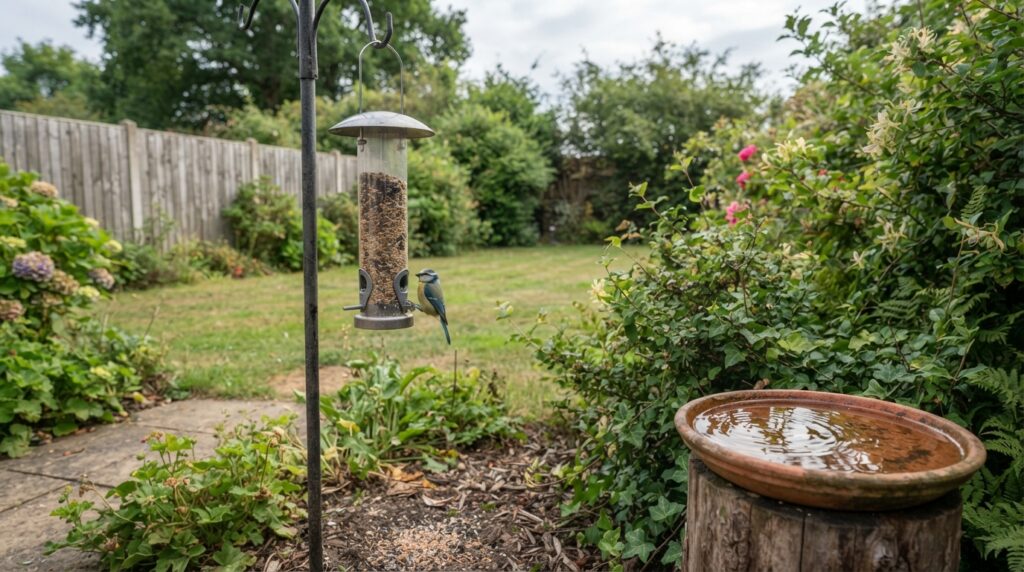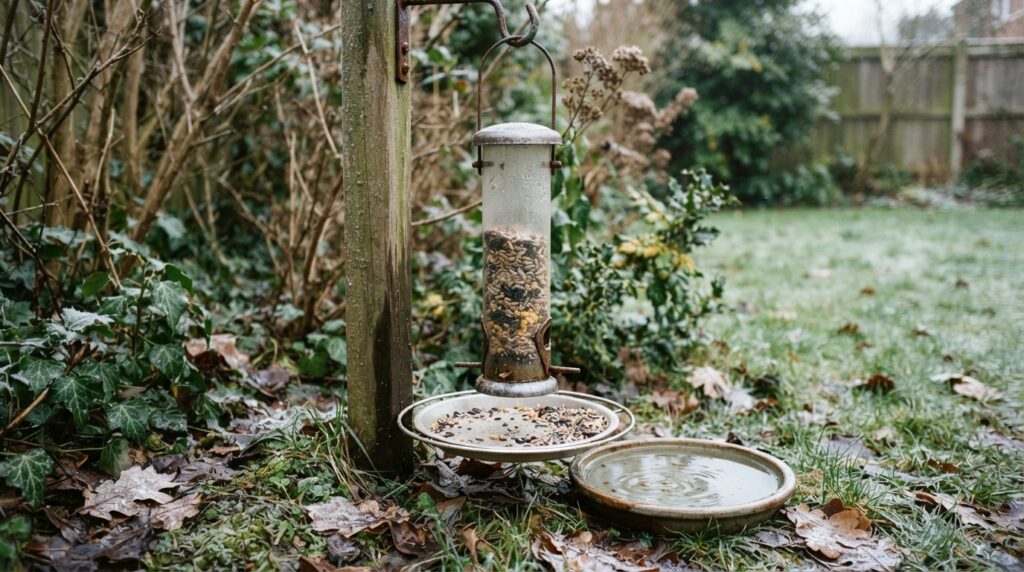
Both things are true. Supplementary feeding genuinely helps birds through winter and has expanded the range of some species. It has also concentrated birds around shared food in ways that spread disease — the greenfinch decline of roughly 67% since 1979 is the clearest example. The evidence-based position isn’t to stop feeding; it’s to feed hygienically and seasonally.
Around 16 million UK households feed garden birds, spending something in the region of £380 million a year on bird food. It’s one of the most widespread forms of direct engagement with wildlife anywhere in the world.
It’s also been the subject of serious scientific scrutiny, and the findings are genuinely mixed. If you’ve felt uneasy about it, that instinct isn’t unfounded — but the conclusion most people jump to is the wrong one.
The balance sheet
- Helps: winter survival, breeding condition, range expansion of some species
- Harms: disease transmission, competitive imbalance between species
- Myth: birds becoming dependent and forgetting how to forage
- The fix: hygiene and seasonality, not abstinence
The case for feeding
Winter survival
The clearest benefit. Small birds operate on very narrow margins — a blue tit can lose a significant proportion of its body weight over a single cold night, and needs to replace it at first light.
Reliable supplementary food in hard weather reduces overnight mortality, particularly for the smallest species. This is the least contested part of the picture, and it’s why feeding is concentrated into the 1 November to 30 April window under current guidance.
Range expansion
Garden feeding has measurably changed where some birds live.
The most striking example is the blackcap. Historically a summer migrant to Britain that wintered around the Mediterranean, a growing population from central Europe now spends the winter in UK gardens instead — and garden feeding is considered a significant factor in that shift.
Goldfinches have also increased substantially in gardens over recent decades, with the spread of nyjer and sunflower heart feeding widely credited.
Engagement
Harder to measure and not trivial. People who feed birds notice them, learn them, and support conservation. The Big Garden Birdwatch — over 650,000 participants counting more than nine million birds — exists because feeding created an interested public.
A great deal of what’s known about British bird population trends comes from data collected by people who started by hanging a feeder.
The case against
Disease — the serious one
This is where the honest concern sits, and it isn’t hypothetical.
Around 2005, trichomonosis emerged in British finches. The parasite was already known in pigeons and doves, but hadn’t previously caused significant disease in finches. It spreads through saliva and regurgitated food — exactly what accumulates at a shared feeder or bird bath.
Greenfinch numbers recorded in gardens fell by around 67% since 1979 — more than two million birds — and the species moved onto the Red List. Chaffinches have been badly affected, and there’s growing concern about bullfinches.
Feeders didn’t cause the parasite. But they created the conditions — many birds, in close contact, around shared food and water, day after day, in the same spot.
That’s not a comfortable thing for a site about bird feeding to say, and it’s the single most important fact on this page.
Competitive imbalance
Feeders don’t benefit all species equally. They favour adaptable, dominant, seed-eating birds that can exploit a concentrated food source.
Great tits displace blue tits; blue tits displace coal tits; starlings and pigeons clear suet in minutes. Meanwhile insectivorous and ground-feeding specialists — wrens, dunnocks, treecreepers, goldcrests — gain comparatively little.
There’s a reasonable argument that decades of garden feeding have subtly reshaped which species thrive in suburban areas, and not always in the direction anyone intended.
Predator concentration
A busy feeder is a reliable place for a sparrowhawk to hunt, and for cats to wait.
Worth keeping in proportion: long-term BTO analysis has not found sparrowhawk predation to be a driver of songbird declines. But feeder placement genuinely affects individual outcomes — a feeder in open ground with no escape cover puts birds at unnecessary risk. Our sparrowhawk guide covers this.
Window strikes
Feeders sited at the wrong distance from glass increase collisions. Either within 1m — too close to build up speed — or beyond 10m. The middle distance is where birds get hurt. See our window strike guide.
Poor quality food
Cheap mixes padded with wheat and split peas get rejected and rot on the ground, attracting rats. Non-bird-grade peanuts can carry aflatoxin, which kills birds. Fat balls left in netting trap beaks and feet.
These aren’t inherent problems with feeding — they’re problems with how it’s done.
The dependency myth
The most common worry, and the one the evidence most clearly contradicts.
Birds do not become dependent on feeders in the sense people fear. Garden feeding is supplementary — it typically makes up a portion of a bird’s intake rather than all of it, and birds continue foraging naturally throughout.
Studies where feeding stopped abruptly found birds adjusted, redistributing to other food sources. They don’t forget how to forage, and they don’t starve because you went on holiday.
There’s a reasonable secondary point — a bird that has built a winter territory around a reliable food source is affected if it disappears during a cold snap. That’s an argument for consistency during hard weather, not for the dependency story as usually told.
What changed in 2026
The RSPB revised its feeding guidance in April 2026 following an evidence review conducted with the BTO and the Institute of Zoology. The changes follow directly from the disease evidence:
- Clean feeders at least weekly, and move them to a fresh spot each time
- Pause seeds and peanuts 1 May – 31 October, when disease risk peaks and natural food is abundant
- Stop using flat-surfaced feeders — bird tables, trays and window feeders. The RSPB removed them from sale in December 2024
- Only offer water if you can change it daily
- Feed in moderation, and spread feeders out
Note what the guidance does not say: it doesn’t say stop.
Where informed people disagree. Several independent UK bird food retailers publicly disputed parts of the 2026 changes. Their central objection is reasonable: the pause covers the entire breeding season, when parent birds are working hardest and natural food availability varies year to year.
The RSPB has acknowledged gaps in the evidence and said it will monitor and may refine the advice. Our seasonal feeding guide sets out both positions in full.
So should you feed birds?
Yes — and the qualification matters more than the answer.
The honest position is that badly done feeding is worse than no feeding, and well done feeding is a net good. The difference isn’t marginal.
Someone running a bird table they clean twice a year, filled with cheap wheat-heavy mix, with a stagnant bird bath alongside, is genuinely doing harm. Someone running one tube feeder of sunflower hearts, cleaned weekly and moved regularly, is not.
What responsible feeding looks like
- Clean feeders at least weekly — hot soapy water, non-toxic disinfectant, rinsed and dried fully
- Move the feeder to a fresh spot after each clean, and clear the ground beneath
- No flat surfaces — no bird tables, no trays, no window feeders
- Feed in moderation — eaten within a day or two
- Spread feeders out rather than clustering them
- Good quality food — sunflower hearts over padded mixes, bird-grade peanuts only, never netting
- Water only if you’ll change it daily
- Stop immediately if you see sick birds, deep-clean, and report to Garden Wildlife Health
- Sensible placement — 2m from cover, and either under 1m or over 10m from glass
The thing that helps more than feeding
Worth saying, because it gets less attention than it deserves.
Habitat does more than feeders do. Native planting, a dense hedge instead of a fence, no insecticides, leaf litter left under shrubs, standing seed heads over winter, a log pile, nest boxes.
Those support insectivores and ground feeders that gain nothing from a seed feeder, they feed chicks — which need invertebrates, not seed — and they carry none of the disease transmission risk.
If you wanted to do one thing for garden birds, planting a hawthorn would beat hanging a feeder. Doing both, properly, beats either.
Our plants guide covers what’s worth growing.
Common questions
Should I stop feeding birds?
No. Feeding done hygienically is beneficial, and the current guidance is about how to feed rather than whether to. Stopping removes a food source without addressing transmission.
Will birds starve if I go away for two weeks?
No. Feeding is supplementary and birds forage naturally throughout. They redistribute to other sources. Consistency matters most during prolonged hard weather.
Did bird feeders cause the greenfinch decline?
Feeders didn’t cause the parasite, but they created the conditions for it to spread — concentrated birds sharing food and water. That’s precisely why the hygiene guidance tightened.
Is it better to plant than to feed?
Habitat does more overall — it supports insectivores, feeds chicks, and carries no disease risk. But the two aren’t in competition. Do both.
Are some species harmed by feeders?
Indirectly. Feeders favour dominant seed eaters, which may disadvantage specialists that gain little from them. Spreading feeders out and planting for insects both help offset this.
How do I know if I’m doing it right?
Weekly cleaning, no flat surfaces, moderate quantities, good food, moved regularly. If you’re doing those five things, you’re doing more than most.
Related guides
- When to feed garden birds: the new UK guidance explained
- Greenfinch: the garden bird that disappeared
- How to clean a bird feeder — and why it now matters more
- 10 bird feeding mistakes almost everyone makes
Sources: RSPB feeding guidance (April 2026) and the accompanying evidence review with the BTO and Institute of Zoology; RSPB flat-surface feeder sales suspension (December 2024); British Trust for Ornithology research on finch trichomonosis, blackcap wintering and avian predators; Garden Wildlife Health; RSPB Big Garden Birdwatch population trends.
Compare hanging bird feeders at Amazon UK. Prices and stock change often, so it is worth checking before you commit.
Browse bird feeders →