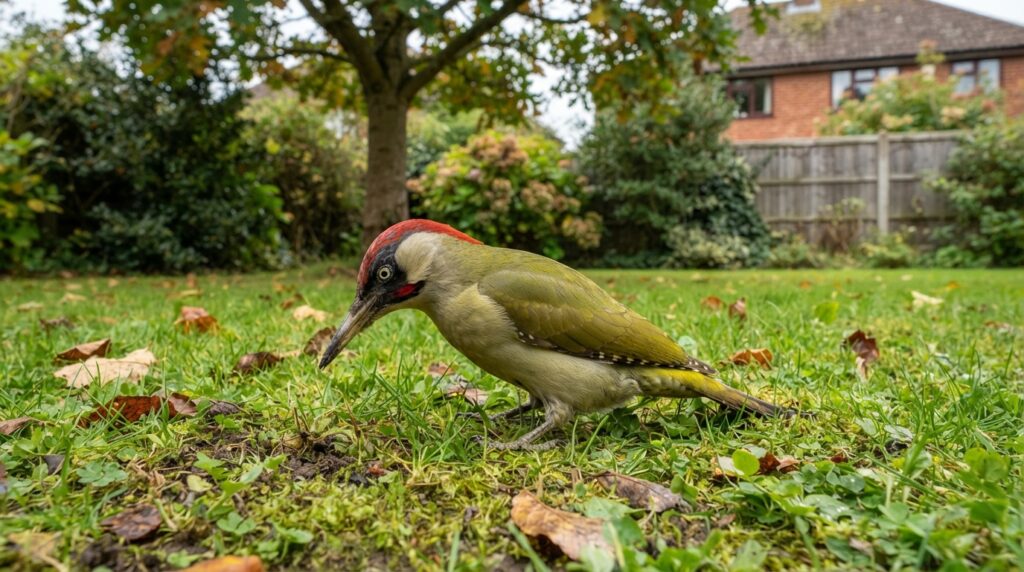
Green Woodpecker on Your Lawn: What It’s Actually Doing
It’s eating ants. Green woodpeckers are the most ground-dwelling woodpecker in Europe and feed mainly on ants and their larvae, which is why you see them on lawns rather than…
It’s eating ants. Green woodpeckers are the most ground-dwelling woodpecker in Europe and feed mainly on ants and their larvae, which is why you see them on lawns rather than…
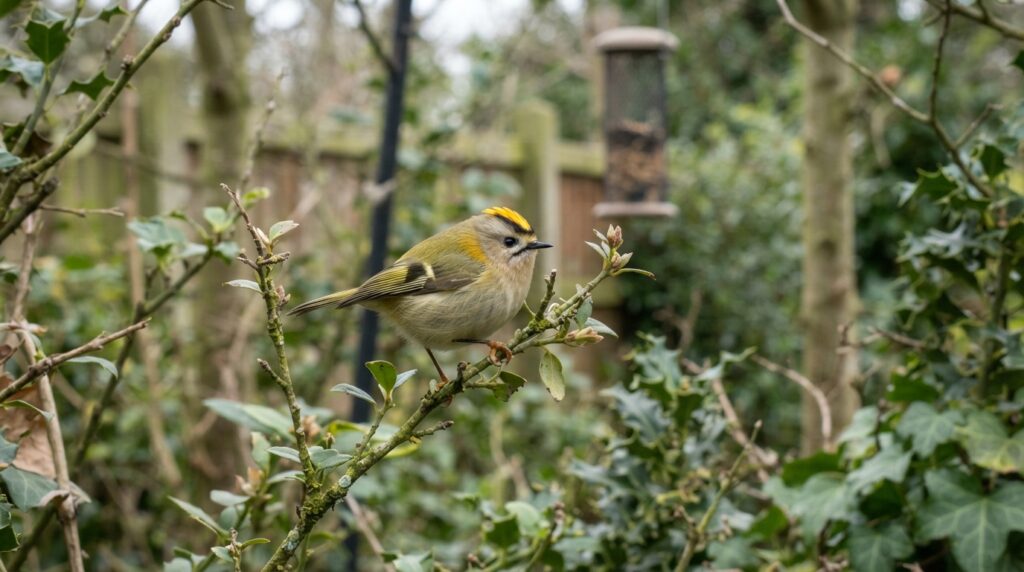
A goldcrest is tiny — around 5 to 6 grams, lighter than a 20p coin — olive-green with a bright yellow or orange crown stripe bordered in black. They’re insect…
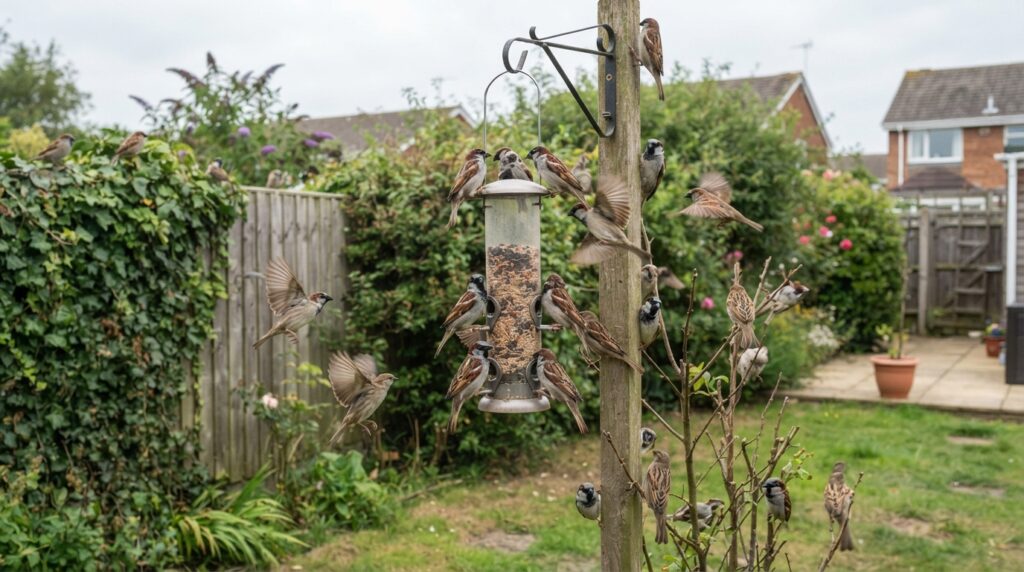
House sparrows want three things: seed (sunflower hearts or a quality mix), dense scruffy cover to sit in, and nest holes in a building. They nest in loose colonies, so…
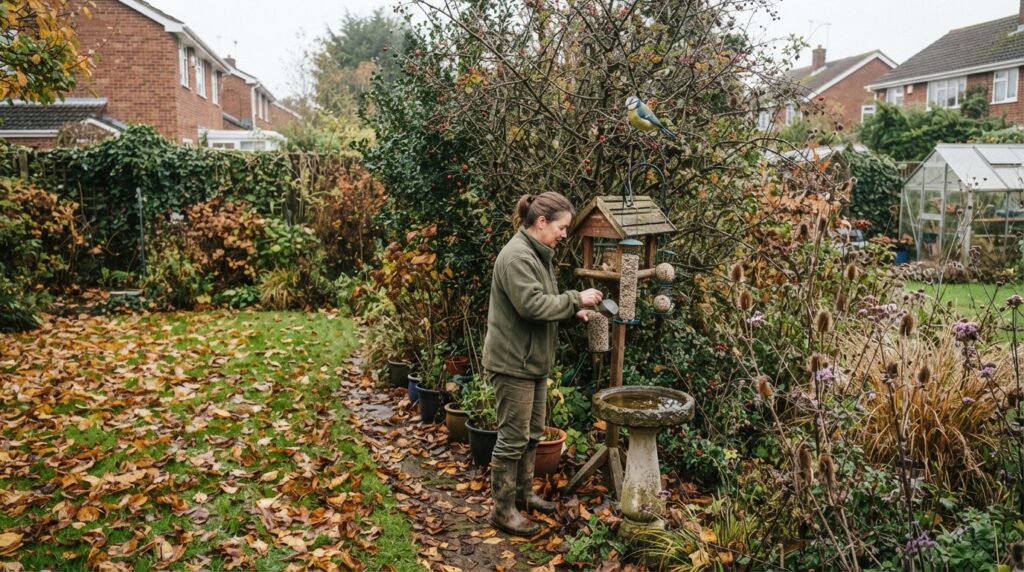
Autumn is preparation, not feeding. Use October to deep-clean every feeder, restock food, get nest boxes up, and resist tidying the borders. Seeds and peanuts go back out on 1…
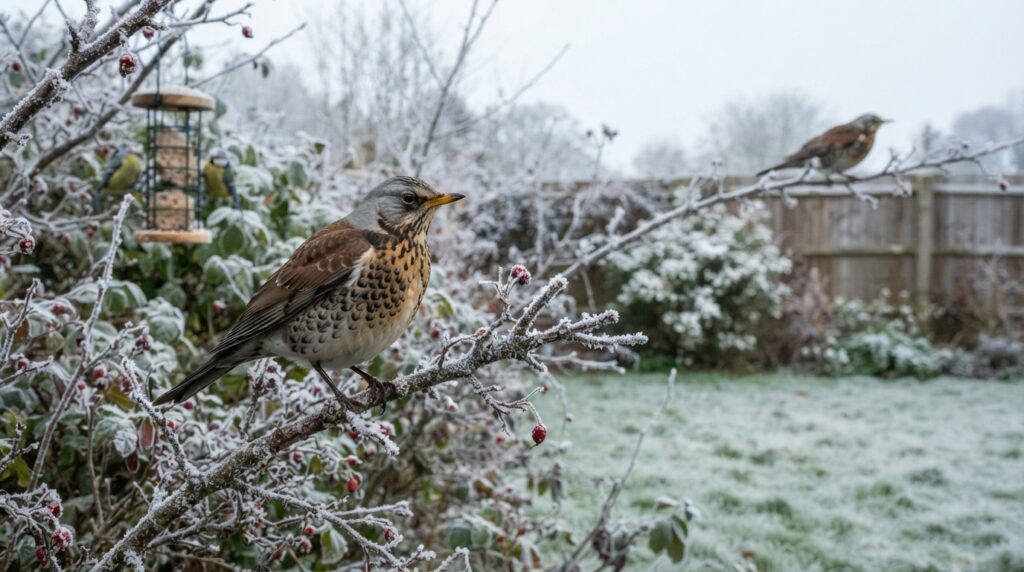
If an unfamiliar bird has turned up in your garden between October and March, the likely candidates are a redwing (thrush with a red flank patch and cream eye-stripe), a…
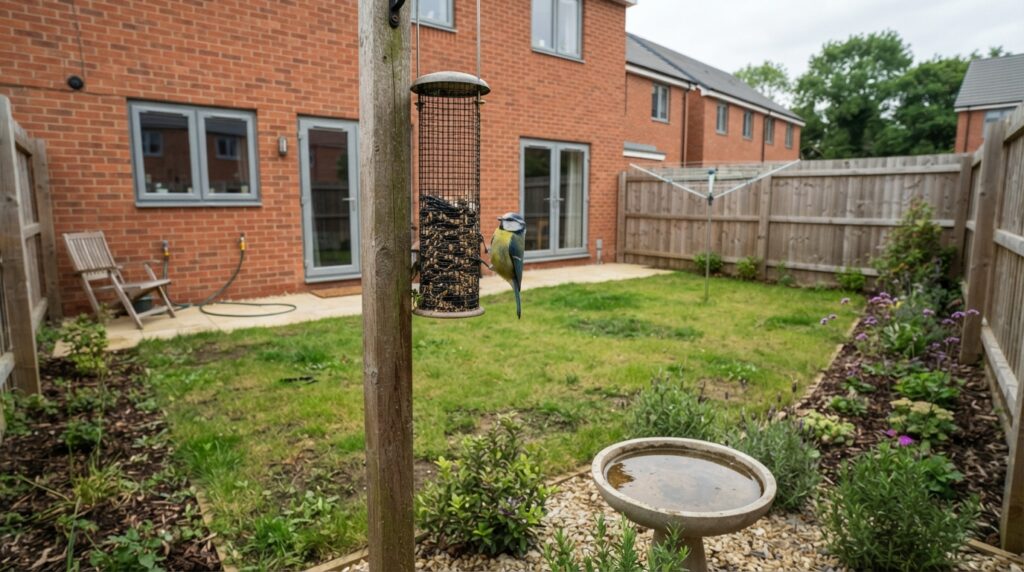
A bare garden’s problem isn’t a lack of food — it’s a lack of cover. Birds won’t use an exposed feeder with nowhere to escape to. Put in something to…
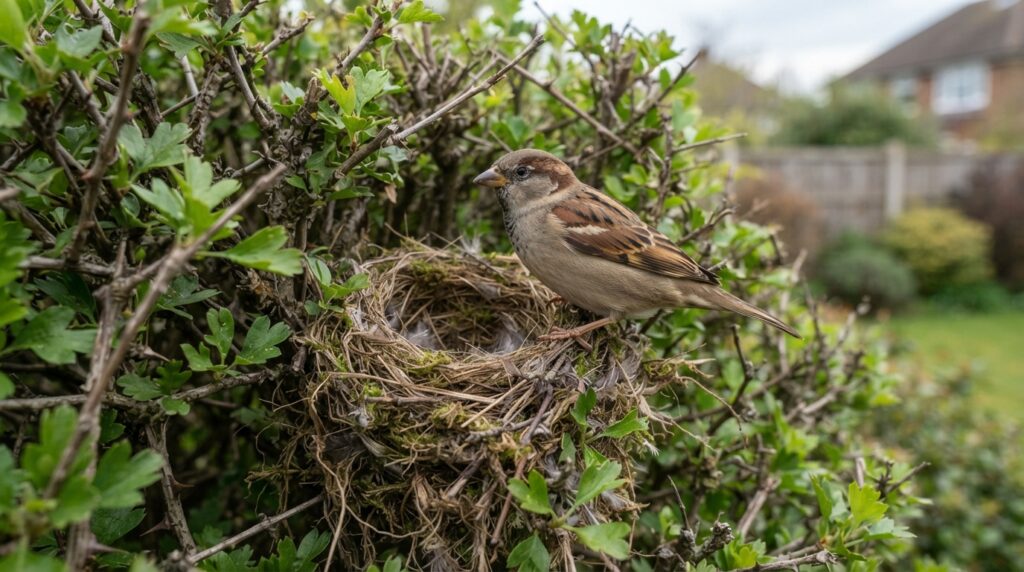
The main UK bird nesting season runs from March to August, though some species start earlier and a few continue into September. That range matters practically as well as biologically:…
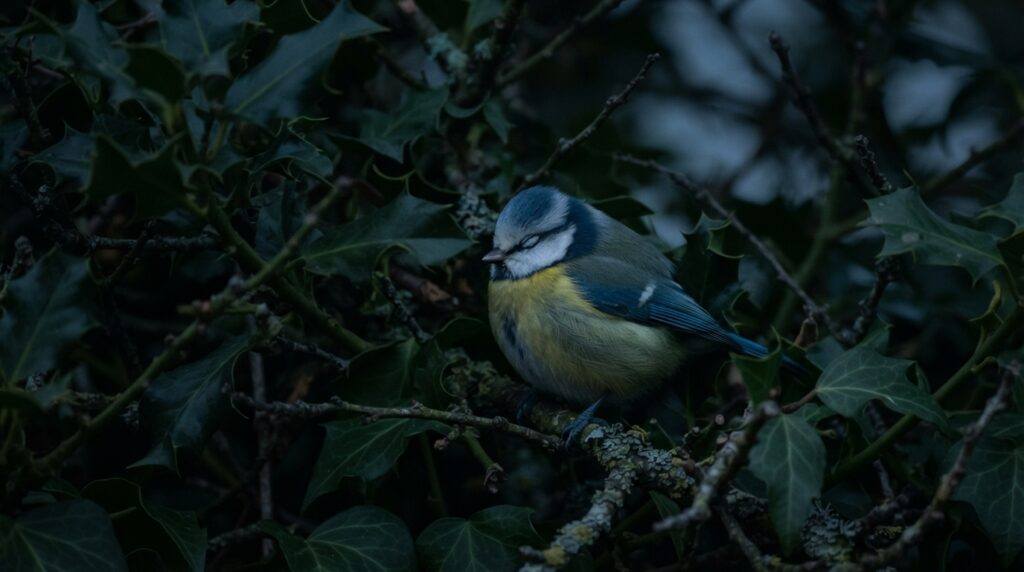
Not in nests — that’s the first surprise. Nests are nurseries, not bedrooms. They’re built for eggs and chicks, used for a few weeks, and abandoned once the young fledge.…
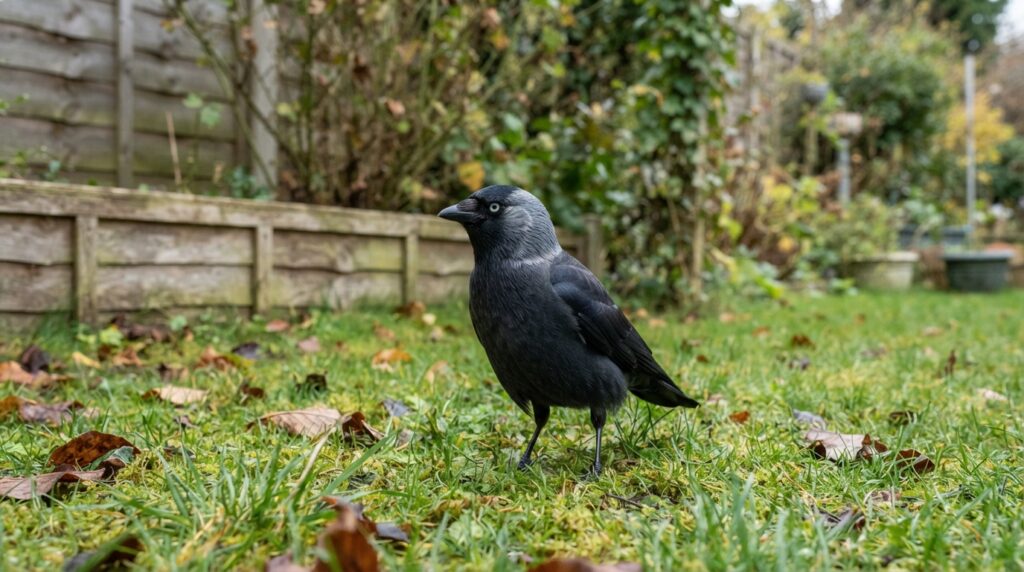
Six black or mostly-black birds turn up in British gardens, and they separate out quickly once you know what to look at: size, bill shape, and whether the bird is…
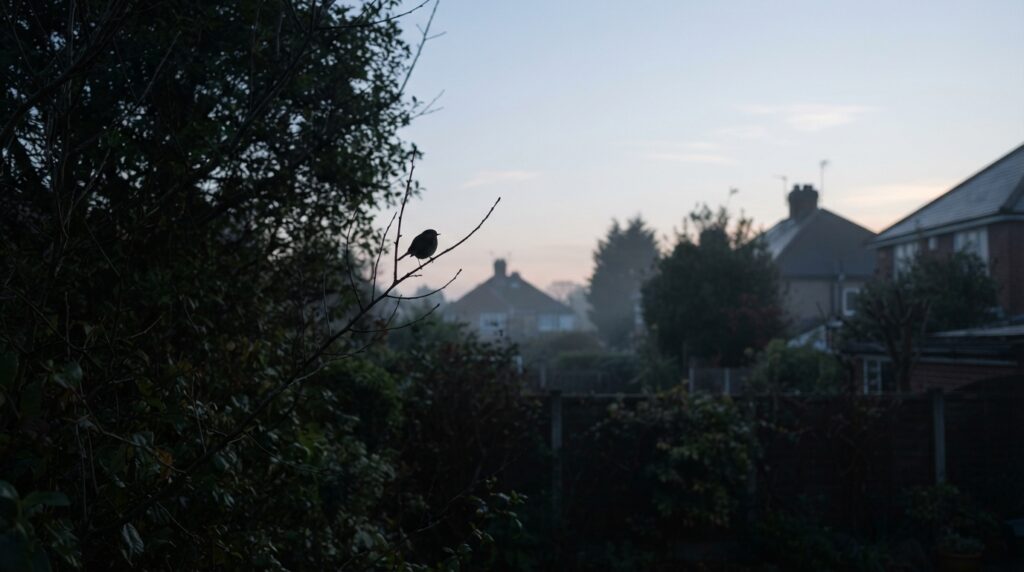
If you’re lying awake listening to a bird singing in the small hours, it’s almost certainly a robin. Nightingales get the credit and are hardly ever responsible — they’re scarce…