Affiliate disclosure: some links on this page go to Amazon. If you buy through one we may earn a small commission, at no extra cost to you. Full disclosure.
Not in nests — that’s the first surprise. Nests are nurseries, not bedrooms. They’re built for eggs and chicks, used for a few weeks, and abandoned once the young fledge.
For the rest of the year, garden birds roost in dense vegetation, tree cavities, building crevices, ivy, thick hedges and, if you provide one, nest boxes.
Where they actually go
- Dense hedges and shrubs — the most common roost for small garden birds
- Ivy — evergreen, thick, and one of the best winter roosts available
- Tree cavities and building crevices — tits, sparrows, starlings
- Nest boxes — used year-round as roosts, not just in the breeding season
- Conifers and evergreens — shelter from wind and rain
How a small bird survives a freezing night
A blue tit weighs around 11 grams. On a long December night it may burn a substantial proportion of its body weight simply staying alive. Several mechanisms make that possible.
Fluffing up
The round, puffed-up look birds have in cold weather isn’t discomfort — it’s insulation. Raising the feathers traps a thicker layer of air against the body. A bird can look almost spherical on a frosty morning.
Tucking in
Birds tuck their bill into their shoulder feathers to reduce heat loss through the face, and often stand on one leg with the other drawn up into the body. Both reduce exposed surface area considerably.
Shivering
Birds shiver through the night to generate heat — an effective but expensive strategy, which is why they need to feed heavily at first light.
Dropping body temperature
Some species can lower their body temperature overnight to conserve energy, entering a shallow torpor. Long-tailed tits, wrens and goldcrests are among those known to use variations of this.
Huddling together
The most striking adaptation. Wrens roost communally in cold weather, packing into a single cavity, nest box or crevice to share body heat. Records exist of extraordinary numbers — dozens of wrens in one box on the coldest nights, occasionally more.
Long-tailed tits also roost in a row along a branch, pressed together, usually with the flock’s dominant birds in the warmer middle positions.
Where different birds roost
| Bird | Typical roost |
|---|---|
| Blue tit, great tit | Tree cavities, nest boxes, thick ivy |
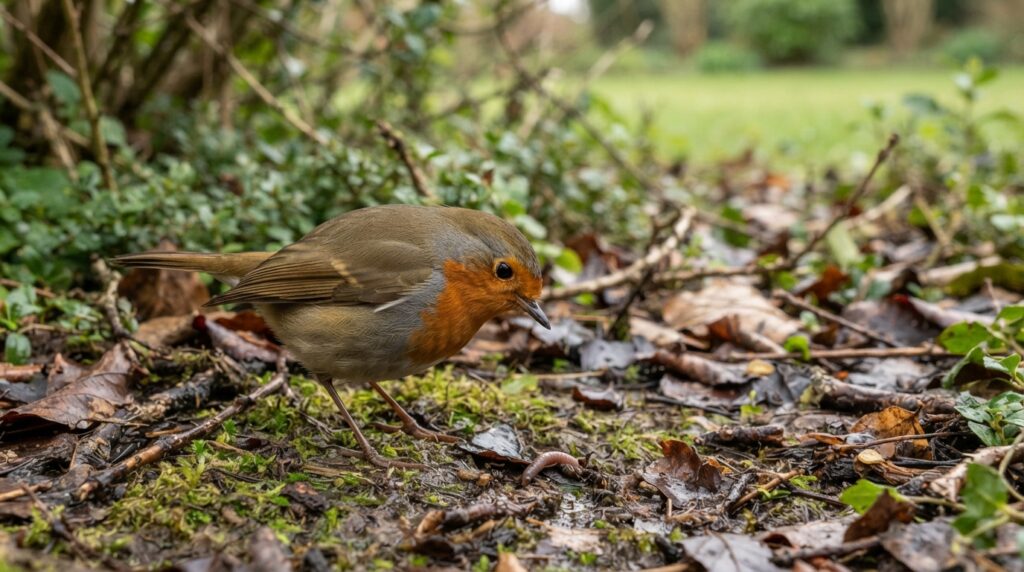
| Robin | Dense low shrubs, ivy, hedge interiors — solitary, defending a winter territory |
| Wren | Cavities, nest boxes, crevices — communally in cold weather |
| Blackbird | Dense shrubs and hedges, evergreens |
| House sparrow | Building cavities, roof spaces, dense hedges — in groups |
| Starling | Communal roosts, sometimes enormous — reedbeds, woodland, piers, city structures |
| Long-tailed tit | Huddled in a row along a branch, in flock groups |
| Woodpigeon | Tree branches, often quite exposed |
Starling murmurations end in a roost
Those vast wheeling flocks on winter evenings are birds gathering before settling for the night. Roosts can number tens or hundreds of thousands of birds in reedbeds, woodland or under piers. The swirling display is thought to serve several purposes, including confusing predators and helping birds locate the roost site.
How to help
Leave nest boxes up over winter
The most useful thing, and widely misunderstood. Nest boxes aren’t only for spring — they’re used as winter roost sites, sometimes by several birds at once.
Clean them out between September and January, then leave them in place. A small handful of clean wood shavings inside adds insulation. This is also why putting boxes up in autumn works better than spring: birds that roost in a box over winter are more likely to nest in it come April.
Consider a dedicated roost box
Roost boxes differ from nest boxes — larger inside, with the entrance hole near the bottom rather than the top, so rising warm air is retained. Some include internal perches so several birds can use it.
Worth having if you get wrens or want to support birds specifically through hard winters.
Plant evergreen cover
The single most valuable long-term change. Ivy is outstanding — dense, evergreen, and doubles as a late berry source. Holly, conifers, thick hedging and climbers on walls all provide sheltered roosting.
See our plants guide.
Don’t over-tidy
- Don’t cut hedges in autumn if you can avoid it — you’re removing winter roosts. Hedges also can’t be cut March to August, when nests are active
- Leave ivy on walls and fences
- Leave a rough corner — long grass, log piles and brash all shelter something
- Don’t strip climbers back in winter
Feed late in the day
Birds need to go to roost with as much energy stored as possible. A top-up of high-fat food in mid-afternoon, particularly in freezing weather, helps them through the night — arguably more than a morning feed.
January falls inside the 1 November to 30 April window when the full range of foods including seeds and peanuts is recommended.
Do birds actually sleep?
Yes, though not quite as we do.
Many birds can engage in unihemispheric slow-wave sleep — resting one half of the brain while the other remains alert, with the corresponding eye open. Birds on the outer edge of a roosting group tend to do this more than those in the middle, keeping watch for the group.
Sleep also comes in short bouts rather than one long block, and the tendon arrangement in a bird’s leg means gripping a perch requires no active effort — the weight of the bird settling actually tightens the grip. A sleeping bird won’t fall off a branch.
Common questions
Do birds sleep in their nests?
Not usually. Nests are for raising young and are abandoned after fledging. Birds roost in dense cover, cavities or boxes instead.
Should I take nest boxes down in winter?
No — leave them up. They’re valuable roost sites, and birds that winter in a box often nest in it the following spring. Clean them out between September and January.
Where do birds go in heavy rain?
Dense cover — evergreens, thick hedges, ivy, building crevices. They sit tight and wait it out, which is why gardens go quiet in bad weather.
Do birds get cold feet?
Birds’ legs and feet have a counter-current heat exchange system that limits heat loss, and there’s minimal soft tissue to freeze. It’s one reason ducks can stand on ice.
Why do birds sing before dawn?
They’re announcing territory at the start of the day, and singing before feeding once light levels allow. Robins in particular sing at night near artificial lighting — see our guide to night singing.
How many birds might use one box?
Usually one or two. But wrens roost communally in cold weather and remarkable numbers have been recorded sharing a single box on the coldest nights.
Related guides
- When to put up a nest box (and exactly where to site it)
- Best plants to attract birds to a UK garden
- Best bird food for winter: what to put out and what to skip
- What bird is singing at night in the UK?
Sources: RSPB guidance on roosting and nest box use; British Trust for Ornithology research on winter roosting and communal roosting in wrens; RSPB advice on helping birds in cold weather.
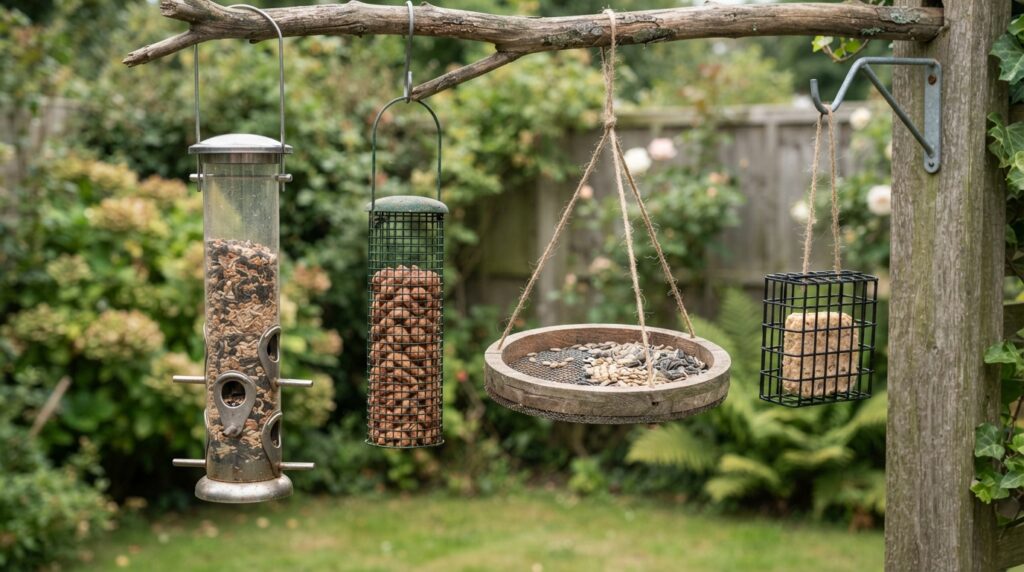
Compare current prices on bird food and feeders at Amazon UK. Prices and stock change often, so it is worth checking before you commit.
Browse bird food →