The twelve birds you’re most likely to see in a UK garden are the house sparrow, blue tit, starling, woodpigeon, blackbird, great tit, robin, goldfinch, magpie, long-tailed tit, chaffinch and dunnock. Work through them by size first, then bill shape, then behaviour — colour is the least reliable clue.
You’ve spotted something on the fence and you’d like to know what it is. This guide covers the birds you’re most likely to see in a UK garden, how to tell the tricky ones apart, and a method for working it out when you’re not sure.
The species below are ordered roughly by how commonly they’re recorded in the RSPB’s Big Garden Birdwatch — the largest garden wildlife survey in the world, with over 650,000 people counting more than nine million birds in the most recent count. So this isn’t an arbitrary list; it reflects what actually turns up in British gardens.
The four-step method
- Size — compare it to a sparrow, a blackbird, or a pigeon
- Shape and bill — chunky seed-cracking bill, or fine insect-eating bill?
- Colour and markings — but never rely on colour alone
- Behaviour — on the feeder, on the ground, alone or in a flock?
How to identify a garden bird
Start with size
Most people jump straight to colour, but size narrows things down faster and is harder to get wrong. Use three reference points you already know:
- Sparrow-sized (about 14cm) — tits, finches, dunnocks, wrens (smaller still)
- Blackbird-sized (about 25cm) — thrushes, starlings (slightly smaller)
- Pigeon-sized (40cm+) — woodpigeons, magpies, crows
Then look at the bill
The bill tells you what a bird eats, which tells you a great deal about what it is.
- Short, thick, conical — a seed eater. Sparrows, finches
- Fine and pointed — an insect eater. Dunnocks, robins, wrens
- Long and strong — a generalist. Blackbirds, starlings
Then behaviour
Behaviour is often the clincher, especially for the brown birds that all look alike at a glance.
- Does it cling to a hanging feeder, or feed on the ground?
- Is it alone, in a pair, or in a flock?
- Does it hop, or walk?
- Does it flick its tail, cock it upright, or hold it still?
The birds you’re most likely to see
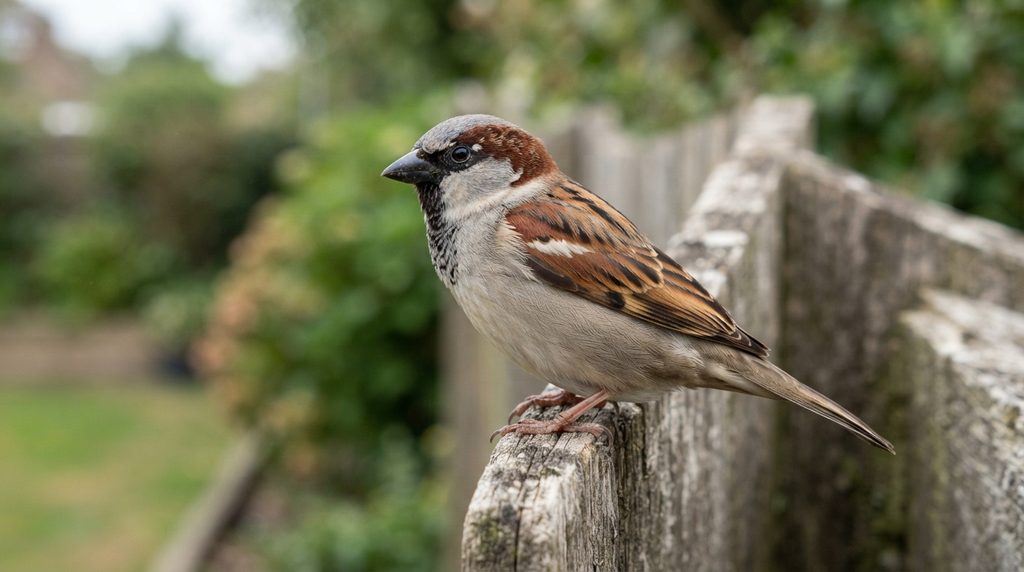
1. House Sparrow
Still the most commonly recorded bird in UK gardens, despite a severe decline since the 1970s.
Look for: Males have a grey cap, a black bib, and chestnut-and-white wings over a streaked brown back. Females are plainer — buff-brown all over with a pale stripe behind the eye and no bib.
Behaviour: Rarely alone. Sparrows arrive as a chattering group, feed noisily, and leave together. They’ll take seed from feeders and the ground alike.
Feeds on: Seeds, mainly. Sunflower hearts and mixed seed.
2. Blue Tit
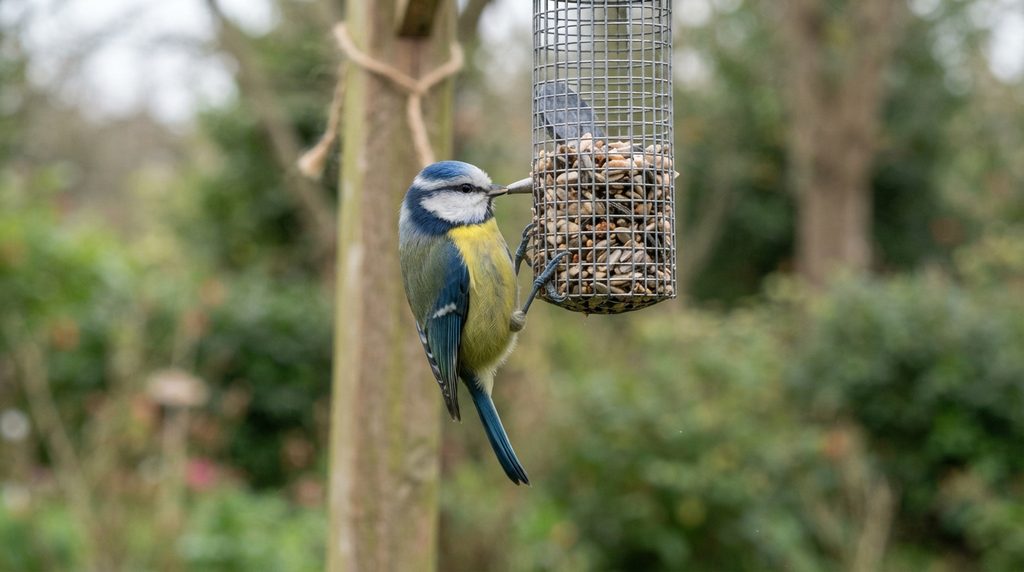
Second most recorded, and probably the bird most people picture when they think of a garden feeder.
Look for: A blue cap, white cheeks with a dark eye-stripe, greenish back and a yellow breast. Small — noticeably smaller than a sparrow.
Behaviour: Acrobatic. Hangs upside down on feeders without apparent effort, darts in, takes a seed, and leaves to eat it elsewhere.
Feeds on: Sunflower hearts, peanuts, suet. Insects and caterpillars in the breeding season.
More detail in our full guide to blue tits.
3. Starling
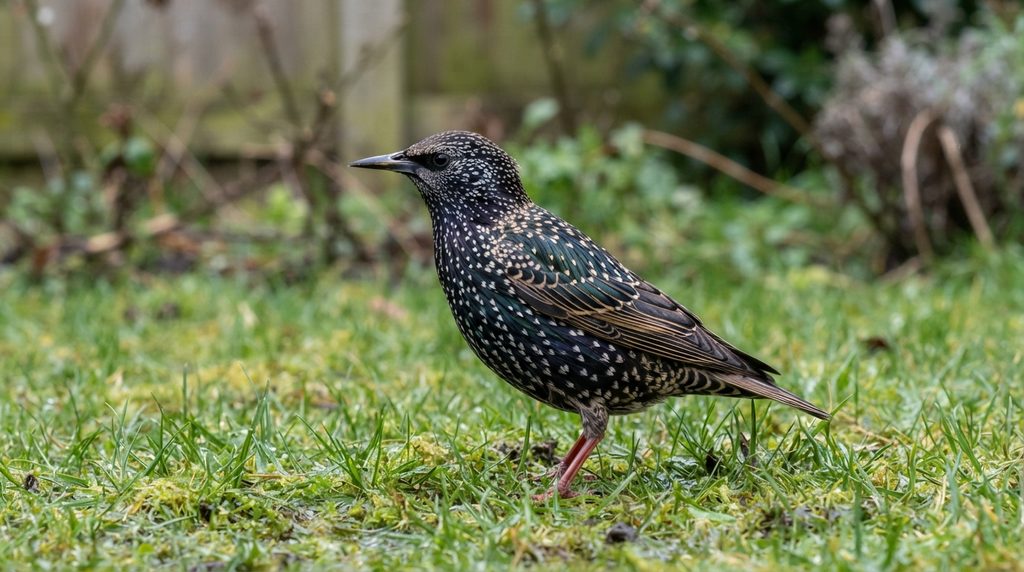
Look for: Black from a distance; up close, a remarkable iridescent green and purple sheen, heavily spotted with white in winter. Shorter-tailed and more upright than a blackbird, with a pointed yellow bill in summer.
Behaviour: Arrives in noisy flocks and dominates a feeder. Walks rather than hops — a genuinely useful distinguishing feature. An exceptional mimic; a starling copying a car alarm or a phone ringtone is not unusual.
Feeds on: Almost anything. Suet especially.
Despite being common, starlings are Red Listed in the UK following steep population declines.
4. Woodpigeon
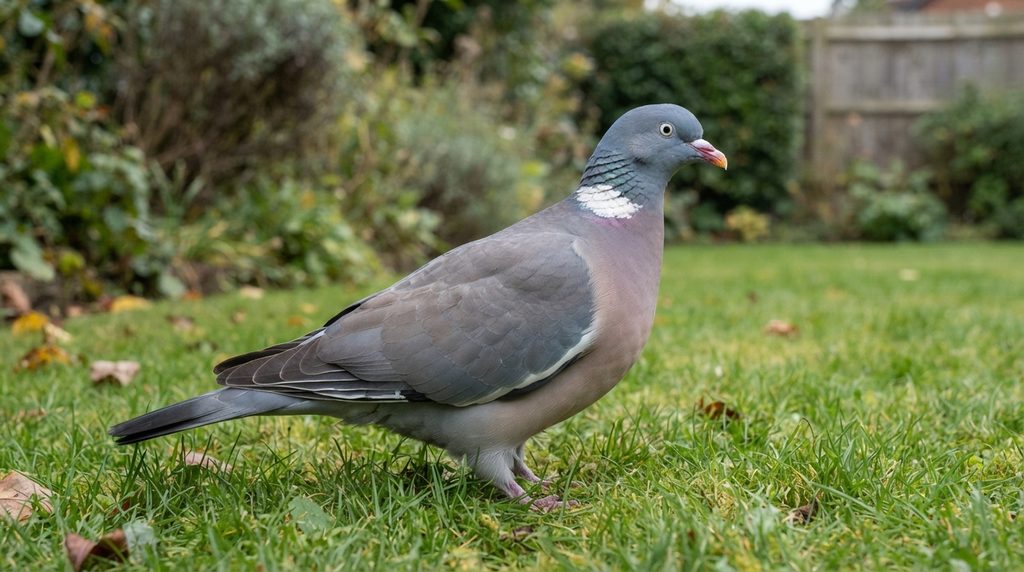
Look for: Large and plump, grey with a pinkish breast, and a distinctive white patch on the side of the neck. White wing flashes in flight.
Behaviour: Waddles across lawns. Takes off with a loud clatter of wings. Will attempt to feed from anything it can balance on, usually unsuccessfully and always comically.
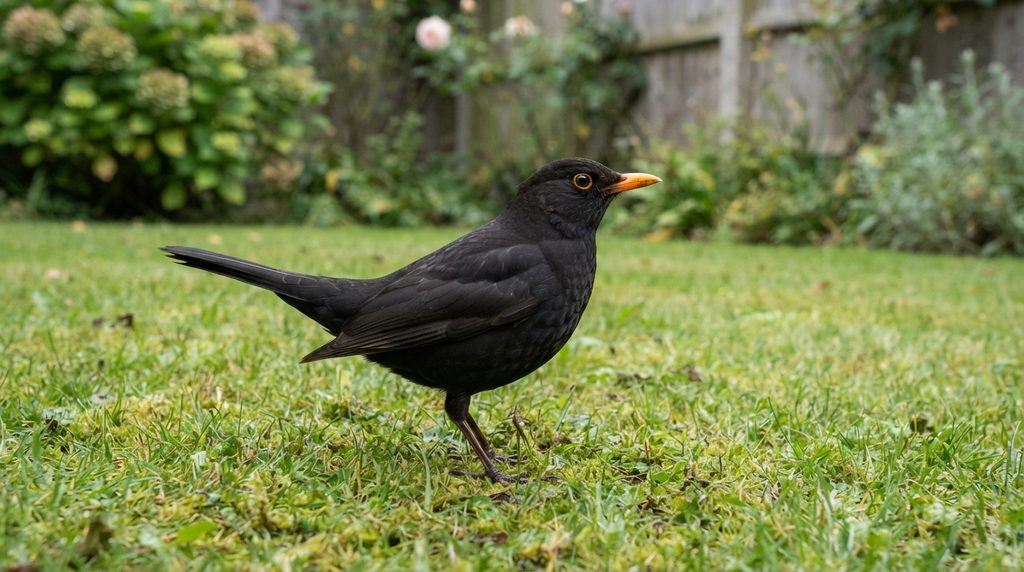
5. Blackbird
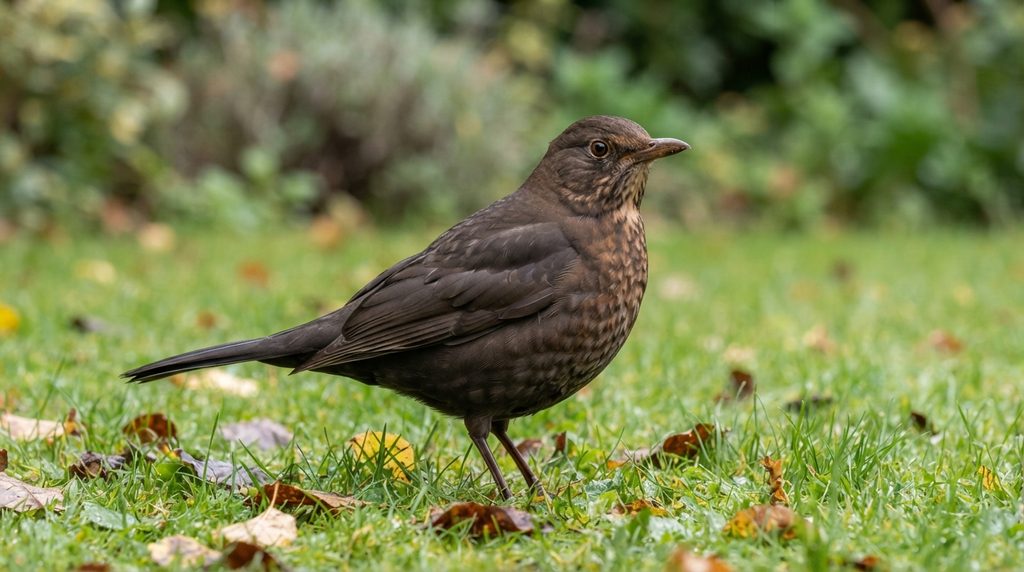
Look for: Males are glossy black with a bright orange-yellow bill and eye-ring. Females are dark brown with a paler, faintly speckled throat and a duller bill. Juveniles are warm brown and spotted.
Behaviour: A ground feeder. Runs a few paces, stops, cocks its head to listen for worms, runs again. Rarely uses hanging feeders.
Feeds on: Worms, insects, windfall fruit, berries. Suet and mealworms from the ground.
One of the finest songbirds in Britain — the rich, fluty song from a rooftop in spring is usually a male blackbird. More in our blackbird guide.
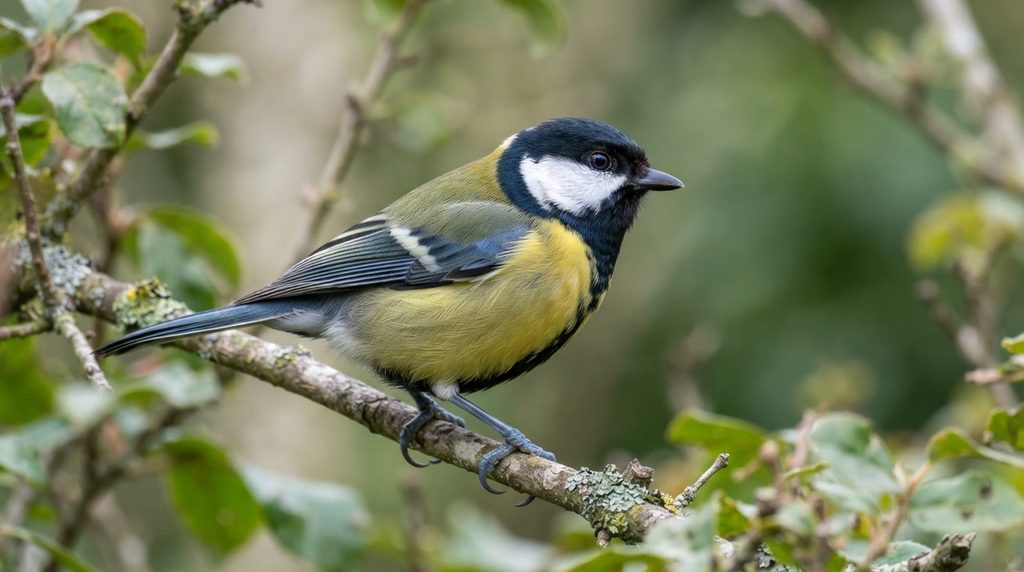
6. Great Tit
Look for: Like a blue tit but bigger, with a black cap and throat, bold white cheeks, and — the key feature — a thick black stripe running straight down the centre of a yellow breast. The stripe is broader on males.
Behaviour: More assertive than blue tits and will displace them at a feeder. The largest of the UK tits.
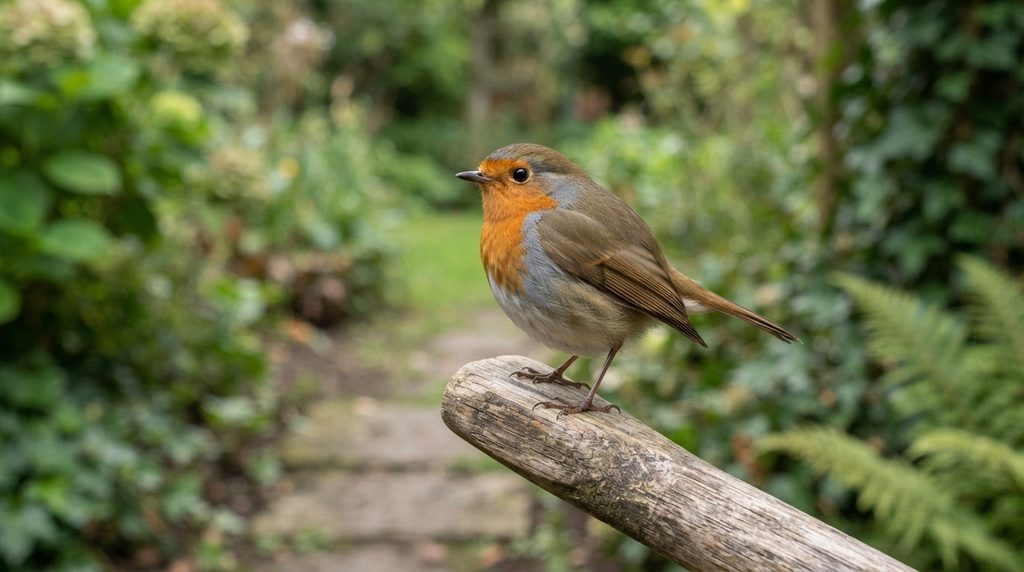
7. Robin
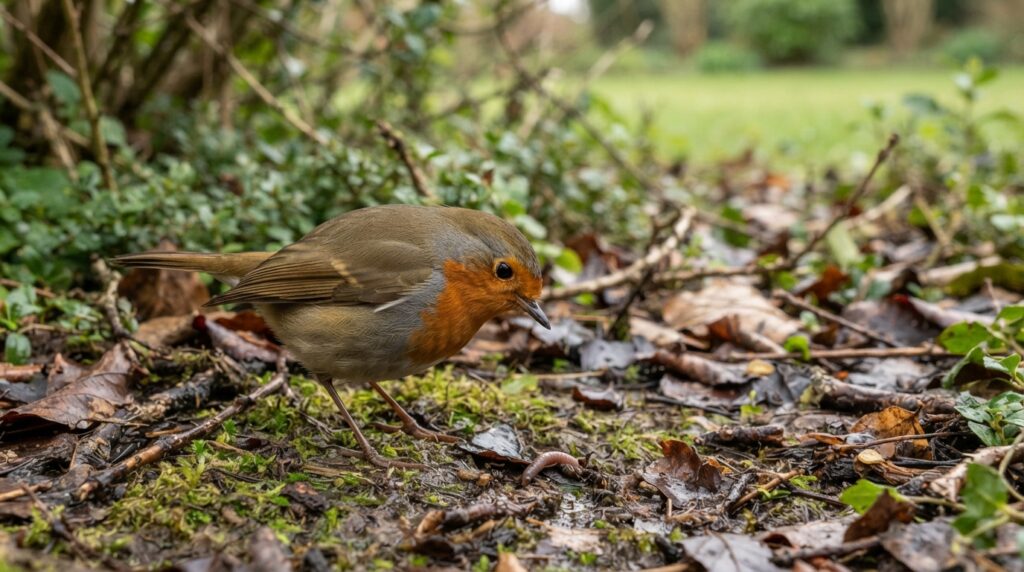
Look for: The orange-red breast and face, brown upperparts, pale belly. Males and females look identical — a very common misconception is that only males have the red breast. Juveniles are brown and spotted with no red at all.
Behaviour: Fiercely territorial year-round, unusually for a British bird. Often follows gardeners around to take invertebrates from freshly turned soil. Sings through the winter.
Feeds on: Insects, worms, mealworms, suet. Prefers feeding at or near ground level.
More detail in our full guide to robins.
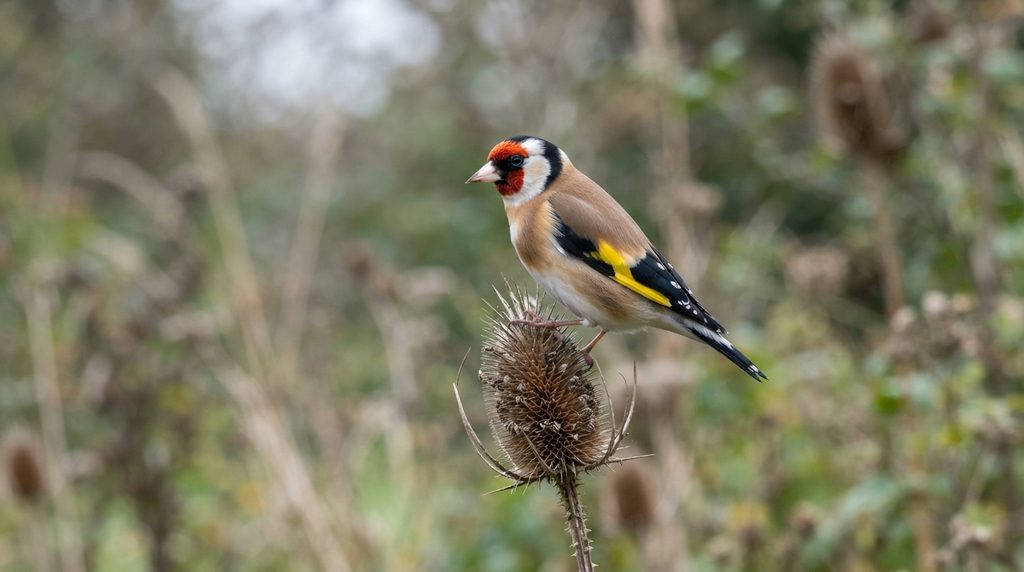
8. Goldfinch
Look for: Unmistakable once seen — a bright red face, black-and-white head, and a broad gold bar across black wings.
Behaviour: Usually in small groups, with a distinctive tinkling, liquid call. Has become considerably more common in gardens over recent decades.
Feeds on: Nyjer seed and sunflower hearts especially. Teasel and thistle seed heads in the wild.
More in our guide to attracting goldfinches.
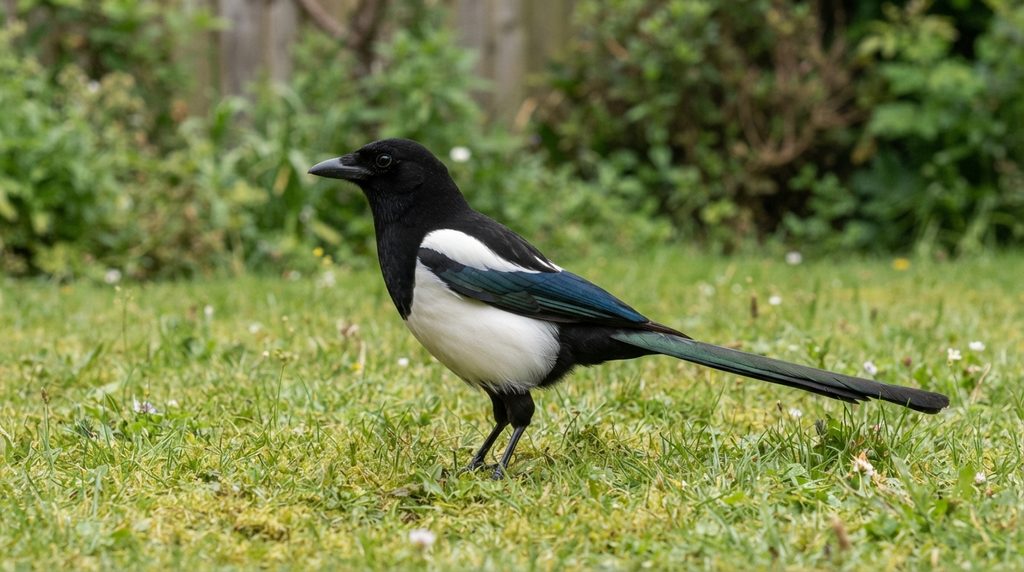
9. Magpie
Look for: Large, black and white, with a long tail that shows a green-blue iridescence in good light.
Behaviour: Bold, intelligent, and often unpopular with garden bird watchers because magpies do take eggs and chicks in spring. Worth knowing: research has not found magpie predation to be a driver of songbird population declines nationally.
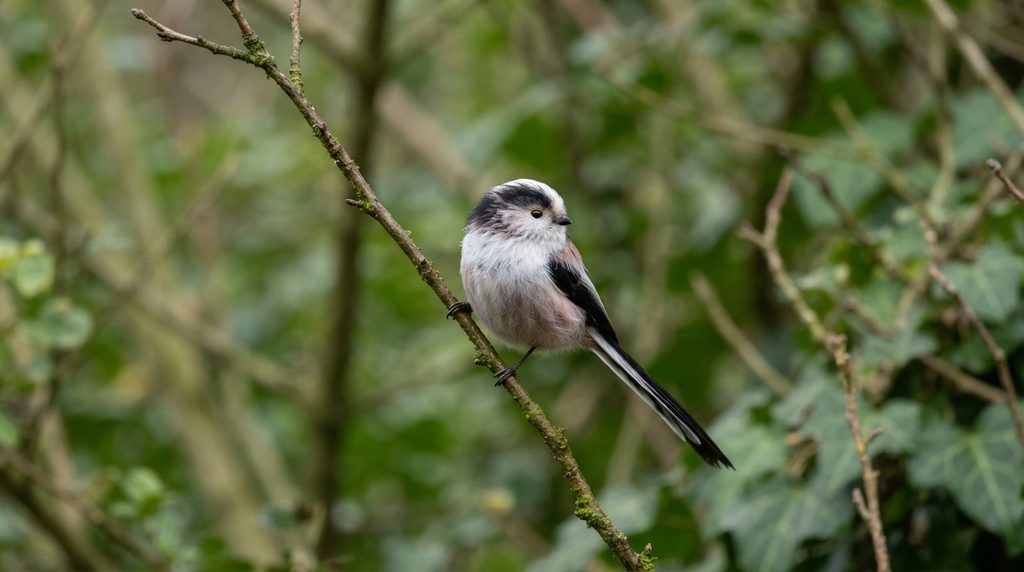
10. Long-tailed Tit
Look for: Tiny — under 10 grams, less than a pound coin — with a fluffy black, white and pink body and a tail longer than the bird itself. Often described as a flying lollipop.
Behaviour: Almost always in a flock of a dozen or more, moving through in a rush and then gone. Keeps contact with high-pitched “tsee-tsee-tsee” calls.
Feeds on: Insects mainly, but suet and fat balls will draw them in.
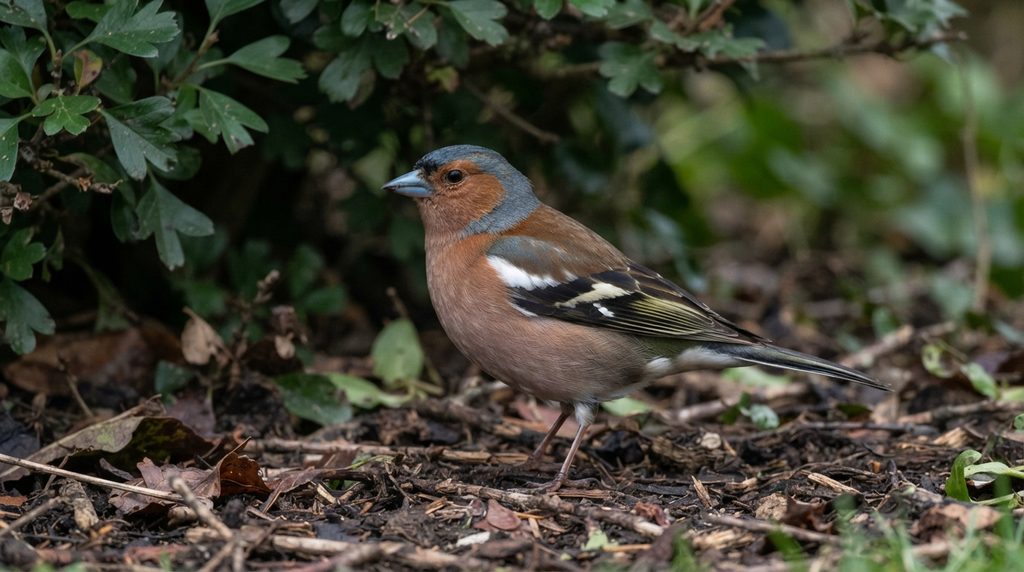
11. Chaffinch
Look for: Males have a blue-grey crown and a rusty-pink breast. Females are much plainer buff-brown — but both sexes show two distinctive white wing bars, which is the reliable identifier.
Behaviour: Often feeds on the ground beneath feeders rather than on them. Loud, cheerful, descending song.
Chaffinches have been significantly affected by trichomonosis in recent years — see our seasonal feeding guide for why that matters.
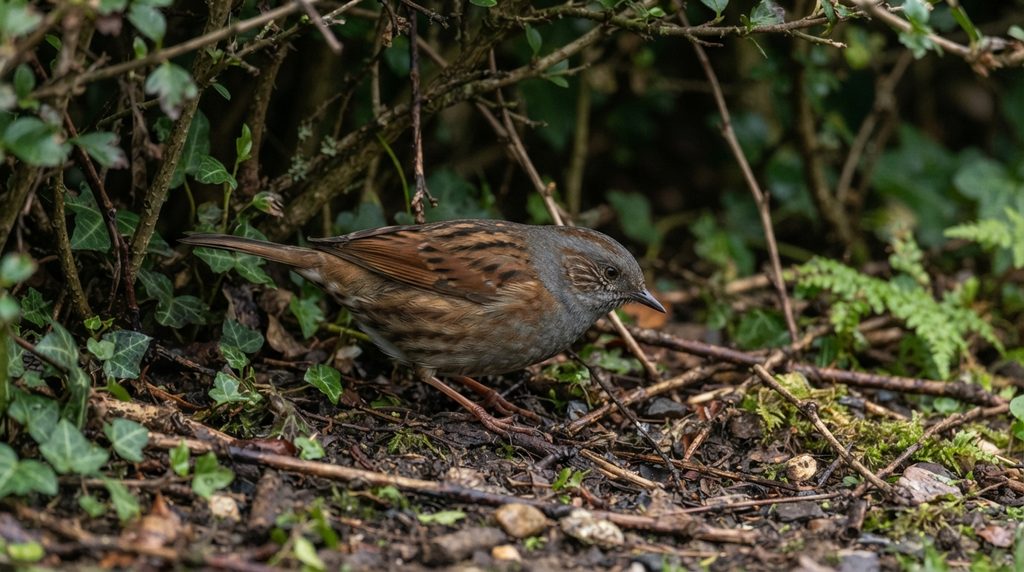
12. Dunnock
Look for: Sparrow-sized and streaky brown on the back, but with a distinctly slate-grey head and breast, and a fine, thin bill.
Behaviour: The giveaway. A dunnock shuffles nervously along the ground under bushes and hedges, alone, keeping to cover. Where sparrows are loud and gregarious, dunnocks are quiet and solitary.
The pairs people mix up
These are where most identification goes wrong.
| Confused pair | How to tell them apart |
|---|---|
| House Sparrow vs Dunnock | Sparrow has a thick conical bill and is in a noisy group. Dunnock has a fine bill, a grey head, and shuffles alone under a bush. |
| Blue Tit vs Great Tit | Great tit is bigger, has a black cap rather than blue, and a bold black stripe down the yellow breast. |
| Blackbird vs Starling | Blackbird has an orange bill, longer tail, hops. Starling is iridescent, shorter-tailed, spotted in winter, walks, and arrives in flocks. |
| Female Blackbird vs Song Thrush | Song thrush has a pale cream breast with bold, arrowhead-shaped spots. Female blackbird is uniformly darker brown with only faint mottling. |
| Coal Tit vs Marsh Tit | Coal tit has a white patch on the nape (back of the neck). Marsh tit does not. |
| Juvenile Robin vs Dunnock | Young robins are warm brown with heavy mottling and hold the upright robin posture. Dunnocks are greyer-headed and creep along the ground. |
Seasonal visitors
Some birds only appear at certain times of year, which is worth knowing before you spend an hour trying to identify a bird that isn’t in the usual list.
- Redwing and Fieldfare — winter thrushes, arriving from Scandinavia around October. Often turn up in gardens in hard weather, especially where there’s windfall fruit.
- Brambling — a winter finch, similar to a chaffinch but with an orange breast and a white rump.
- Blackcap — increasingly overwinters in UK gardens. Grey with a neat black cap (male) or reddish-brown cap (female).
- Siskin — small yellow-green finch, most likely at nyjer feeders in late winter.
Why colour alone isn’t enough
Colour is the first thing we notice and the least reliable thing to identify by. Females and juveniles are frequently a completely different colour from the adult male. Light changes everything — a starling looks plain black on an overcast day and spectacular in sunshine. And several unrelated species share the same basic brown.
If you’ve got a brown bird and no idea, our guide to small brown birds works through them properly. For the black ones, try our crow, rook and jackdaw guide.
Getting a better look
Most identification problems are really viewing problems. A few things help more than any amount of squinting:
- Position yourself before the birds arrive — birds settle if you’re already still, but not if you approach
- Watch from indoors — a window is the best hide you own
- Note behaviour, not just appearance — you’ll often identify a bird by how it moves before you’ve seen its markings clearly
- Binoculars help for anything beyond about ten metres, though for feeder-watching they’re rarely necessary. Our binoculars guide covers what the numbers mean
Common questions
Why have all the birds disappeared from my garden?
Usually seasonal — gardens go noticeably quiet in July and August while birds moult. If it’s the feeder that’s been abandoned, our guide on why birds stop coming to feeders works through the causes.
What’s the most common garden bird in the UK?
The house sparrow, by the RSPB Big Garden Birdwatch count. Note that this measures what people see in gardens, not the total UK population — the wren is generally reckoned the UK’s most numerous breeding bird, but it’s secretive and easily missed.
How do I attract more species?
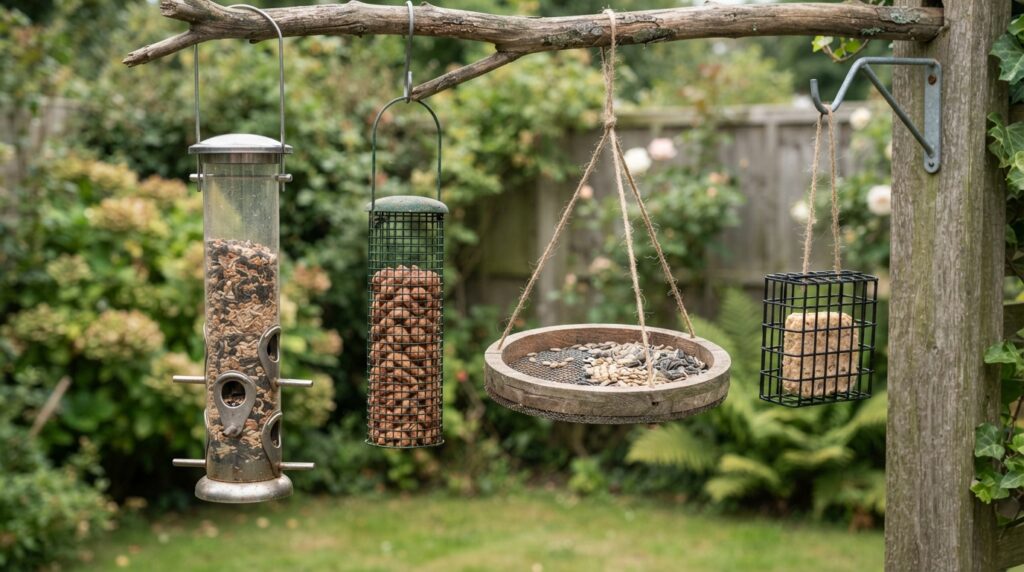
Variety. Different foods and feeder types attract different birds, and cover and water matter as much as food. Our bird food guide covers which foods suit which species.
Can I identify a bird from a photo I took?
Often, yes — the RSPB and BTO both publish detailed identification resources, and the Merlin Bird ID app handles UK species well. We’re not able to identify individual photos sent to us.
Related guides
- Small brown birds in your garden: how to tell them apart
- Black birds in your garden: crow, rook, jackdaw or something else?
- What do robins eat? Feeding Britain’s favourite garden bird
- When to feed garden birds: the new UK guidance explained
Sources: RSPB Big Garden Birdwatch 2026 results; RSPB bird identifier; British Trust for Ornithology; Woodland Trust; The Wildlife Trusts. Species rankings reflect the most recent published Birdwatch results and are reviewed annually.
Compare current prices on bird food and feeders at Amazon UK. Prices and stock change often, so it is worth checking before you commit.
Browse bird food →