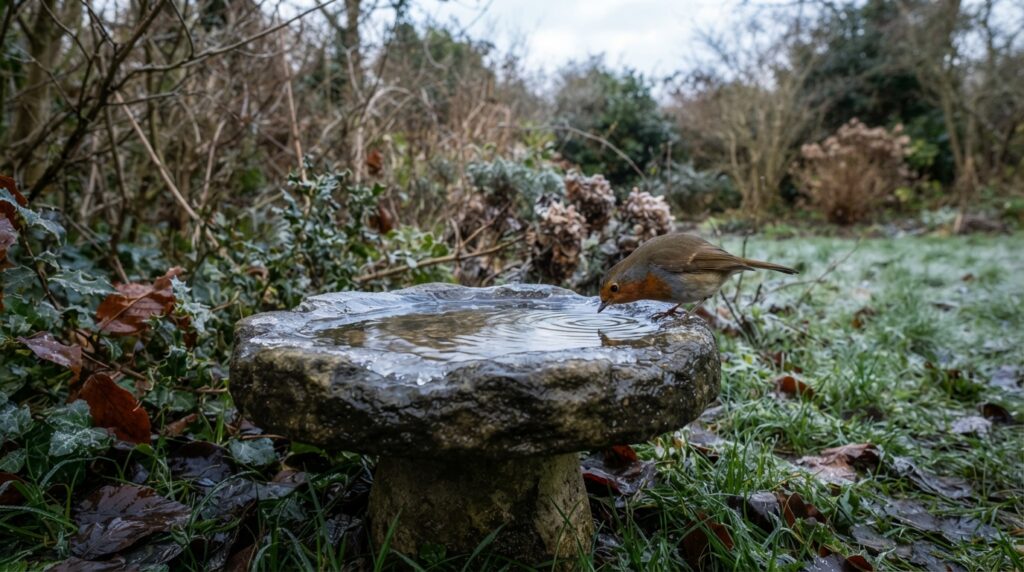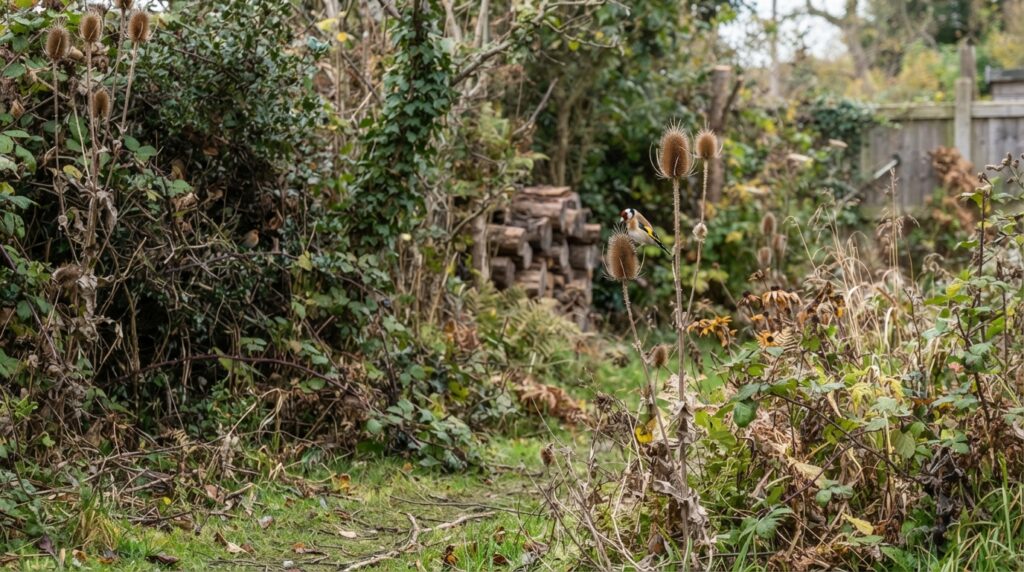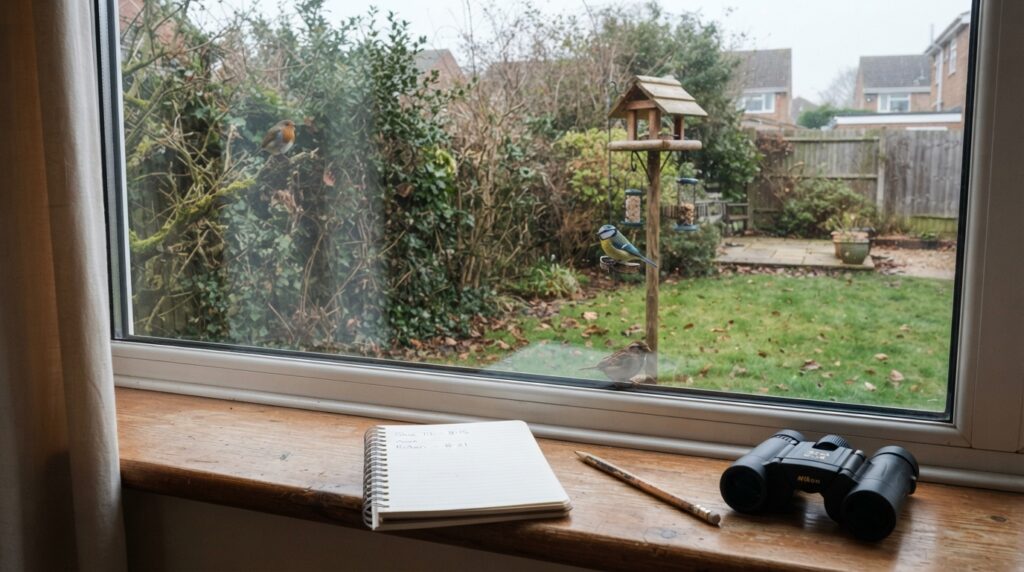
Most UK garden birds stay put all year — robins, blue tits, blackbirds, sparrows and wrens are resident. What leaves are the summer insect-eaters: swifts go first, often by early August, then swallows, house martins and warblers. What arrives are redwings, fieldfares, bramblings and continental blackbirds and starlings, which is why garden numbers often rise in winter.
The usual mental picture is that birds fly south for winter and come back in spring. For the birds in a British garden, that’s mostly wrong.
The UK is a winter destination as much as a summer one, and the traffic goes in several directions at once.
Three groups
- Summer visitors — here to breed, gone by autumn
- Winter visitors — arrive in autumn from colder places
- Residents — most garden birds, here year-round
- Plus: partial migrants, where some individuals move and others don’t
Who leaves
These are almost all insect eaters, and that’s the whole explanation — flying insects vanish in a British winter, so the birds that depend on them have no option.
| Bird | Roughly when it goes | Where to |
|---|---|---|
| Swift | Late July to early August | Sub-Saharan Africa |
| Cuckoo | Adults from June; young later | Central Africa |
| House martin | September to October | Africa |
| Swallow | September to October | Southern Africa |
| Willow warbler, chiffchaff | August to September | Africa and southern Europe |
| Spotted flycatcher | August to September | Africa |
The swift is the one that surprises people. They’re among the last to arrive, usually early May, and among the first to leave — often by the first week of August. A British summer with swifts screaming over the rooftops lasts barely three months.
The cuckoo goes even earlier. Adults typically leave in June, having left their young to be raised by foster parents — so a young cuckoo makes its first migration to central Africa alone, with no parent to follow. How it knows where to go is a genuinely remarkable piece of biology.
Who arrives
The part most people miss. The UK’s relatively mild, maritime winter makes it an attractive destination for birds from Scandinavia, Iceland and Russia.
- Redwing — thrushes from Iceland and Scandinavia, arriving from around October. Move into gardens in hard weather looking for fruit
- Fieldfare — larger thrushes, same origin and timing, often in mixed flocks with redwings
- Brambling — chaffinch-like finches, numbers varying hugely year to year depending on the European beech crop
- Siskin — numbers boosted from the continent, appearing at nyjer feeders from January
- Waxwing — only in “irruption” years when the Scandinavian berry crop fails. Spectacular when it happens
- Whooper and Bewick’s swans, and large numbers of geese — not garden birds, but a major part of the UK’s winter bird population
Our winter visitors guide covers how to identify the garden ones.
Who stays — most of your garden
The birds you feed are, with few exceptions, here all year.
Resident: robin, blue tit, great tit, coal tit, long-tailed tit, blackbird, house sparrow, dunnock, wren, goldfinch, greenfinch, nuthatch, woodpeckers, magpie, jay, collared dove, woodpigeon.
Many are also highly sedentary — house sparrows in particular may spend their entire lives within a very small area, sometimes a few streets. That’s part of why local sparrow declines can be so complete: once a colony is lost, it isn’t quickly replaced.
Our guide on whether birds recognise you covers territories and lifespan.
The complicated middle: partial migrants
This is where it gets interesting, and it explains something people notice without being able to name.
In several species, some individuals migrate and others don’t — and British birds may be joined in winter by continental ones of the same species.
Blackbirds. British blackbirds are largely resident. But large numbers arrive from Scandinavia and the near continent each autumn. So the blackbird on your lawn in January may well have flown in from Norway, while the one there in June is a local.
Starlings. Same pattern, on a large scale — which is why garden flocks grow noticeably from October and why winter murmurations are so vast.
Chaffinches and robins. Both get continental arrivals, though British birds mostly stay.
Blackcaps — the genuinely odd one. British-breeding blackcaps head south for winter, as you’d expect. But a growing population from central Europe now flies north-west to spend the winter in British gardens instead of going to the Mediterranean. Garden feeding is considered a significant factor in that shift.
So a blackcap in your garden in January is not the same individual you had in June — it’s a different bird, from a different population, doing the opposite journey.
Why UK garden numbers often rise in winter
Putting it together:
- The summer insect eaters that leave were mostly never garden feeder birds — swifts, swallows and warblers don’t use feeders
- The arrivals — thrushes, finches, continental blackbirds and starlings — do come into gardens
- Natural food runs out from midwinter, pushing more birds onto feeders
Which is why a garden can feel busier in January than in July. It isn’t an illusion.
The summer quiet has a separate cause too: birds are moulting and staying in cover. See our guide on moulting and the late summer silence.
A rough calendar
| Month | What’s happening |
|---|---|
| July–August | Swifts leave. Gardens go quiet as birds moult |
| September | Swallows, martins and warblers depart |
| October | Redwings and fieldfares arrive. Continental blackbirds and starlings begin arriving |
| November | Bramblings appear. Main feeding season starts on the 1st |
| December–January | Peak winter numbers. Thrushes move into gardens in hard weather |
| February | Siskins arrive as natural seed runs out. Song picks up |
| March | Winter visitors begin leaving. First chiffchaffs return |
| April | Swallows and house martins return |
| May | Swifts return, last of all. Seed and peanut feeding pauses on the 1st |
Is migration changing?
Yes, measurably — and the blackcap is the clearest example of a species altering its route within living memory.
Other shifts documented by long-term monitoring include some summer migrants arriving earlier in spring, and some species that formerly left Britain now overwintering in small numbers, chiffchaffs among them.
Not all of it is benign. Where a migrant’s arrival no longer coincides with the peak of its food supply, breeding success suffers — the same timing-mismatch problem that affects tits and the caterpillar peak.
If you want to contribute to tracking any of this, BTO BirdTrack takes casual records, and the Big Garden Birdwatch each January is how a great deal of the garden data gets collected.
Common questions
Do robins migrate?
British robins are largely resident and hold territories year-round. Some continental robins arrive for the winter, so numbers rise slightly.
When do swallows leave the UK?
September into October, heading for southern Africa. Swifts go much earlier — often by the first week of August.
Why does my garden get busier in winter?
The birds that leave weren’t feeder birds anyway, while thrushes, finches and continental blackbirds and starlings arrive — and natural food runs short, pushing more birds onto feeders.
Is my winter blackbird the same one as in summer?
Possibly not. Large numbers arrive from Scandinavia each autumn, so your January blackbird may be a continental visitor.
Does feeding stop birds migrating?
No. Migration is triggered mainly by day length rather than food availability. Feeding doesn’t hold birds back from a journey they’re programmed to make.
Which bird spends the shortest time here?
The swift. Often arriving in early May and gone by early August — barely three months, and it spends almost all of that time airborne.
Related guides
- Winter visitors: birds that only appear in UK gardens in winter
- When to feed garden birds: the new UK guidance explained
- Getting your garden ready for winter birds: an autumn checklist
- The Big Garden Birdwatch: how to take part
Sources: British Trust for Ornithology migration research, ringing recoveries and BirdTrack data; RSPB species information and migration guidance; Woodland Trust. Timings are typical rather than fixed and vary year to year and by region.
Compare rodent-proof seed storage at Amazon UK. Prices and stock change often, so it is worth checking before you commit.
Browse seed storage →