Affiliate disclosure: some links on this page go to Amazon. If you buy through one we may earn a small commission, at no extra cost to you. It never affects what we recommend. Full disclosure.
The things genuinely worth buying in a sale are the ones you’d have bought anyway at full price — a metal-ported feeder that dismantles, binoculars, a squirrel baffle. Check the price history before believing any discount. And be wary of bulk bird food: seed degrades, and a discounted 20kg sack going stale in a shed isn’t a saving.
Bird feeding kit appears in the November sales every year, and the timing is deliberate — it lands right as the main feeding season starts on 1 November and as people begin Christmas shopping.
Some of it is genuinely worth buying. A fair amount isn’t, and a few things are worse value in a sale than at full price.
Before you buy anything
- Check the price history — a “was” price is not evidence
- Buy the thing you already wanted, not the thing that’s discounted
- Can it be taken apart? If not, don’t buy it at any price
- Food: buy a season’s worth, not the biggest sack
- Avoid anything with a flat tray — no longer recommended
How to tell a real discount from a fake one
The single most useful habit, and it takes seconds.
Use a price history tool. Browser extensions and sites like CamelCamelCamel track what an Amazon product has actually sold for over time. A great many “Black Friday” prices turn out to be the normal price, briefly preceded by a higher one.
UK pricing rules require that a “was” price must have been genuinely charged, but enforcement is imperfect and the presentation is often misleading even when technically compliant. Checking the graph is faster than arguing about it.
Other things worth doing:
- Note the price now, before the sale, on anything you’re considering
- Ignore percentage claims and look at the actual figure
- Check the seller, not just the listing — an unfamiliar third-party seller on a familiar-looking product is a common pattern
- Read the one-star reviews specifically. On bird feeders the complaints that matter are “can’t be taken apart” and “cracked in the first frost”
- Be wary of very new listings with a sudden flood of five-star reviews
Genuinely worth buying in a sale
Binoculars
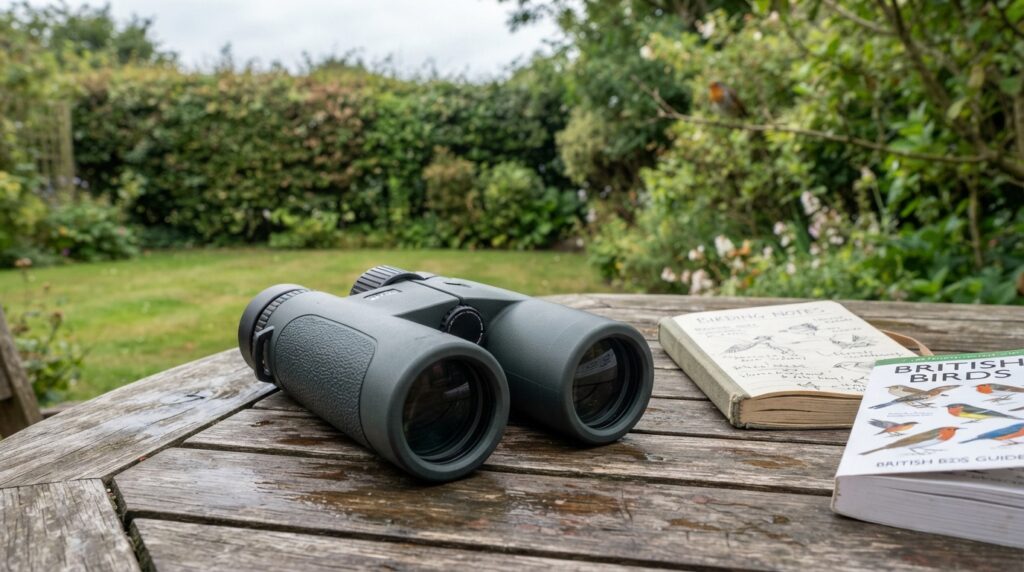
The best sale purchase in this category, because the gap between budget and mid-range optics is large and genuinely noticeable — so a discount that moves you up a tier changes what you actually see.
Buy 8×32 or 8×42. Resist higher magnification; 10x amplifies hand shake and narrows the field of view, so people typically see less detail, not more.
If you wear glasses, check eye relief is at least 15mm and the eyecups twist down. This spec is buried in the details and is the most common cause of disappointment.
Our binoculars guide explains the numbers properly.
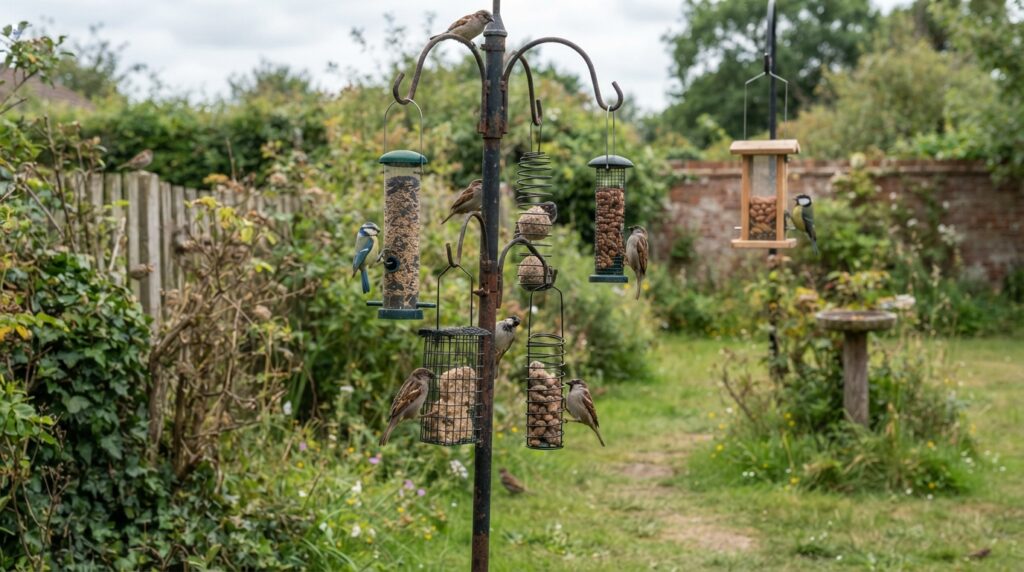
A metal-ported feeder that fully dismantles
Worth paying for, and worth buying on discount. Metal ports resist squirrel and parakeet damage where plastic gets chewed open within a season, and full dismantling is what makes the weekly clean realistic.
Check it has no base tray, or one that unclips — flat surfaces where food collects are no longer recommended.
A squirrel baffle or weight-activated feeder
Baffles are cheap anyway, but weight-activated squirrel-proof feeders are expensive enough that a genuine discount matters.
With a baffle, buy the right shape: a dome fits above a hanging feeder; a cone fits around a pole. They aren’t interchangeable, and buying the wrong one is the commonest mistake here.
A nest box
Good sale timing for once. Boxes want to go up by mid-February, and birds roost in them over winter — so November or December is close to ideal, not early.
Get the hole size right: 25mm for blue tits, 28mm for great tits, 32mm for house sparrows and nuthatches, open-fronted for robins and wrens. A 25mm box is the safest general choice.
Look for one with a metal hole protector plate, or buy one separately — it prevents woodpeckers and squirrels enlarging the entrance.
A feeder cleaning kit
Cheap, boring, and almost nobody buys it for themselves. Given that weekly cleaning is now the standard, a set of brushes that reach inside a tube turns a fiddly job into a five-minute one.
Where sale buying goes wrong
| Tempting in a sale | Why to think twice |
|---|---|
| Huge sacks of bird food | Seed degrades. A discounted 20kg sack going stale and damp in a shed costs more than a fresh 5kg bag. Buy what you’ll use in a season |
| Nyjer in bulk | Worst offender — very high oil content, goes rancid within weeks of opening. Always buy small |
| Cheap mixed seed multipacks | Padded with wheat and split peas birds won’t eat. It ends up on the ground attracting rats. Cheap per kilo, expensive per useful kilo |
| Bird tables | Heavily discounted because guidance moved against them. The RSPB advises against flat-surfaced feeders and stopped selling them in December 2024 |
| Fat balls in netting | Birds get beaks and feet trapped. Never buy them at any price — buy loose and use a cage |
| Novelty and ornamental feeders | Usually can’t be taken apart, which makes weekly cleaning impossible |
| Very cheap plastic feeders | Go brittle and crack in the first hard frost, and squirrels chew straight through. A false economy at any discount |
| Peanuts from a general retailer | Only buy aflatoxin-free peanuts sold specifically for wild birds. This is a safety issue, not a quality one |
The one test that settles most of it
Before buying any feeder on discount, ask: can I take this apart and scrub inside it in five minutes?
If the answer is no, it doesn’t matter what it costs. Current guidance is weekly cleaning, and a feeder you can’t clean properly is one you’ll stop cleaning — which makes it worse than no feeder at all, given what trichomonosis has done to greenfinch numbers.
Our guides on feeder types and cleaning cover the reasoning.
If you’re buying as a gift
Two things worth knowing:
Bird food is the safest gift — a decent bag of sunflower hearts always gets used, and December falls inside the main feeding season so nothing is off-limits seasonally.
Don’t buy a bird table, however traditional it looks. It’s the gift most likely to be quietly retired by anyone who follows current guidance.
Our gift guide covers this by budget.
Common questions
Are Black Friday bird feeder deals real?
Some are. Check the price history before believing a discount — a fair proportion of “sale” prices turn out to be the normal price.
Is it worth stocking up on bird food in a sale?
Up to a season’s supply, stored in a sealed metal bin. Beyond that it degrades, and nyjer in particular goes rancid within weeks of opening.
Why are bird tables so cheap now?
Current RSPB guidance advises against flat-surfaced feeders, and they were removed from the RSPB shop in December 2024. A discount doesn’t make one a good buy.
What’s the best single thing to buy?
If you have nothing: a metal-ported tube feeder that dismantles, plus sunflower hearts. If you already feed birds: binoculars.
Should I wait for the January sales instead?
For kit, January is often as good and sometimes better. For food, you’d be going without through the coldest part of the season, which rather defeats the point.
Related guides
- Gifts for bird lovers: what to buy someone who feeds the birds
- Types of bird feeder: which one should you actually buy?
- Best binoculars for garden birdwatching
- 10 bird feeding mistakes almost everyone makes
Sources: RSPB feeding guidance (April 2026); RSPB flat-surface feeder sales suspension (December 2024); RSPB guidance on peanuts and aflatoxin. Product guidance is based on design and published specifications; we have not tested individual models, and we do not quote prices, which change constantly.
Compare hanging bird feeders at Amazon UK. Prices and stock change often, so it is worth checking before you commit.
Browse bird feeders →