Affiliate disclosure: some links on this page go to Amazon. If you buy through one we may earn a small commission, at no extra cost to you. It never affects what we recommend. Full disclosure.
If they already feed the birds, good food is the safest gift — a decent sack of sunflower hearts always gets used. If you want something more interesting, a nyjer feeder (for goldfinches) or 8×32 binoculars are the two things most casual feeders don’t own and genuinely enjoy. Avoid bird tables and anything with fat balls in netting.
Buying for someone who feeds the birds is easier than it looks, as long as you avoid two traps: buying a duplicate of something they already own, and buying something that’s no longer recommended.
Below is what’s genuinely worth buying, arranged by budget, plus a short list of popular gifts to steer clear of and why.
The short list
- Under £15: sunflower hearts, suet products, a feeder cleaning kit
- £15–£40: nyjer feeder, caged feeder, nest box, good bird bath
- £40+: binoculars, weight-activated squirrel-proof feeder, feeding station
- Avoid: bird tables, fat balls in netting, novelty feeders
Under £15
Sunflower hearts
Unglamorous and the single most reliable gift on this page. Every garden bird takes them, they generate almost no mess because the husk is already removed, and anyone who feeds birds gets through them constantly.
It’s the equivalent of buying a keen cook good olive oil — not exciting to unwrap, completely certain to be used.
Suet products
Fat balls, suet blocks or suet pellets. High energy, popular with a wide range of birds, and — usefully — one of the few foods that stays recommended year-round under current RSPB guidance, while seeds and peanuts pause from 1 May to 31 October.
Buy them loose, not in netting. Birds get beaks and feet caught in the plastic mesh, which causes real injuries. Anything sold in netting is worth passing over regardless of price.
A feeder cleaning kit
Genuinely useful and almost nobody buys it for themselves. Current guidance is to clean feeders at least weekly, and a proper set of brushes that reach inside a tube makes that a five-minute job instead of a fiddle.
Pair it with a bird-safe disinfectant and you’ve given someone something they’ll use every week for years.
Dried mealworms
The way to a robin’s heart. Also taken by blackbirds, wrens and dunnocks, and approved year-round. A good choice if you know they’ve got a resident robin they’re fond of.
£15 to £40
A nyjer feeder and seed
The best “they probably haven’t got one” gift on this list.
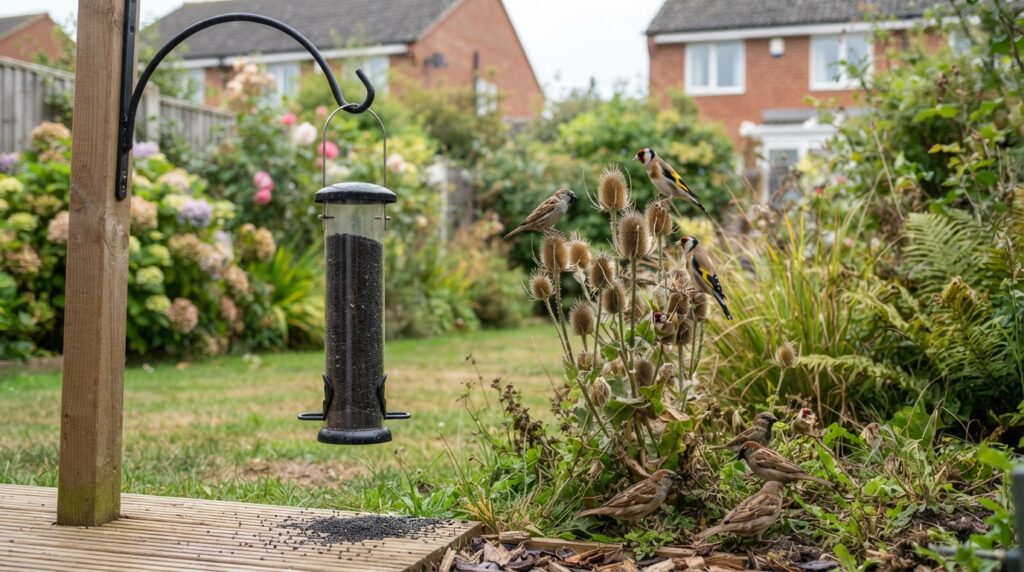
Nyjer seed is tiny and pours straight out of an ordinary feeder, so it needs a specialist one with very fine ports. Most casual feeders never get round to buying it — and goldfinches, which are among the prettiest birds that’ll visit a garden, love the stuff.
Buy the feeder and a bag of seed together, since one is no use without the other.
A caged feeder
Solves two of the most common complaints at once: squirrels emptying the feeder, and starlings or pigeons hogging it. The mesh admits small birds and excludes everything bigger.
A thoughtful gift if you’ve ever heard them complain about either. Check the mesh is wide enough for blue tits to pass through comfortably.
A nest box
A good gift precisely because it’s a project rather than a consumable — and autumn or early winter is the right time to give one, since boxes want to be up by mid-February.
Get the hole size right, because it determines which birds can use it: 25mm for blue tits, 28mm for great tits, 32mm for house sparrows, and an open-fronted design for robins and wrens. A 25mm box is the safest general choice.
Our nest box guide covers siting, which matters as much as the box itself.
A decent bird bath
Water is often more valuable to birds than food and is the thing most people overlook. Look for one that’s shallow — no more than about 10cm at the deepest point — with sloping sides and a rough surface for grip.
One practical consideration: it needs emptying and refilling daily under current guidance, so a bath that’s easy to lift beats a heavy stone one that never gets moved.
£40 and above
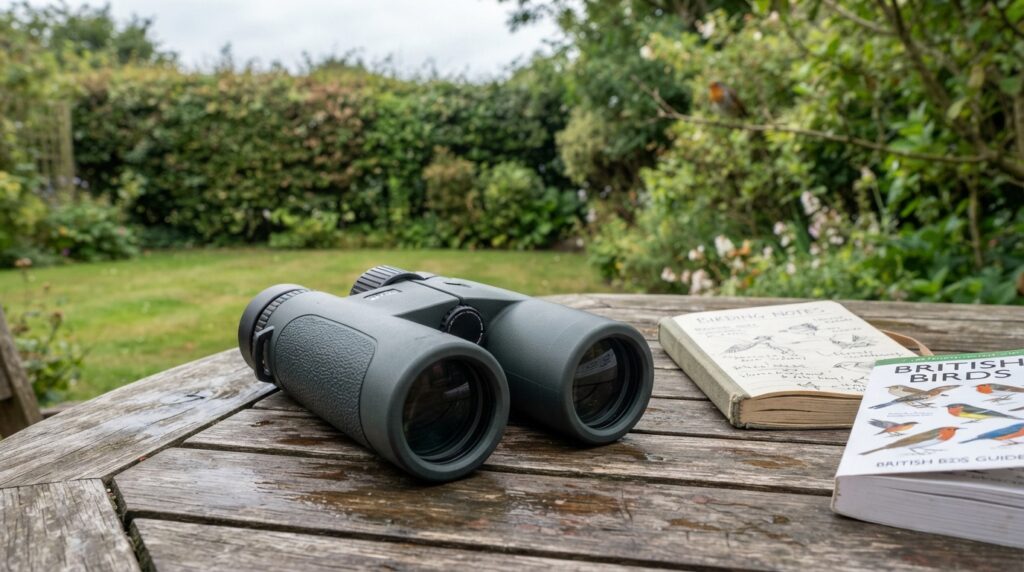
Binoculars
The gift that turns feeding birds into watching birds, and the one most likely to be genuinely treasured.
Buy 8×32 or 8×42. Resist the pull towards higher magnification — 10x sounds better and generally isn’t, because it amplifies hand shake and narrows the field of view, so people actually see less detail. For garden use, 8×32 is often the better choice: lighter, easier to grab off the windowsill, and therefore actually used.
If they wear glasses, check the eye relief is at least 15mm, and that the eyecups twist down. This single specification is the most common cause of disappointment and it’s usually buried in the product details.
Our binoculars guide explains what the numbers mean in plain English — worth a read before buying.
A weight-activated squirrel-proof feeder
The most effective answer to a squirrel problem, and expensive enough that people rarely buy one for themselves. A spring mechanism closes the ports when something heavier than a bird lands on the perch.
A very good gift for someone who’s mentioned squirrels more than once.
A feeding station
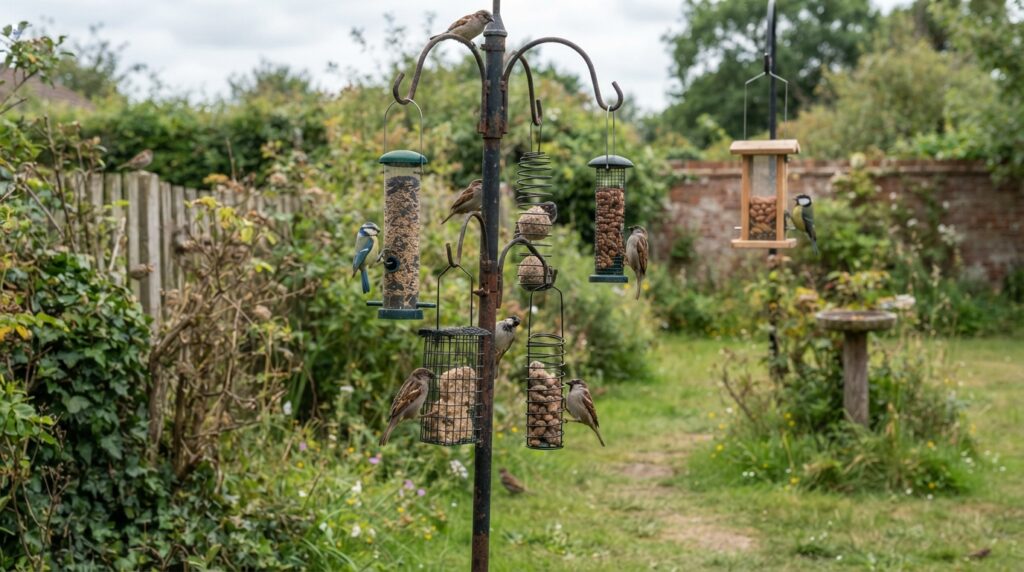
A pole with hooks for several feeders. Useful because current guidance recommends spreading feeders out rather than clustering them, and a station with arms at different heights does that in one footprint.
Look for a smooth metal pole rather than a textured one, and consider adding a baffle if squirrels are around.
What to avoid
| Popular gift | Why to skip it |
|---|---|
| A bird table | The RSPB now advises against flat-surfaced feeders entirely, and stopped selling them in December 2024. Regurgitated food from infected birds collects on the flat surface and is picked up by healthy ones. A traditional-looking gift that’s now the wrong thing to give |
| Fat balls in netting | Birds get beaks and feet trapped in the plastic mesh. Buy loose ones and a cage feeder instead |
| Window feeders | Same flat-surface problem as bird tables. Often suggested for flats, but no longer recommended |
| Novelty and decorative feeders | Usually impossible to take apart, which makes weekly cleaning impractical. Pretty on a shelf, poor in a garden |
| Cheap mixed seed | Padded with wheat, barley and split peas that most garden birds won’t eat. It ends up on the ground attracting rats. Sunflower hearts cost more per kilo and waste far less |
| Supermarket peanuts | Can carry aflatoxin, a fungal toxin that kills birds. Only buy peanuts sold specifically for wild birds, from a reputable supplier |
Matching the gift to the person
They’ve just started feeding birds — sunflower hearts and a decent tube feeder that comes apart for cleaning. Skip anything specialist until they know what visits.
They’ve fed birds for years — a nyjer feeder, or binoculars. The things people don’t get round to buying themselves.
They complain about squirrels — a baffle if you’re spending less, a weight-activated feeder if you’re spending more.
They’ve got a small garden or a balcony — a compact hanging feeder and a railing bracket. Not a window feeder.
They’re not sure they’re doing it right — honestly, a cleaning kit and a bag of sunflower hearts, because those cover the two things that matter most.
Common questions
Is bird food a boring present?
It’s the one thing certain to be used. If it feels thin on its own, pair it with something small — a cleaning brush set, or a bag of mealworms — and it becomes a proper gift rather than a top-up.
What if they already have a feeder?
Buy a different type. Most people have one seed feeder and nothing else. A suet cage or a nyjer feeder adds species rather than duplicating what’s there — and spreading feeders out is now actively recommended.
Is a nest box a good Christmas present?
Very good timing, in fact. Boxes want to go up by mid-February, and birds often roost in them over winter before nesting in spring. December is nearly ideal.
Are expensive binoculars worth it?
The jump from budget to mid-range is significant and worth paying for. Beyond that, improvements are real but incremental and less noticeable in a garden. Mid-range 8×32 from an established optics brand beats impressive-sounding specs from an unknown one.
Can I give bird food as a stocking filler in December?
Yes — December falls inside the 1 November to 30 April window when the full range of foods including seeds and peanuts is recommended. Good timing.
Related guides
- Best bird food for winter: what to put out and what to skip
- Types of bird feeder: which one should you actually buy?
- Best binoculars for garden birdwatching
- When to put up a nest box (and exactly where to site it)
Sources: RSPB feeding guidance (April 2026) and feeder buying advice; RSPB flat-surface feeder sales suspension (December 2024); British Trust for Ornithology nest box guidance. Recommendations are based on design and suitability; we say clearly where we have not tested a product ourselves.
Compare current prices on bird food and feeders at Amazon UK. Prices and stock change often, so it is worth checking before you commit.
Browse bird food →