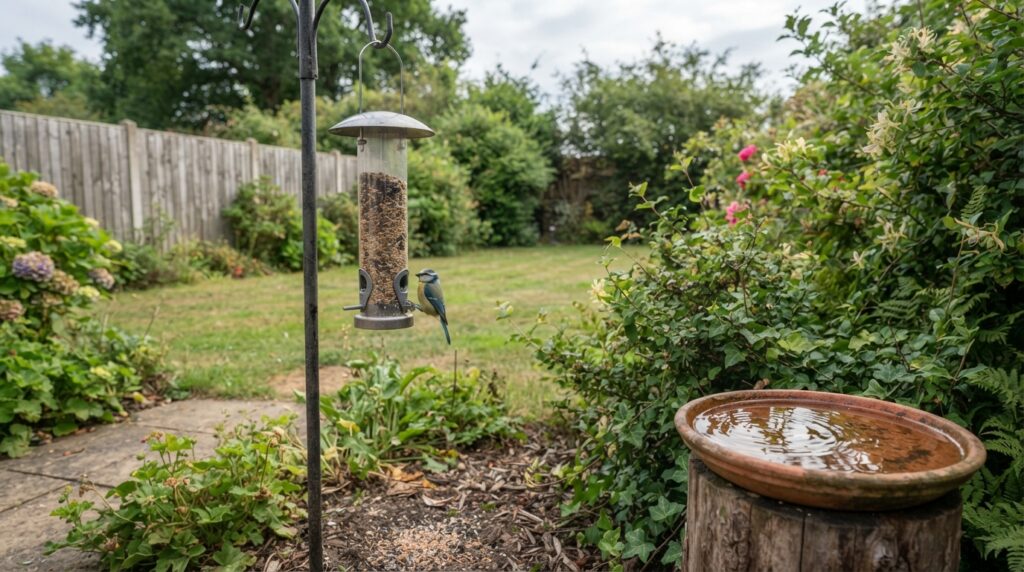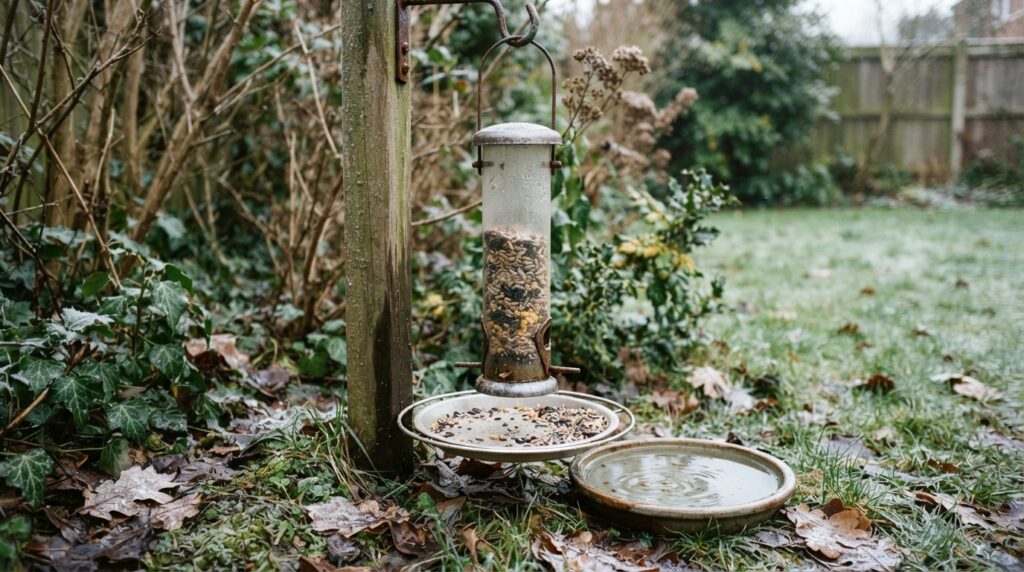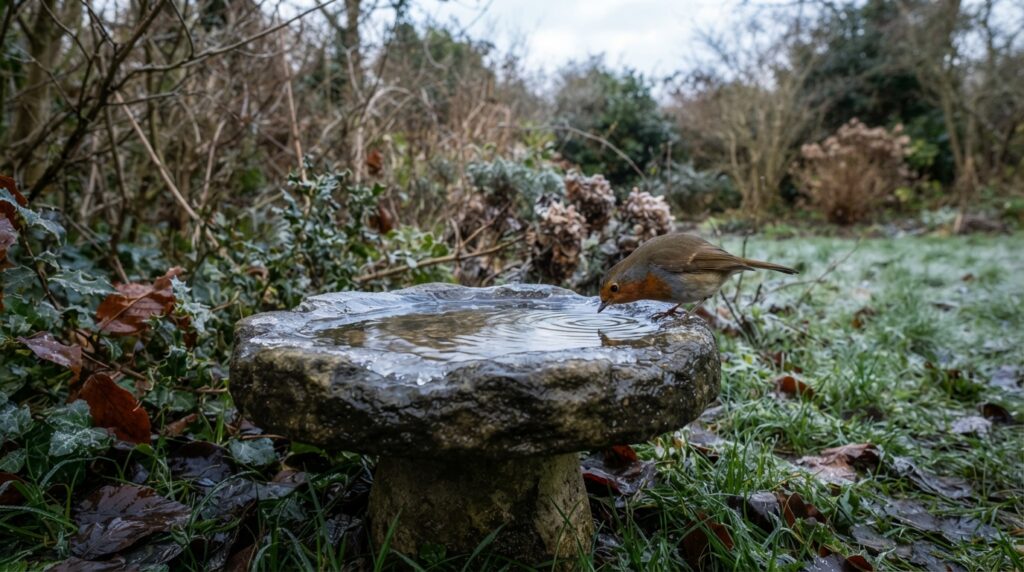
The birds will be fine. Garden feeding is supplementary and birds forage naturally throughout — they don’t become dependent and won’t starve because you went away. Don’t overfill the feeder before you go; damp, mouldy seed sitting for a week is worse than an empty one. If it’s a long trip in a hard frost, ask a neighbour to top up and, more importantly, to deal with the water.
This is one of the most common worries among people who feed birds, and it comes up twice a year — at Christmas and again during the summer holidays.
The short version is reassuring. The longer version has one genuine caveat worth knowing.
Before you go
- Don’t overfill — a week of damp seed goes mouldy
- Clean the feeder rather than leaving it dirty for a week
- Empty the bird bath if nobody will change the water
- Ask a neighbour for trips over a few days in hard weather
- Suet keeps better than seed over a week in winter
The dependency question
The worry is that birds have come to rely on your feeder and will suffer without it. The evidence doesn’t support that.
Garden feeding is supplementary. It typically makes up a portion of a bird’s intake rather than all of it, and birds continue foraging naturally the whole time. Where studies have looked at feeding stopping, birds redistributed to other food sources rather than starving.
They don’t forget how to forage. A blue tit visiting your feeder is also working hedges, bark crevices and leaf litter every day.
Our article on whether feeders are bad for birds covers the research in more detail.
The genuine caveat
There is a reasonable secondary point, and it’s worth stating honestly rather than dismissing.
A bird that has built its winter territory around a reliable food source is affected if that source disappears during a prolonged hard frost, when natural food is genuinely scarce and the margins are narrowest.
That’s not an argument for the dependency story as usually told. It’s an argument for consistency during severe weather specifically — which mostly means asking someone to help if you’re away for more than a few days during a cold snap.
Don’t overfill before you leave
The instinct is to cram the feeder to the top. It’s the wrong move, and it’s the one genuine mistake people make here.
Seed that sits for a week gets damp, clumps, and grows mould — particularly in a British December. Birds won’t eat it, and mouldy food is actively harmful.
Current guidance is to feed in moderation, with seed eaten within a day or two. A brimming feeder left for ten days does the opposite of what’s intended.
Better: fill it to the normal level, or slightly less. Whatever gets eaten in the first couple of days will have been useful; the rest would have spoiled either way.
Water matters more than food
The thing most people don’t think about, and in a December freeze it’s the more valuable of the two.
Current guidance is to only offer water if you can change it daily. If nobody is going to do that, the right move is to empty and turn over the bird bath before you leave rather than leave a week of stagnant or frozen water standing.
Stagnant water in a bath is a disease transmission route — the parasite behind trichomonosis survives in it. A week of it is worse than none.
If you can get a neighbour to do one thing, make it the water rather than the feeder. Our guide to keeping a bath clean covers the routine.
What to ask a neighbour
If someone’s popping in anyway, keep the ask small and specific — people are far more likely to do three simple things than a vague “look after the birds”.
- Tip out the bird bath and refill it with fresh tap water. Thirty seconds, and the most valuable job
- Top the feeder up part-way if it’s empty — not to the brim
- In a hard frost, pour warm water over the bath. Not boiling, and never add salt, antifreeze or glycerine, all of which are harmful
Leave the food where they can find it and a note with those three lines on it.
Which foods keep best over a week
| Food | Over a week in winter |
|---|---|
| Suet blocks and fat balls | Best option. Slow to spoil in cold weather, high energy, and approved year-round |
| Sunflower hearts | Fine if the feeder sheds rain. Clump if damp gets in |
| Peanuts in mesh | Reasonable, though damp peanuts are exactly how mould develops. Mesh feeder only |
| Nyjer | Poor. Fine, packs tight, holds damp. Take it in |
| Ground-scattered food | Don’t. It attracts rats, and nobody’s there to clear it |
If you’re away for a week in December, a suet cage is the sensible thing to leave out.
Coming back
- Check the feeder before topping up. If seed has gone damp, clumped or smells musty, empty the whole thing rather than adding fresh on top
- Clean it properly — hot soapy water, non-toxic disinfectant, rinse, dry completely
- Move it to a fresh spot, which is current guidance after each clean anyway
- Clear beneath, especially if anything has been dropped over the week
- Restart the water
Birds will find it again within a day or two. They haven’t gone anywhere.
Longer absences
For a few weeks or more — an extended trip, a hospital stay, a winter abroad — the honest position is that nobody is obliged to feed birds.
Take the feeders down, clean them, store them dry, and put them back when you return. Birds in the area will use other gardens and natural food. Taking a feeder down cleanly is a perfectly responsible thing to do.
What’s genuinely worth avoiding is leaving a dirty, half-full feeder and a stagnant bath out for a month.
Common questions
Will birds starve if I go away for a week?
No. Feeding is supplementary and birds forage naturally throughout. They redistribute to other sources.
Should I fill the feeder right up before I leave?
No — that’s the one mistake to avoid. Seed sitting for a week gets damp and mouldy. Fill to the normal level or slightly less.
What about the bird bath?
Empty it before you go unless someone will change the water daily. A week of standing water is a disease risk rather than a kindness.
Is it different in a hard frost?
Somewhat. Natural food is scarcer and margins are tighter, so consistency matters more. If you’re away several days during a freeze, asking a neighbour to help is worth doing.
Can I use an automatic feeder?
They exist, but they don’t solve the real problems — food still spoils, and nothing changes the water or cleans the feeder. Simpler to fill normally and leave it.
Should I stop feeding permanently if I travel a lot?
Not at all. Irregular feeding is fine. Habitat — a hedge, native planting, no insecticides, standing seed heads — helps birds year-round with no maintenance at all.
Related guides
- Are bird feeders actually bad for birds? The honest answer
- How to help garden birds in freezing weather
- Christmas leftovers and garden birds: what’s safe from the festive table
- How to clean a bird feeder — and why it now matters more
Sources: RSPB feeding guidance (April 2026), including advice on feeding in moderation and on providing water; British Trust for Ornithology research on supplementary feeding; Garden Wildlife Health.
Compare sunflower hearts and suet at Amazon UK. Prices and stock change often, so it is worth checking before you commit.
Browse bird food →