Affiliate disclosure: some links on this page go to Amazon. If you buy through one we may earn a small commission, at no extra cost to you. Full disclosure.
The seed has almost certainly gone stale. Nyjer is very high in oil, which means it goes rancid faster than any other bird food — often within a few months of opening. Fresh nyjer is glossy black and slightly oily to the touch. Dull, dusty or clumped seed gets ignored, and birds are right to ignore it.
An untouched nyjer feeder is one of the more common frustrations in garden bird feeding, partly because nyjer is expensive and partly because everyone tells you goldfinches love it.
They do. The problem is almost always the seed rather than the birds.
Check these, in order
- Is the seed fresh? The cause most of the time
- Has it got damp? Nyjer clumps and moulds readily
- Are the ports the right size? Nyjer needs a specialist feeder
- Have they found it yet? Several weeks is normal
- Is there something better nearby? Sunflower hearts often win
- Is it the wrong time of year? Demand peaks late winter
1. Stale seed — the usual answer
Nyjer has a very high oil content. That’s what makes it valuable to finches, and it’s also what makes it perishable.
Once exposed to air, warmth or light, the oils oxidise and go rancid. Birds detect this long before you do, and they simply stop coming.
How to check yours:
- Fresh nyjer is glossy black, almost shiny, and leaves a faint oily residue on your fingers
- Stale nyjer is dull, matte and dry, often greyish, and feels dusty rather than oily
- Crush a few seeds. Fresh ones are moist inside with a mild nutty smell. Stale ones are dry, powdery or smell sharp and paint-like
The practical fix: buy nyjer in small quantities. A large sack is a false economy — you’ll be throwing most of it away. Store what you have in a sealed container somewhere cool and dark, and replace it every couple of months rather than topping up over old stock.
2. Damp
The second most common cause, and often the same problem in a different form.
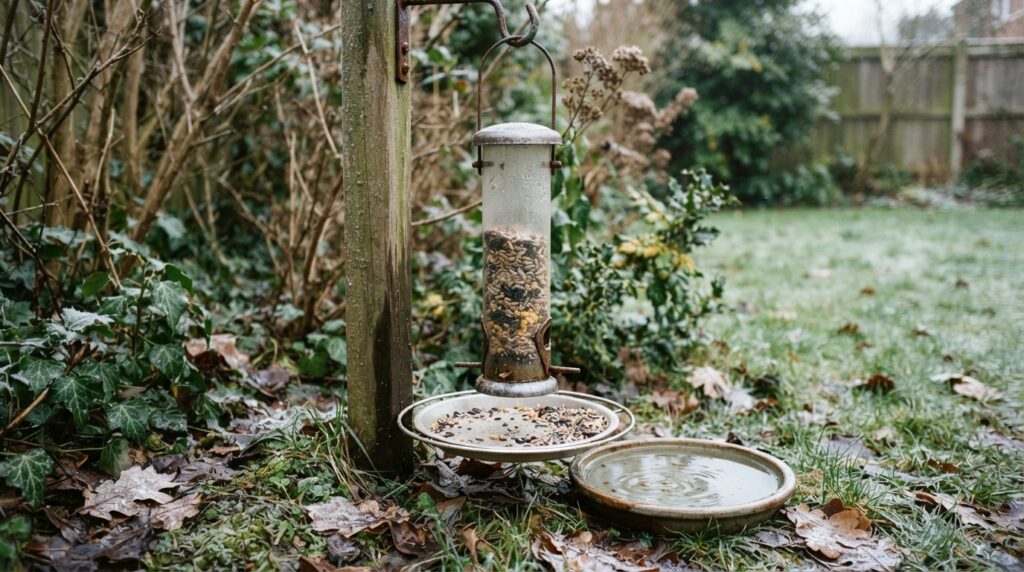
Nyjer is fine and tightly packed, so a feeder that lets rain in produces a solid plug of damp seed near the ports. Birds can’t extract it, and mould develops quickly underneath.
What to do:
- Empty the whole feeder — don’t just top it up
- Wash, disinfect and dry it completely before refilling
- Fill only part-way. Little and often keeps it moving, and matches current guidance to feed in moderation anyway
- Site it with some shelter from prevailing rain
- Check the drainage holes in the base are clear
Our cleaning guide covers the method.
3. Wrong feeder
Nyjer seed is tiny — considerably smaller than any other common bird food — and pours straight out of a standard seed feeder.
You need a dedicated nyjer feeder with very fine slit ports. If you’ve put nyjer in a general tube feeder, it’s either on the ground or has been blown away, and what’s left in the tube may be too compacted to extract.
Conversely, some cheap nyjer feeders have ports so fine that birds struggle. If the seed is fresh and dry and still untouched, look closely at whether a goldfinch could realistically get a bill in.
4. They haven’t found it
A new feeder in a garden birds haven’t used before takes time, and nyjer takes longer than most because it’s unfamiliar.
Several weeks is completely normal. Four to six weeks isn’t unusual.
The mistake that compounds it is moving the feeder repeatedly while you wait, which resets the clock each time. Pick a sensible position and leave it alone for a month.
What helps: site the nyjer feeder near an established feeder that’s already busy. Goldfinches investigating sunflower hearts will find the nyjer alongside it far quicker than they’d find it in an unused corner.
5. Something better is available
Worth being honest about: goldfinches increasingly prefer sunflower hearts.
Nyjer was the standard goldfinch food for years, but sunflower hearts are higher in energy, easier to handle and taken from a standard feeder. Many gardens now see goldfinches ignore nyjer entirely in favour of hearts a metre away.
That isn’t a fault — it’s a reasonable choice by the bird. If your goldfinches are happily on sunflower hearts, you may simply not need nyjer at all.
Where nyjer still earns its place: siskins and lesser redpolls take it enthusiastically, and they’re more likely to turn up at nyjer than at anything else. If you want those species, it’s worth persisting.
Our winter visitors guide covers both.
6. Time of year
Nyjer demand is strongly seasonal.
Peak: January to March, when natural seed has run out and siskins arrive. This is when a nyjer feeder earns its keep.
Quiet: late summer and autumn, when teasel, thistle, knapweed and other natural seed heads are abundant. Goldfinches will take those in preference every time.
An untouched nyjer feeder in September is often just a well-fed local goldfinch population.
Worth knowing about nyjer
- It isn’t thistle seed, despite often being sold as “niger thistle”. It comes from an African daisy, Guizotia abyssinica
- It’s heat-treated before import to sterilise it, so it won’t germinate under your feeder — unlike cheap mixed seed
- It’s the most expensive common bird food per kilo, which makes the waste from stale stock genuinely costly
- Spillage is fine and light, so it scatters badly in wind — take the feeder in during a gale
A workable nyjer setup
- Buy a small bag and check it’s glossy and oily before filling
- Use a proper nyjer feeder with fine slit ports
- Fill it part-way, not to the top
- Site it near an existing busy feeder, about 2m from cover
- Leave it a month before judging
- Empty, clean and refill weekly rather than topping up
- Replace unused stock every couple of months
Common questions
How long does nyjer seed last?
Weeks rather than months once opened. The high oil content means it goes rancid quickly. Buy small quantities and store them cool, dark and sealed.
Can I use nyjer in a normal seed feeder?
No — it pours straight out of standard ports. It needs a dedicated feeder with very fine slits.
Will nyjer grow under my feeder?
No. It’s heat-treated before import specifically to prevent germination.
Do I need nyjer if I already have goldfinches?
Not necessarily. Many goldfinches now prefer sunflower hearts. Nyjer’s main advantage is attracting siskins and redpolls in late winter.
Is nyjer affected by the seasonal feeding pause?
Yes — it’s a seed, so current RSPB guidance pauses it between 1 May and 31 October along with other seeds and peanuts. Suet stays approved year-round.
My feeder is full but birds ignore it. Should I just bin the seed?
If it’s dull, dusty or smells sharp, yes. Rancid seed won’t be eaten and isn’t good for birds anyway.
Related guides
- How to attract goldfinches to your garden
- Why have the birds stopped coming to my feeder?
- Best bird food for winter: what to put out and what to skip
- Winter visitors: birds that only appear in UK gardens in winter
Sources: RSPB guidance on bird food types and feeder hygiene; RSPB feeding guidance (April 2026); British Trust for Ornithology Garden BirdWatch data on goldfinch and siskin feeding.
Compare sunflower hearts and suet at Amazon UK. Prices and stock change often, so it is worth checking before you commit.
Browse bird food →