Wasps aren’t after your seed. In August and September their colonies break down and workers switch to hunting sugar — so they’re drawn to fallen fruit, sugary residues and water, not sunflower hearts. Clear windfall fruit, keep the bird bath clean, and it usually settles. Never spray insecticide near a feeder or bath.
Wasps turning up around a feeding area in late summer is one of the more common seasonal complaints, and it’s almost always about timing rather than anything you’ve done wrong.
Understanding why it happens in a specific six-week window makes it much easier to deal with.
The short version
- Peak nuisance: August to early October
- What attracts them: sugar and water, not seed
- Main culprits: fallen fruit, suet in hot weather, dirty bird baths
- The fix: clear windfalls, change water daily, move fruit away from the feeder
- Never: spray insecticide near feeders, baths or where birds feed
Why it happens in late summer specifically
Worth knowing, because it explains why the problem arrives suddenly and then disappears.
Through spring and early summer, worker wasps are hunting insects to feed the colony’s larvae. In return the larvae produce a sugary secretion the adults feed on. It’s a closed loop, and during this period wasps are genuinely useful garden predators — they take large numbers of aphids, caterpillars and flies.
By August the queen stops laying, the larvae mature, and that sugar supply ends. The workers are suddenly redundant, with no colony to provision and no sugar source.
So they go looking for it — which is when they start appearing around fruit, drinks, bins and anything sweet, and why they seem markedly bolder and more irritable than they were in June.
The first hard frosts finish the workers off, and the problem ends for the year.
What’s actually attracting them
Fallen fruit — the main one
If you have an apple, pear or plum tree, windfalls are almost certainly the draw. Rotting fruit is a concentrated sugar source and wasps find it quickly.
This creates an awkward conflict, because windfall apples are also genuinely valuable for birds — blackbirds, thrushes and later redwings and fieldfares all take them.
The workable compromise: put fruit out for birds in a different part of the garden from the feeders and seating, and put out only what will be eaten within a day. Clear anything left before it starts to rot. That keeps the fruit useful for birds without creating a permanent wasp station next to where you sit.
Suet in hot weather
Fat can go rancid quickly in warm conditions and does sometimes attract wasps, though it’s a lesser draw than fruit.
In August, put out smaller quantities of suet and check it more often — advice that holds anyway, since rancid fat isn’t good for birds either.
The bird bath
Frequently overlooked. Wasps need water, particularly in dry spells, and a shallow bird bath is ideal for them.
They’re more attracted to water that’s stale, algae-covered or has organic residue in it. Since current guidance is to change the water daily and clean the bath weekly anyway, keeping on top of that reduces the appeal considerably.
Our bird bath guide covers the maintenance routine.
What isn’t attracting them
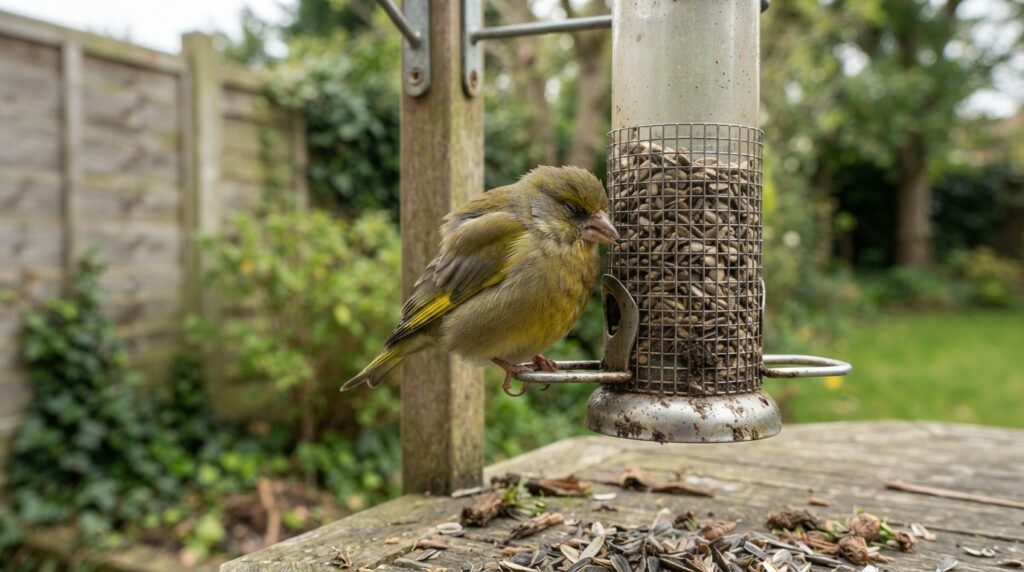
Sunflower hearts, mixed seed, peanuts and nyjer are of essentially no interest to wasps. If you’re getting wasps and only feeding seed, look elsewhere in the garden for the actual source.
What to do
- Clear windfall fruit daily, or move it well away from feeders and seating
- Reduce suet quantities in hot weather and check it isn’t going rancid
- Change bird bath water daily and scrub the bath weekly
- Cover bins and clear up spilled drinks nearby
- Move the feeder temporarily if wasps have settled on one spot — often enough to break the pattern
- Wait it out. The first frosts end it, usually by mid-October
What not to do
Never use insecticide sprays around feeders, bird baths or feeding areas. Residues get onto food and water, and onto birds’ feathers. You’d be poisoning the birds you’re feeding to deal with an insect problem that ends by itself in a few weeks.
Also avoid:
- Sugar-water wasp traps near feeders. They work, but they also concentrate wasps into the area you’re trying to keep clear, and they indiscriminately kill hoverflies and other beneficial insects — including some birds’ food supply
- Destroying a nest that isn’t causing a problem. Wasp nests are annual — abandoned entirely by winter and never reused. If it’s somewhere out of the way, leaving it alone is usually the better call
- Swatting at them. Crushed wasps release alarm pheromone, which attracts others. Move away calmly instead
A word in their defence
Worth saying, because the late-summer nuisance colours how people think about wasps generally.
Through spring and early summer, a single social wasp colony consumes a very large quantity of insects — aphids, caterpillars, flies — which makes them significant natural pest controllers in a garden. Some species are also pollinators.
The six weeks of late-summer irritation are the tail end of a season during which they’ve been doing useful work. That’s a reasonable argument for tolerating them where they’re not actually in the way.
If there’s a nest causing genuine problems
A nest in a shed you use daily, beside a door, or where someone allergic will encounter it is a different matter.
Contact your local council’s pest control service or a professional. Don’t attempt to deal with a nest yourself with shop-bought sprays — the failure mode is a very large number of defensive wasps in a confined space, and the products involved are not things you want near a garden where birds feed.
If anyone in the household has a known wasp sting allergy, treat that as a straightforward reason to get it dealt with professionally.
Common questions
Do wasps eat bird seed?
No. They’re after sugar and water. If you’re only putting out seed and getting wasps, the actual source is elsewhere — usually fallen fruit or a bin.
Why are they so aggressive in September?
Their colony has broken down and the sugar supply from the larvae has ended. The workers are effectively at a loose end, hungry, and near the end of their lives.
Will wasps hurt the birds?
Generally no. Birds and wasps largely ignore each other at a feeder, and several bird species will eat wasps. The problem is nuisance to people rather than risk to birds.
Should I stop putting out fruit?
Not entirely — it’s valuable for blackbirds and thrushes, and increasingly so as autumn goes on. Put out small amounts away from seating, and clear what isn’t eaten.
When will it stop?
With the first hard frosts, typically by mid-October. The workers die, and only new queens survive to hibernate. It’s genuinely a short-term problem.
Related guides
- Bird baths: choosing one, siting it, and stopping it freezing
- When to feed garden birds: the new UK guidance explained
- What do blackbirds eat? How to feed and attract them
- Best plants to attract birds to a UK garden
Sources: RSPB guidance on feeding and hygiene (April 2026); Royal Horticultural Society guidance on wasps in gardens; Wildlife Trusts information on social wasp colony cycles.
Compare hanging bird feeders at Amazon UK. Prices and stock change often, so it is worth checking before you commit.
Browse bird feeders →