Affiliate disclosure: some links on this page go to Amazon. If you buy through one we may earn a small commission, at no extra cost to you. Full disclosure.
Most feeder mess is seed husks, not droppings — and switching to sunflower hearts removes almost all of it, because the husk is already gone. For droppings, move the feeder away from patios, seating and parked cars, and clear beneath it weekly. Clean with hot soapy water rather than a pressure washer.
Feeding birds produces mess. Husks on the lawn, droppings on the patio, and a spattered car if the feeder is in the wrong place.
Nearly all of it is manageable, and the fixes overlap neatly with what current guidance asks you to do anyway.
The fixes
- Sunflower hearts — no husk, so no husk mess
- Move the feeder away from patios, seating, washing lines and cars
- Clear beneath weekly, alongside the feeder clean
- Move the feeder position regularly, which is recommended anyway
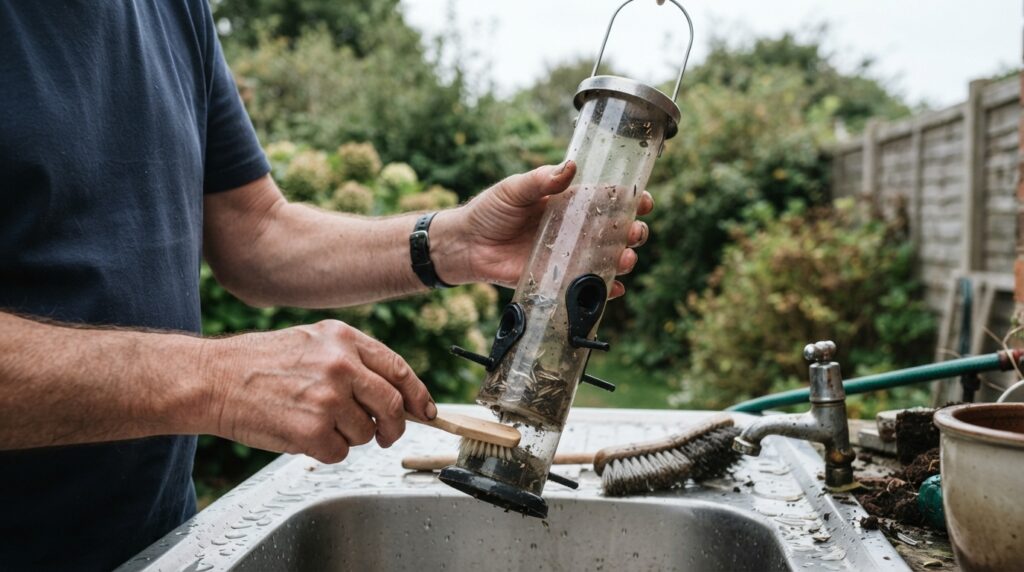
- Clean with hot soapy water, wearing gloves — not a pressure washer
Most of it isn’t droppings
Worth establishing first, because it changes the fix.
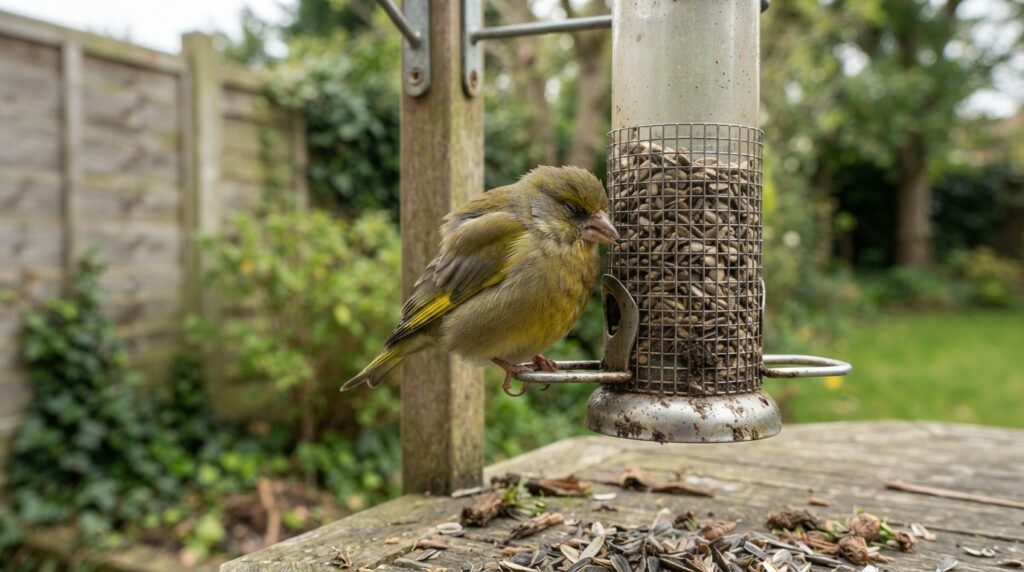
The layer of debris under a busy feeder is mostly seed husks — the discarded shells birds strip off before eating the kernel — plus dropped and rejected food. Droppings are a smaller proportion of it than people assume.
That means the single most effective change isn’t cleaning more, it’s changing what you put out.
Sunflower hearts solve most of it
Sunflower hearts have the husk already removed. Birds eat the whole thing, and almost nothing falls.
Compare that with black sunflower seeds, where every seed produces a discarded shell, or cheap mixed seed, where birds flick out the wheat and split peas they won’t eat and it all ends up underneath.
Switching is more expensive per kilo and generates a fraction of the mess — and less waste means less rat interest too.
Suet is the other low-mess option — very little falls from a cage feeder. Nyjer is the worst for scatter, being very fine and light.
Placement decides the rest
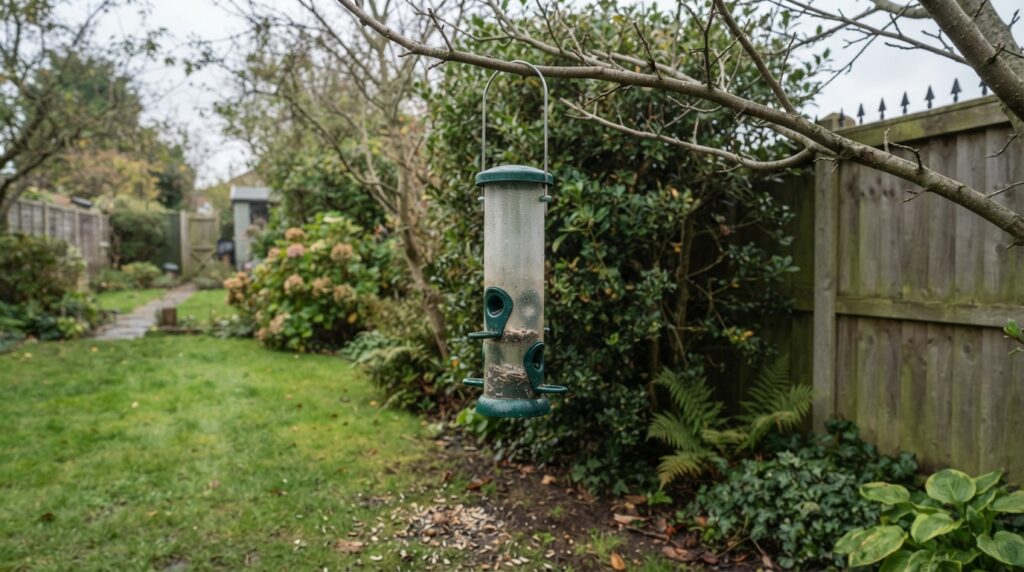
Where the feeder hangs determines what gets messy. Think about what sits directly beneath and downwind.
Don’t put a feeder above:
- A patio or decking
- Garden seating or a table
- A washing line
- A parked car or a driveway
- A doorstep or path you use daily
- A pond — droppings and seed affect water quality
- Vegetable beds where crops are eaten raw
Better positions: over lawn, a border, or bare soil, where debris breaks down and can be raked. If you have gravel, note that husks are genuinely awkward to clear from it.
You still need the other placement rules to hold — about 2m from cover, 1.5m up, 3m from squirrel launch points, and either within 1m of a window or beyond 10m. A tidy position that breaks all of those isn’t an improvement.
Move it regularly — you should anyway
Current RSPB guidance is to move feeders to a fresh spot after each weekly clean, and to clear the debris underneath.
That exists for disease reasons — accumulated droppings and damp food in one patch of ground is how trichomonosis and other infections spread. But it happens to solve the mess problem at the same time, because nothing builds up in one place long enough to become a permanent stain or a bare patch of lawn.
Two or three positions you rotate between is the practical approach.
Cleaning up safely
Bird droppings can carry organisms that affect humans — salmonella among them. The risk from ordinary garden exposure is low, but basic precautions are sensible.
Don’t use a pressure washer on bird droppings. High pressure aerosolises the material into a fine spray you then breathe in. This is the one genuinely important point on this page.
Use hot soapy water, a stiff brush and a bucket instead.
The method for hard surfaces:
- Wear rubber gloves
- Wet the area first — this stops dried material becoming airborne while you brush
- Scrub with hot soapy water and a stiff brush
- Rinse away
- Wash your hands thoroughly afterwards
For lawns and borders: rake up husks and debris. This matters more than it looks — a thick mat of husks smothers grass and creates the bare patch under a feeder that people find hard to shift.
Keep a dedicated brush and bucket for this, used for nothing else — the same principle as the weekly feeder clean.
The bare patch under the feeder
Common, and fixable.
It’s caused by a combination of accumulated husks smothering the grass, droppings, and constant foot traffic from ground-feeding birds. Some seed husks are also thought to inhibit growth of other plants beneath.
What to do:
- Move the feeder to a new position and let the patch recover
- Rake off the husk layer thoroughly
- Reseed in spring or autumn if it’s on lawn
- Rotate between two or three positions permanently, so no single patch takes the load
- Or accept it and put the feeder over a border or bare soil instead of grass
What about seed catching trays?
The obvious solution, and unfortunately not one that’s recommended any more.
Trays fitted beneath hanging feeders are exactly the flat surfaces current RSPB guidance advises against — regurgitated food from infected birds collects on them and is picked up by healthy ones. The RSPB stopped selling flat-surfaced feeders in December 2024.
So the answer to mess isn’t to catch it, it’s to produce less of it — hence sunflower hearts and smaller quantities.
Our feeder types guide covers this in full.
Reducing it further
- Feed smaller amounts, eaten within a day or two. Less sitting means less spilling, and it’s the current guidance
- Check for spillage from the ports — some feeders leak badly in wind. A feeder that scatters seed every time a bird lands is worth replacing
- Take nyjer in during windy spells — it scatters more than anything else
- Consider gravel or bark beneath the feeder position, which is easier to rake and replace than trying to keep lawn alive
- Sweep paving weekly rather than letting it build up and stain
Common questions
Is bird mess dangerous?
Risk from ordinary garden exposure is low, but droppings can carry salmonella and other organisms. Wear gloves, wet surfaces before brushing, wash hands afterwards, and don’t use a pressure washer.
Can I compost the husks?
They break down slowly and can carry disease organisms from droppings mixed in. If composting, use a hot heap rather than a cold one, and don’t put the material straight onto vegetable beds.
Will a seed tray help?
It would catch the mess, but flat-surfaced feeders are no longer recommended for disease reasons. Reducing waste at source is the better answer.
How do I get droppings off a car?
Soften with warm soapy water rather than scraping — dried droppings are acidic and can damage paintwork if left or rubbed off dry. Better still, move the feeder away from where you park.
Should I stop feeding because of the mess?
Not necessary. Sunflower hearts, smaller quantities, a sensible position and a weekly clear-up reduce it to very little.
Related guides
- How to clean a bird feeder — and why it now matters more
- Rats under the bird feeder: how to stop attracting them
- Types of bird feeder: which one should you actually buy?
- Best bird food for winter: what to put out and what to skip
Sources: RSPB feeding and hygiene guidance (April 2026); RSPB flat-surface feeder sales suspension (December 2024); UK Health Security Agency guidance on handling bird droppings; Garden Wildlife Health.
Compare hanging bird feeders at Amazon UK. Prices and stock change often, so it is worth checking before you commit.
Browse bird feeders →