Beakfeeder is reader-supported. If you buy through our Amazon links we may earn a small commission at no extra cost to you.
If you do nothing else in 2027, do three things: sign up for Big Garden Birdwatch, plant one native berry shrub, and clean your feeders weekly. Everything else here is a bonus. The three above cost almost nothing and add up to a genuinely better garden for birds by next winter.
- Big Garden Birdwatch 2027: RSPB’s annual survey, held over one weekend in late January.
- Feed clean: weekly cleaning is now standard RSPB advice.
- Feeding pause: 1 May–31 October for seed and peanuts.
- Nest box window: put boxes up by mid-February.
- Free actions beat paid ones: leaving mess is more useful than most products.
1. Sign up for Big Garden Birdwatch
The RSPB’s Big Garden Birdwatch is the biggest garden wildlife survey in the world, run over one weekend in late January. You spend an hour counting birds in your garden and submit the numbers online. It takes less time than making Sunday breakfast, feeds real conservation data, and gets kids interested. Sign-ups open on the RSPB site from December.
2. Plant one native berry shrub
A single hawthorn, holly, rowan, elder, blackthorn, guelder rose, spindle or pyracantha in a border pays back for decades. Winter birds strip berries in weeks, and in spring the flowers feed insects that feed bird chicks. Bare-root plants in January and February are the cheapest way in — often a couple of pounds each from a hedging nursery.
3. Clean the feeders every week
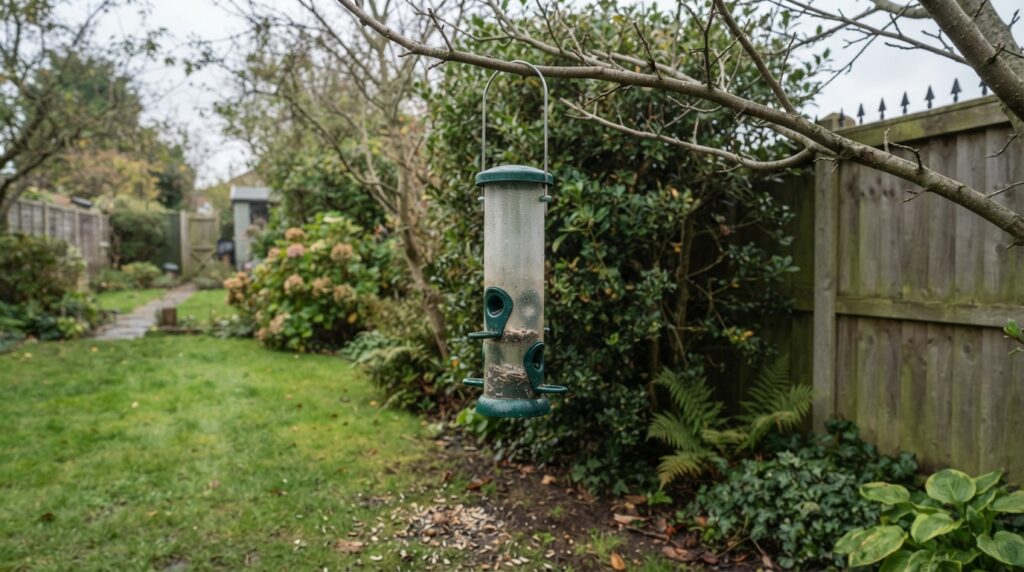
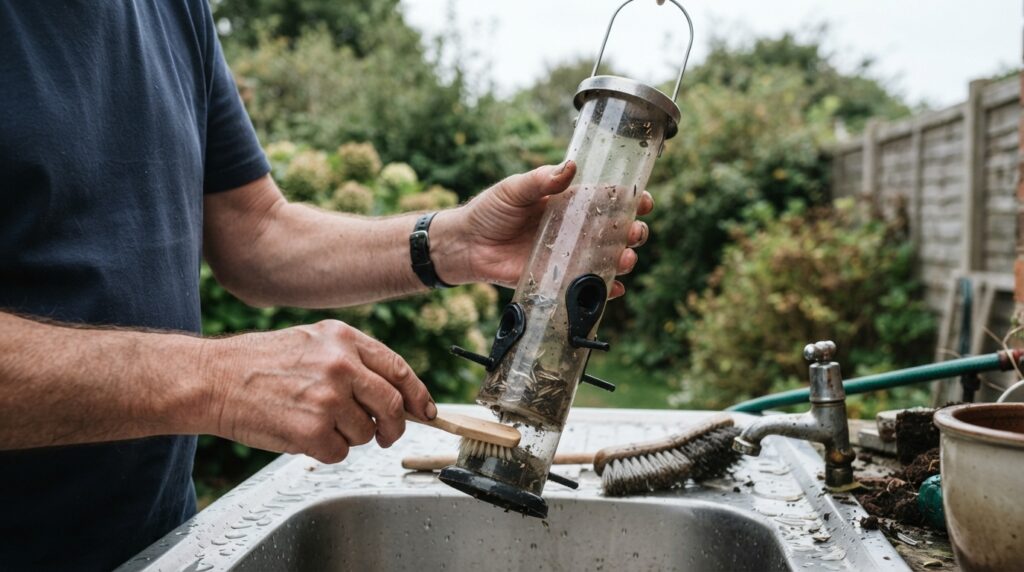
The RSPB’s April 2026 guidance made weekly cleaning the standard, not the exception. Warm soapy water, a bottle brush, rinse, dry fully, move the feeder to a fresh spot every few weeks. This one habit does more to protect finches, sparrows and doves from trichomonosis than any product you can buy.
4. Switch to a no-filler seed
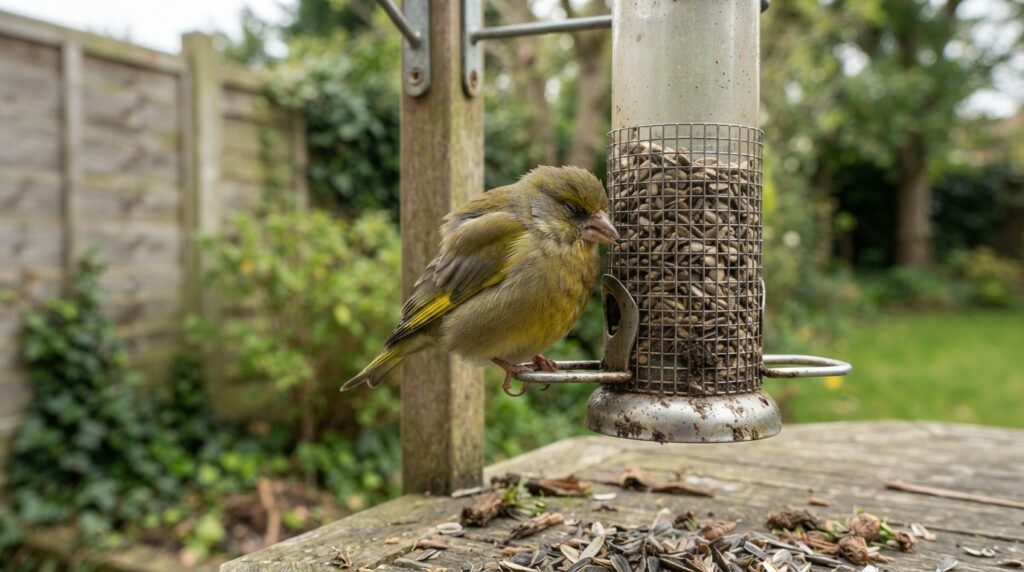
Cut out the cheap mixes full of wheat, split peas and lentils that pile up under the feeder. Sunflower hearts or a “no-mess” mix cost more per bag but almost all of it gets eaten, cutting waste, rats and sprouting weeds. Buy smaller bags more often, and store in a sealed bin.
5. Put up (or clean) a nest box before Valentine’s Day
Blue and great tits start prospecting for nest sites from mid-February. Between 1 September and 31 January you can legally clean out old nests; after that you leave the box alone until autumn. Fit new boxes with a 28 mm hole for blue and coal tits, 32 mm for great tits, an open-fronted box for robins in dense cover, and a hole-fronted box tucked into ivy for wrens.
6. Add fresh water — and keep adding it
Water is often forgotten and always used. Under current RSPB guidance the summer feeding pause exempts water: you can offer it year-round, but change it daily to keep it clean. A shallow dish on the ground is as good as an ornamental bath, sometimes better.
7. Leave one messy corner
Rake the lawn, sweep the path — then draw a line. One corner with a pile of leaves, a rotting log, nettles or long grass supports the beetles, spiders and larvae that feed wrens, dunnocks, robins and hedgehogs. It costs nothing and looks after itself.
8. Photograph or keep a garden bird list
A little notebook or a phone note where you jot down the first singing thrush, the last redwing, the day the swifts return, becomes something valuable over years. Try a “garden year list” — how many species you can identify in your garden by 31 December 2027. Twenty is a good target for a small urban garden; forty is achievable in a rural garden with hedge and open views.
9. Cut light and window strikes
Birds hitting windows kill millions of UK birds a year. External decals, screens or a couple of vertical strips of tape on the outside of the glass are proven to help. Where feeders sit, keep them either closer than 1 metre to the window (birds can’t build up speed) or further than 5 metres away (birds recognise the house as a wall).
10. Say no to poisons, plastic grass and slug pellets
Slug pellets, rat poisons in unsealed bait stations and lawn “weed and feed” all leach up the food chain. Song thrushes are eaten by sparrowhawks; slug-eating hedgehogs and thrushes take pellets; robins pick worms off poisoned lawns. Plastic grass supports no invertebrates at all — a garden that runs on it feeds nothing. Pull one habit out this year.
January calendar: feeders topped up daily, water not frozen, signed up for Big Garden Birdwatch, bare-root shrub bought, one nest box cleaned. Everything else can wait.
Big Garden Birdwatch 2027: the RSPB confirms the exact dates each autumn. Search “Big Garden Birdwatch 2027” from December for the sign-up page.
Common questions
When is Big Garden Birdwatch 2027?
The RSPB confirms the exact weekend each autumn. It’s traditionally held over the last weekend in January, so late January 2027 is the safe expectation — check the RSPB site for confirmed dates from December.
What’s the cheapest thing I can do for garden birds?
Leave a corner untidy and offer water every day. Both are free.
Is it worth planting a hedge just for birds?
Yes. A three-metre mixed native hedge (hawthorn, blackthorn, hazel, holly) fed by a compost mulch will feed and shelter birds within two seasons.
What about a resolution for a small balcony?
A window feeder, a small water dish and a pot of ivy or an evergreen shrub add up to more than you’d think in a flat.
Related guides
- Big Garden Birdwatch guide
- Best plants for birds
- Complete nest box guide
- Attracting birds to a balcony or flat
- A year-round bird calendar for the UK garden
Sources: RSPB Big Garden Birdwatch and garden bird feeding guidance (April 2026 update); BTO Garden BirdWatch; Wildlife and Countryside Act 1981; RSPB and Butterfly Conservation guidance on pesticide-free gardening.
Compare current prices on bird food and feeders at Amazon UK. Prices and stock change often, so it is worth checking before you commit.
Browse bird food →