Beakfeeder is reader-supported. If you buy through our Amazon links we may earn a small commission at no extra cost to you.
At Christmas in a typical UK garden you’ll see robins, blackbirds, blue tits, great tits, house sparrows, starlings, dunnocks, woodpigeons and — if you’re lucky — winter visitors like redwings and blackcaps. Cold weather brings more birds to feeders because natural food is scarce, so a well-stocked garden over Christmas is one of the best times to watch a bird table anywhere in the year.
- Peak viewing: a still, frosty morning with fresh food out.
- Best foods: sunflower hearts, fat balls, mealworms, halved apples.
- Star visitor: the winter blackcap — often overlooked.
- Legal note: nest boxes can be cleaned between 1 September and 31 January.
- Big Garden Birdwatch: late January — start noting what you see now.
1. Robin
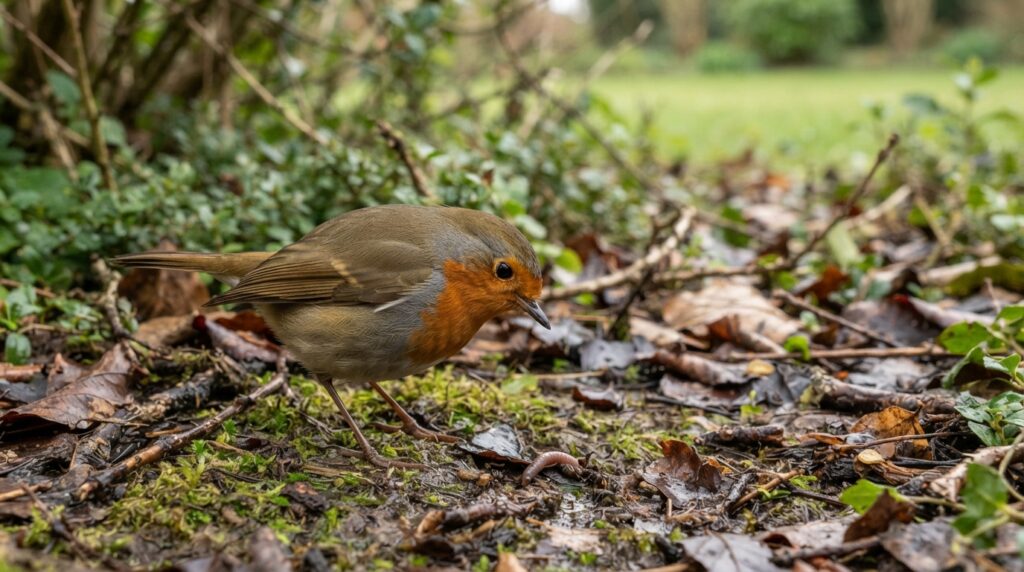
The bird on the Christmas card, and for good reason. Robins hold territory year-round and sing through winter, one of very few birds you’ll hear on Christmas morning. In cold snaps they become bold enough to take mealworms from the hand. The Victorians nicknamed postmen “robins” because of their red uniforms, and cards followed — that’s why robins are on almost every Christmas card printed.
Feed: live or soaked dried mealworms, sunflower hearts, fat pellets on a ground tray.
2. Blackbird
A male blackbird under a berry bush or picking through leaf litter is a winter-garden staple. Numbers are boosted through winter by continental blackbirds from Scandinavia and central Europe. Windfall apples are their absolute favourite. Females are dark brown, not black; young males have brown wings until their first full moult.
Feed: halved apples on the lawn, soaked sultanas, suet crumble.
3. Blue tit
Blue tits visit gardens in family groups through winter. Their winter roosts can be up to a dozen birds packed into one hole, sharing body heat. A single feeder of sunflower hearts is what pulls them in.
Feed: sunflower hearts, peanut cake, fat balls.
4. Great tit
Bigger, bolder and louder than a blue tit, with a black head and a black stripe down a yellow chest. Their “teacher, teacher” song often starts on mild days as early as Boxing Day — the first hint of spring in the garden calendar.
Feed: sunflower hearts, whole peanuts in a mesh feeder, suet.
5. House sparrow
Once so common no one paid attention, house sparrows are now on the UK Red List. A flock in the hedge is genuinely worth celebrating. They love company, thick cover and mixed seed on the ground.
Feed: a good no-mess mix, sunflower hearts, kibbled peanuts.
6. Starling
Winter is when starlings’ plumage is at its most beautiful — dark, oily green and purple with fine white spots (their “star” pattern). Small garden flocks join the bigger evening murmurations you’ll see over reedbeds and piers around the country.
Feed: fat balls, mealworms, suet in any form.
7. Dunnock
The quiet, streaky brown bird shuffling under the feeder is a dunnock — often mistaken for a female house sparrow, but with a slate-grey face and a thin insect-eater’s bill. They pick up crumbs and small seed from the ground and rarely go up on feeders.
Feed: a scatter of finely chopped suet and small seed on the ground.
8. Woodpigeon
The UK’s biggest and commonest pigeon. Look for the white patch on the side of the neck and the white bar across each wing in flight. They’ll clean up almost anything spilled from a feeder.
Feed: naturally clears fallen seed — no separate provision needed.
9. Blackcap (winter visitor)
A grey warbler with a black cap on the male, chestnut-brown on the female. The blackcaps in your Christmas garden are almost certainly not our summer breeders — they’re a separate population that migrates from central Europe to spend winter here, arriving in gardens from November onwards. A single male will often guard a fat feeder aggressively.
Feed: halved apples, fat balls, soaked sultanas.
10. Redwing (winter visitor)
Our smallest thrush, arriving in flocks from Scandinavia and Iceland from October. Look for the creamy stripe above the eye and the rusty-red flank patch under the wing. Redwings turn up in gardens in real numbers only in cold weather, when berries in the hedgerows have been stripped.
Feed: windfall apples on the lawn are the best draw.
Honourable mentions: coal tit, long-tailed tit (in fluffy family flocks), chaffinch, goldfinch, fieldfare (redwing’s bigger cousin) and great spotted woodpecker on peanut feeders.
What to put out over Christmas week
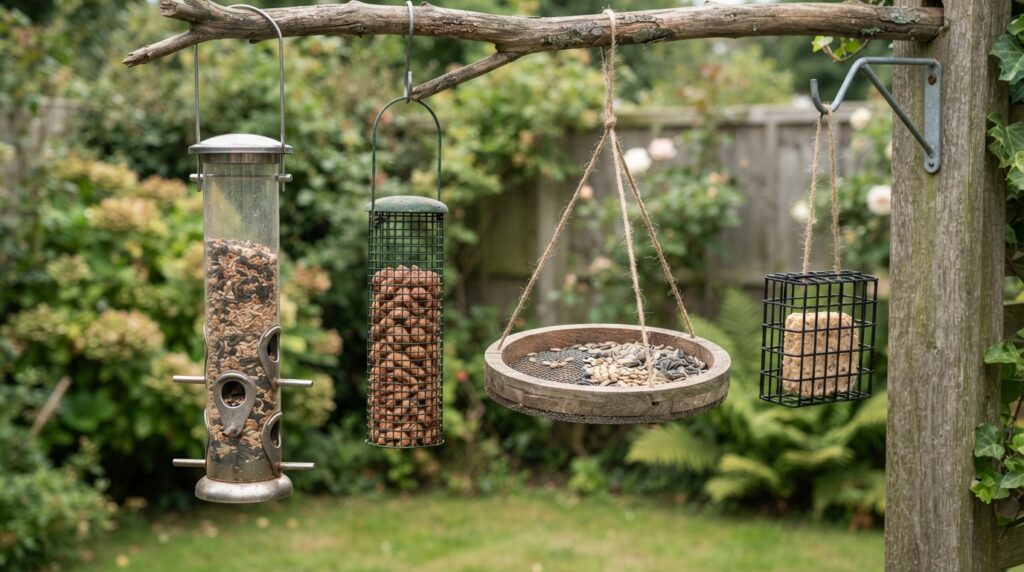
If you’re going to fill just three feeders and one dish over the holidays, make them:
- A tube of sunflower hearts — feeds tits, finches, siskins, sparrows.
- A fat ball feeder — starlings, blackcaps, long-tailed tits.
- A peanut feeder (mesh, no whole peanuts loose) — tits and woodpeckers.
- A ground dish of soaked sultanas, mealworms and suet crumble — robins, dunnocks, blackbirds, thrushes.
Christmas timing: seed feeding restarts in November under the RSPB’s 2026 guidance (a pause runs 1 May–31 October). By Christmas you’ll be well into peak feeding season. Fresh water matters just as much as food — change it daily if it freezes.
Sultanas and raisins are toxic to dogs. Keep dried fruit on a raised dish if you have one.
Common questions
Which bird is most likely to sing on Christmas morning?
The robin. Both males and females hold winter territory and sing to defend it. A soft, wistful song from a garden shrub at dawn on 25 December is almost always a robin.
Why do I see more birds at feeders in December?
Natural food — berries, seeds, invertebrates — is at its lowest of the year, days are short so birds need to feed more efficiently, and cold means they need more calories.
Are any birds unusually common in gardens over Christmas?
Winter blackcaps and redwings are the two most likely surprises. A hard cold snap often brings fieldfares and even the odd waxwing in irruption years.
Should I feed birds on Christmas Day even though we’re eating?
Yes — birds don’t get a day off. Little and often is fine; a topped-up feeder in the morning is enough.
Related guides
- Christmas leftovers you can feed birds
- Winter visitors to UK gardens
- Robin guide
- How to help birds in freezing weather
- Big Garden Birdwatch guide
Sources: BTO Garden BirdWatch and BirdFacts; RSPB species profiles and garden bird feeding guidance (April 2026 update); BTO reports on winter blackcap movements.
Compare sunflower hearts and suet at Amazon UK. Prices and stock change often, so it is worth checking before you commit.
Browse bird food →