Affiliate disclosure: some links on this page go to Amazon. If you buy through one we may earn a small commission, at no extra cost to you. Full disclosure.
Greenfinch numbers recorded in UK gardens have fallen by around 67% since 1979 — more than two million birds — and they’re now on the Red List. The cause is trichomonosis, a parasitic disease spread at bird feeders. If you want to help greenfinches, the most useful thing you can do is clean your feeders weekly.
If you fed birds in the 1980s or 90s, greenfinches were unavoidable — chunky, olive-green, quarrelsome birds that dominated peanut feeders in numbers.
Most people now feeding birds have never had one in the garden. This is the clearest example in Britain of a common garden bird disappearing within living memory, and unusually, it’s a decline in which garden feeders themselves played a part.
Greenfinch quick facts
- Status: UK Red List of conservation concern
- Decline: around 67% in garden records since 1979
- Cause: trichomonosis, a parasitic disease
- Key feature: bright yellow flash on the wing and tail edges
- How to help: weekly feeder cleaning, moving feeders, feeding in moderation
Identifying a greenfinch
Size: about 15cm — chunkier and heavier-built than a chaffinch, with a noticeably thick neck and a large head.
Male: olive-green with a distinctly yellow-green cast, brightest in spring. Bright yellow flashes along the wing edge and the sides of the tail, obvious in flight.
Female: duller and browner-green with more subdued yellow markings, but the wing flash is still there.
The bill is the other giveaway — heavy, pale and conical, built for cracking large seeds. Considerably stouter than a goldfinch’s fine bill.
The call is distinctive once learned: a long, drawn-out, slightly wheezy “dweeeee”, often given from a treetop in spring, mixed into a twittering song.
Most confused with: a female siskin (smaller, more streaked, forked tail) or a female chaffinch (slimmer, two white wing bars rather than a yellow flash).
What happened
The decline is unusually well documented, because it happened in gardens where people were watching.
Around 2005, an outbreak of trichomonosis emerged in British finches. The parasite responsible, Trichomonas gallinae, was already known in pigeons and doves, but had not previously caused significant disease in finches.
It infects the mouth, throat and upper digestive tract, producing lesions that make swallowing progressively harder. Affected birds effectively starve while sitting at a full feeder.
Greenfinches were hit hardest for two specific reasons:
- They favour seeds and peanuts — precisely what people put out
- They flock at feeders in numbers, and the parasite spreads through saliva and regurgitated food
Wider UK monitoring shows declines of over 65% since the mid-1990s, with the sharpest fall following the arrival of this strain. Greenfinches moved onto the Red List of conservation concern.
Chaffinches have been badly affected too, and there’s growing concern that bullfinches may now be following the same pattern.
Why this changed how everyone feeds birds
The greenfinch decline is the reason UK feeding guidance was substantially revised in April 2026, following an evidence review by the RSPB with the BTO and the Institute of Zoology.
The changes that came from it:
- Clean feeders at least weekly, and move them to a fresh spot each time
- Pause seeds and peanuts between 1 May and 31 October, when disease risk peaks
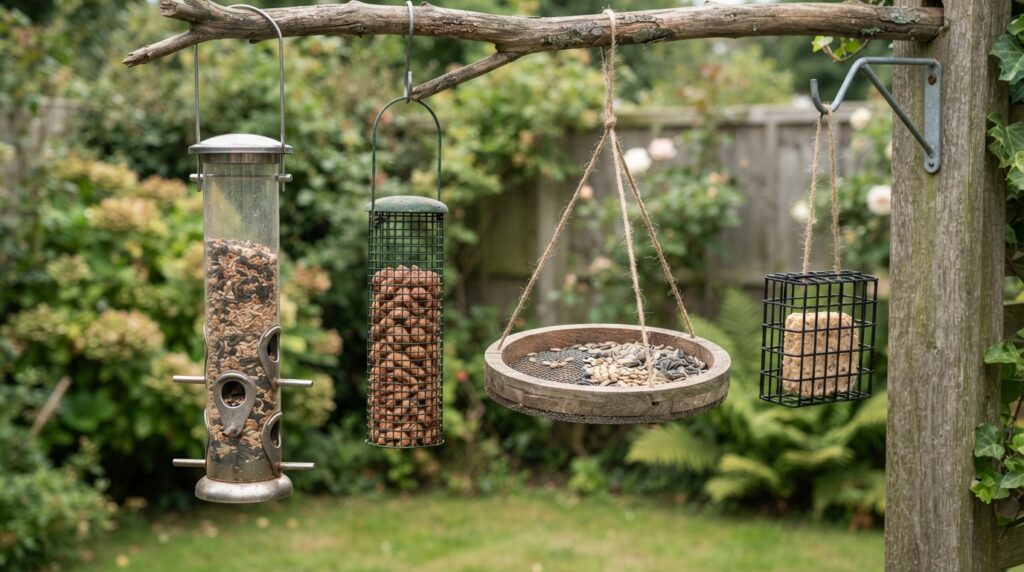
- Stop using flat-surfaced feeders — bird tables, window feeders and trays, where regurgitated food collects
- Only offer water if you can change it daily
- Feed in moderation, and spread feeders out rather than clustering them
Our seasonal feeding guide sets all of this out, including where informed people disagree with parts of it.
The uncomfortable point worth being straight about: supplementary feeding is genuinely good for birds, and it also created the conditions for this outbreak. Both are true. The response isn’t to stop feeding — it’s to feed hygienically, which is entirely achievable.
What to feed them
Greenfinches are seed specialists with a bill built for larger, tougher seeds.
- Sunflower hearts — the reliable choice, taken readily
- Black sunflower seeds — they’re one of the few garden birds that can crack these easily
- Peanuts in a mesh feeder — historically their favourite, and aflatoxin-free bird-grade only
- Nyjer — taken, though goldfinches dominate it
How to actually help
Unusually for a garden bird, the most useful thing isn’t what you put out — it’s how you manage the feeder.
- Clean feeders at least weekly. Hot soapy water, then a non-toxic disinfectant such as Ark-Klens or a mild 5% bleach solution. Rinse and dry completely
- Move the feeder to a fresh spot after each clean, and clear the debris underneath
- Spread feeders out rather than clustering them, to reduce crowding
- Feed in moderation — seed eaten within a day or two rather than sitting
- Only offer water if you can change it daily with fresh tap water
- Follow the seasonal pause — seeds and peanuts 1 November to 30 April
- Stop feeding immediately if you see sick birds, and report it
Our cleaning guide covers the method properly.
If you see a fluffed-up, lethargic finch struggling to swallow or drooling, that’s likely trichomonosis. Stop feeding, deep-clean everything, and report it to Garden Wildlife Health — their data is what tracks outbreaks and informs national guidance. See our guide to sick birds at the feeder.
Is there any good news?
Cautiously, some. The steepest phase of the decline was in the years immediately following the outbreak, and there are signs of the rate of loss easing in more recent monitoring — though from a much lower base, and nobody is describing it as a recovery.
Greenfinches remain widespread in the UK; the loss has been in abundance rather than range. That means gardens that manage feeders well can still get them, and in some areas people report them returning.
Taking part in the Big Garden Birdwatch each January is a genuinely useful contribution here — the greenfinch decline was tracked largely through exactly that data.
Common questions
Why did I used to get greenfinches and now don’t?
Almost certainly the trichomonosis outbreak from around 2005 onwards. It hit greenfinches harder than any other species, and garden populations fell dramatically within a few years.
Did bird feeders cause it?
Feeders didn’t cause the disease, but they concentrate birds around shared food and water, which is how it spreads. That’s precisely why the hygiene guidance changed rather than the advice to feed.
Should I stop feeding to protect them?
No. Feeding done hygienically is beneficial. Stopping altogether removes a food source without addressing transmission — weekly cleaning and moving feeders does far more.
Can trichomonosis affect me or my pets?
No. The parasite doesn’t infect mammals. Standard hygiene when handling feeders is still sensible for other reasons.
How do I tell a greenfinch from a siskin?
Greenfinches are chunkier with a heavy pale bill and a plain yellow-green body. Siskins are smaller, more streaked, with a black cap on the male and a forked tail.
Related guides
- Sick birds at your feeder: spotting trichomonosis and what to do
- How to clean a bird feeder — and why it now matters more
- When to feed garden birds: the new UK guidance explained
- How to attract goldfinches to your garden
Sources: RSPB Big Garden Birdwatch population trends and conservation status listings; British Trust for Ornithology research on finch trichomonosis; Garden Wildlife Health (ZSL, BTO, RSPB, Froglife); RSPB feeding guidance (April 2026).
Compare current prices on bird food and feeders at Amazon UK. Prices and stock change often, so it is worth checking before you commit.
Browse bird food →