Affiliate disclosure: some links on this page go to Amazon. If you buy through one we may earn a small commission, at no extra cost to you. Full disclosure.
The main UK bird nesting season runs from March to August, though some species start earlier and a few continue into September.
That range matters practically as well as biologically: it’s the window in which cutting a hedge, clearing ivy or opening a nest box can be a criminal offence.
The dates that matter
- Main nesting season: March to August
- Don’t cut hedges or dense shrubs: 1 March to 31 August
- Nest boxes up by: mid-February (autumn is better)
- Clean nest boxes: September to January only
- Legal position: it’s an offence to damage or destroy an active nest
Month by month
| Month | What’s happening |
|---|---|
| January | Territorial singing increases. Some birds prospect nest sites. Long-tailed tits may begin building late in the month |
| February | Nest building starts in earnest for early species. Last chance to put up boxes. National Nest Box Week from the 14th |
| March | Blackbirds, robins and song thrushes begin laying. Hedge cutting stops |
| April | Peak nest building. Blue tits and great tits lay. Summer migrants arrive |
| May | Peak breeding. Tit chicks hatch, timed to the caterpillar peak. First fledglings appear |
| June | Fledglings everywhere. Second broods begin for many species |
| July | Later broods. Adults begin moulting; gardens go noticeably quiet |
| August | Season winding down. Late broods still possible. Moulting continues |
| September | Nesting effectively over. Hedge cutting and box cleaning can resume — check first |
| October-December | No nesting. Best time to put up new boxes and do hedge work |
By species
| Bird | Typical laying | Broods | Nest site |
|---|---|---|---|
| Blackbird | March-July | 2-3 | Hedges, shrubs, ivy, sheds |
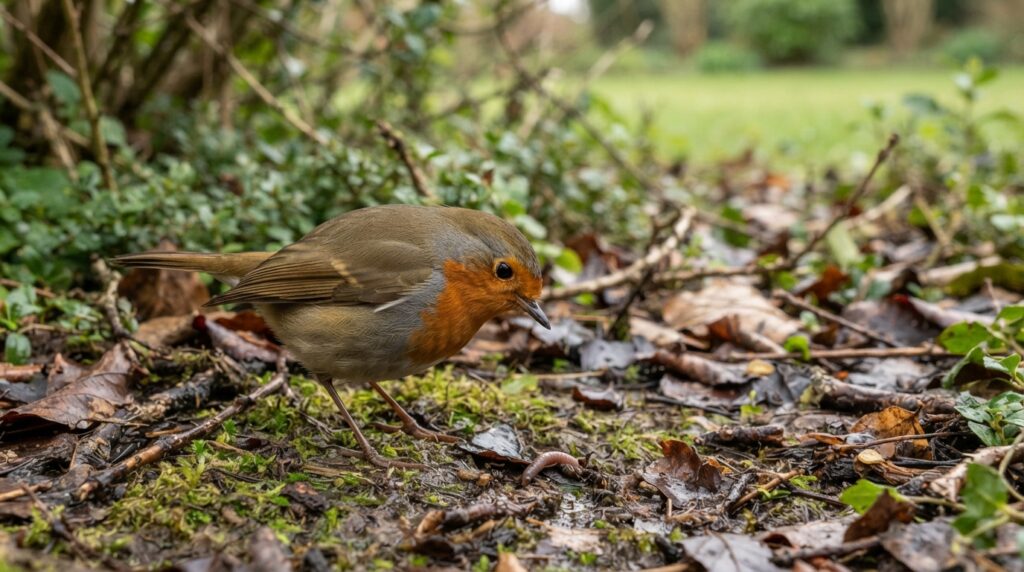
| Robin | March-July | 2-3 | Low, hidden — banks, ivy, sheds, odd containers |
| Song thrush | March-July | 2-3 | Dense shrubs and hedges |
| Blue tit | April-May | 1 | Cavities, nest boxes (25mm hole) |
| Great tit | April-May | 1 | Cavities, nest boxes (28mm hole) |
| House sparrow | April-August | 2-3 | Roof spaces, cavities, colonial |
| Starling | April-June | 1 | Roof cavities, holes in trees |
| Goldfinch | April-August | 2 | Open cup nest, often high in trees |
| Wren | April-July | 2 | Domed nest in cover, ivy, sheds |
| Long-tailed tit | March-May | 1 | Elaborate domed nest of moss, lichen and spider silk |
| Swift | May-July | 1 | Roof cavities. Arrives late April/May, leaves by August |
| House martin | May-August | 2 | Mud cup under the eaves |
The single-brood gamble
Worth understanding, because it explains why blue tits behave so differently from blackbirds.
Blue tits and great tits raise one brood a year, but a large one — often eight to twelve eggs. They time it to coincide with the caterpillar peak on oak and other trees, a window lasting only a couple of weeks.
Everything rides on hitting it. Get it right and most chicks fledge. Miss it — because a warm early spring shifted the caterpillars before the birds anticipated — and an entire brood can fail. This timing mismatch is one of the more closely studied effects of a changing climate on UK birds.
Blackbirds and robins take the opposite approach: smaller clutches, several attempts across a long season, spreading the risk.
The law
Under the Wildlife and Countryside Act 1981 it is an offence to:
- Intentionally take, damage or destroy the nest of any wild bird while it is in use or being built
- Intentionally take or destroy the eggs of any wild bird
- Intentionally kill, injure or take any wild bird
Species on Schedule 1 have additional protection against disturbance while nesting.
Note the wording: the protection applies while the nest is in use or being built — not to a specific calendar window. In practice, March to August is when you must assume nests are active, but a February hedge cut could still catch an early long-tailed tit.
Hedge cutting
Don’t cut hedges or dense shrubs between 1 March and 31 August. This is the most common way active nests are destroyed accidentally, usually by people with no intention of harming anything.
If work genuinely can’t wait, a thorough check for nests is required first — and if a nest is found, the work stops.
There are also separate rules for agricultural hedgerows under cross-compliance regulations, which restrict cutting between 1 March and 31 August.
Other garden work
- Ivy and climbers — prime nest sites. Leave until autumn
- Tree work — schedule for winter. Tell your tree surgeon why
- Roof and building work — sparrows, starlings, swifts and house martins all nest in buildings. See our roof nesting guide
- Strimming rough grass — check first
- Nest boxes — don’t open, move or inspect between March and August
What to do through the season
February — preparation
- Get nest boxes up if you haven’t. 25mm for blue tits, 28mm great tits, 32mm house sparrows, open-fronted for robins
- Face them between north and east
- Finish any hedge work before the end of the month
March to April — building and laying
- Leave nesting material available — leave a patch of moss, don’t clear all the leaf litter
- Stop hedge and shrub work entirely
- Keep feeding: this window still falls within the 1 November to 30 April period when the full food range is recommended
May to July — chicks and fledglings
- Seeds and peanuts pause from 1 May under current guidance. Suet, fat balls and mealworms continue in small amounts
- Mealworms are particularly valuable now — associated with better chick survival
- Keep cats indoors at dawn and dusk, especially through the fledging period
- Expect fledglings on the ground. Most don’t need rescuing — see our baby bird guide
- Don’t use insecticides. Caterpillars are what the chicks are being fed
August to September — winding down
- Gardens go quiet as adults moult. This is normal, not a problem
- From September, hedge work and box cleaning can resume — check each box is genuinely empty first
Common questions
When exactly can I cut my hedge?
Between 1 September and 28 February, and check for nests even then — some species start very early. Never between March and August.
Is it illegal to remove a bird’s nest?
While it’s in use or being built, yes. An old, genuinely disused nest can usually be removed outside the breeding season.
Birds are nesting somewhere inconvenient. What can I do?
Wait. It’s an offence to disturb an active nest, and most are occupied for only a few weeks. Then fix the underlying gap in autumn.
Is the nesting season getting earlier?
Long-term BTO monitoring indicates many UK species now lay earlier than they did several decades ago, which is linked to warmer springs. It’s one reason to be cautious about late-winter hedge work.
Should I feed birds during the nesting season?
Current guidance pauses seeds and peanuts from 1 May, keeping suet, fat balls and mealworms available. Mealworms are especially useful for chick-rearing. See our seasonal guide.
Can I watch a nest box with a camera?
Yes, provided everything is installed and tested well before the season starts. You can’t be adjusting equipment once birds are nesting.
Related guides
- When to put up a nest box (and exactly where to site it)
- I’ve found a baby bird — what should I do?
- Birds nesting in your roof or eaves: what you can and can’t do
- When to feed garden birds: the new UK guidance explained
Sources: Wildlife and Countryside Act 1981; RSPB nesting and nest box guidance; British Trust for Ornithology Nest Record Scheme and research on laying date trends; Defra hedgerow cutting regulations.
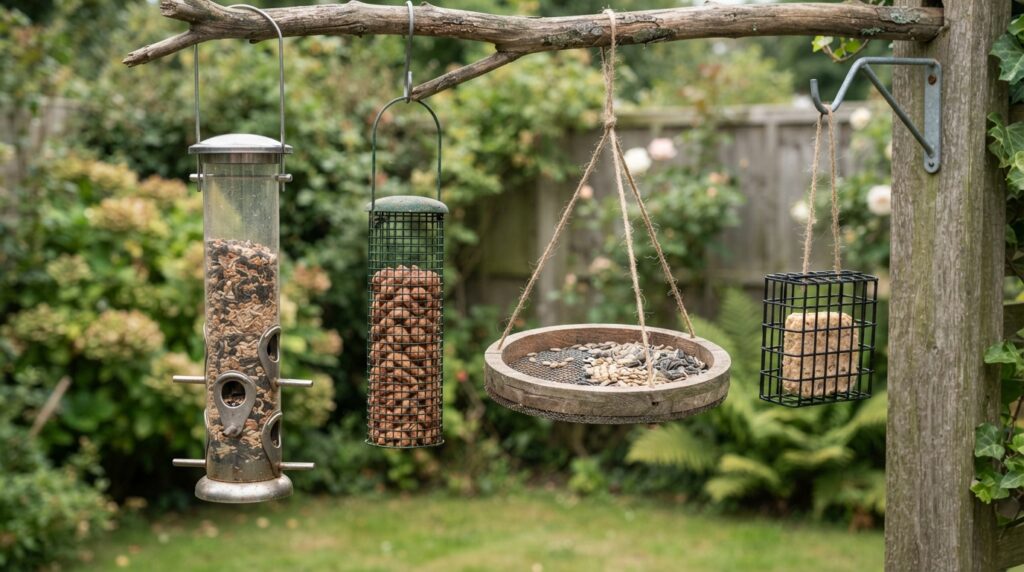
Compare current prices on bird food and feeders at Amazon UK. Prices and stock change often, so it is worth checking before you commit.
Browse bird food →