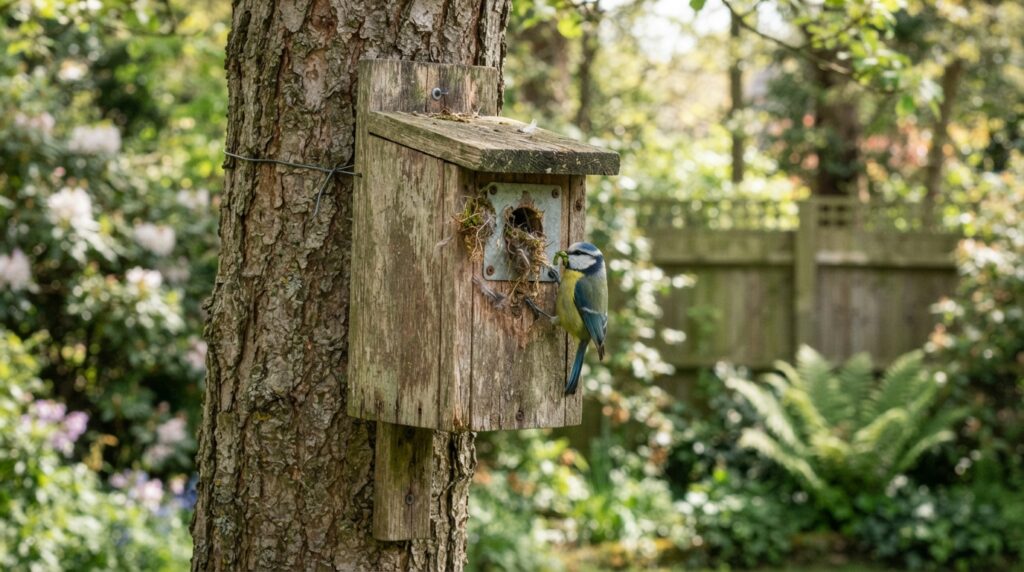
How Long Do Baby Birds Stay in the Nest? A Nest Box Timeline
For blue tits and great tits: roughly two weeks of incubation, then about three weeks in the nest before fledging — so around five weeks from the last egg to…

For blue tits and great tits: roughly two weeks of incubation, then about three weeks in the nest before fledging — so around five weeks from the last egg to…
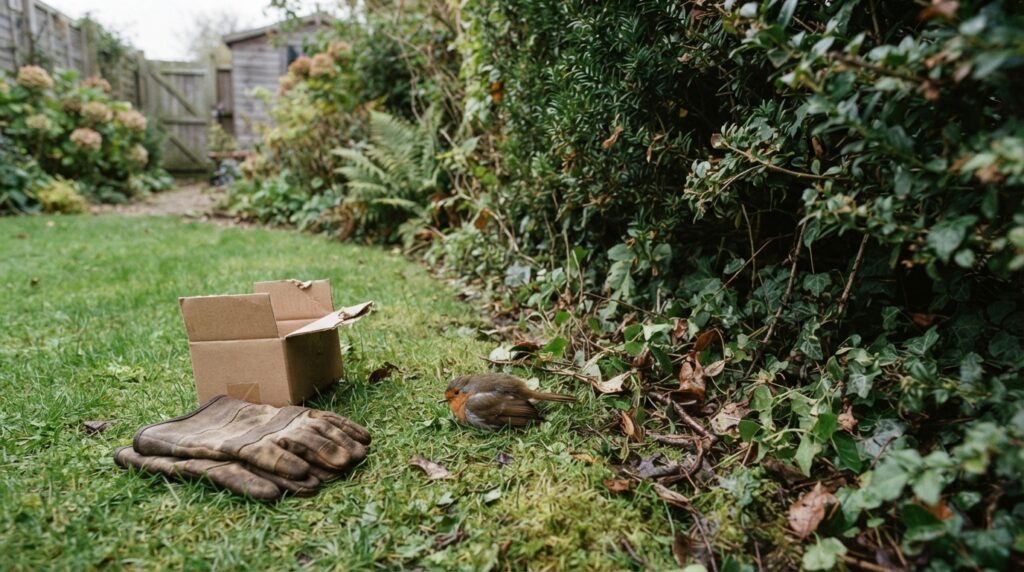
Don’t handle it with bare hands. Use gloves or an inverted plastic bag, double-bag it, and put it in household waste or bury it deep away from water. One dead…
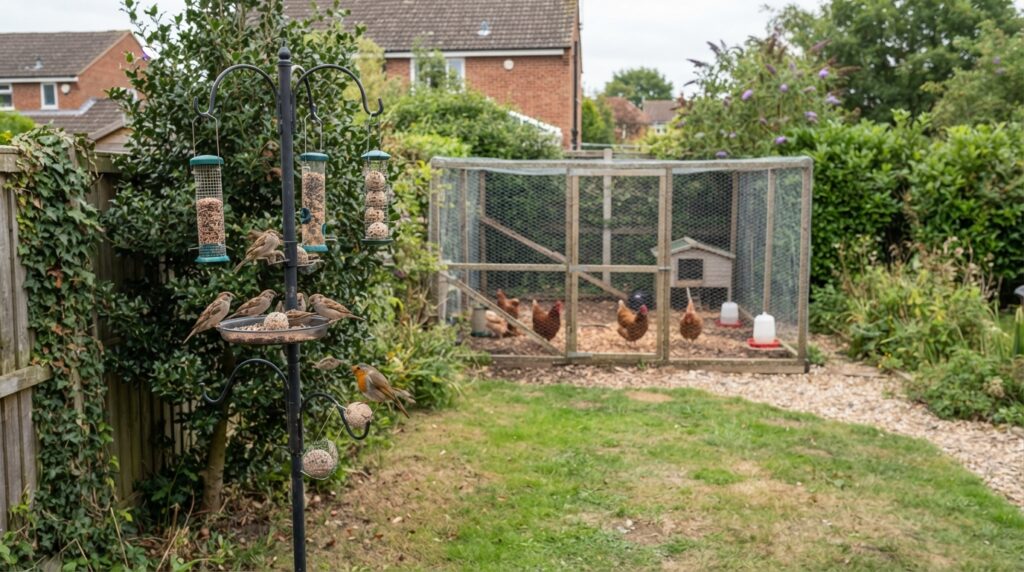
Yes, but with care. The key is keeping wild birds away from your poultry’s feed, water and run — not stopping feeding altogether. Site feeders as far from the chickens…
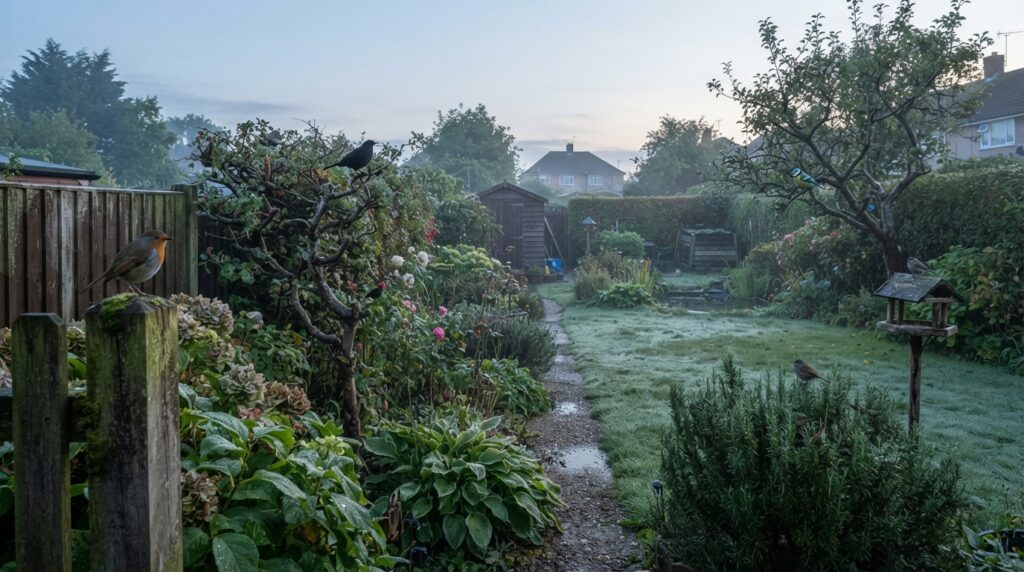
Birds sing at dawn because sound carries further in still, cool air, it’s too dark to forage productively, and a male singing hard at first light is advertising that he…
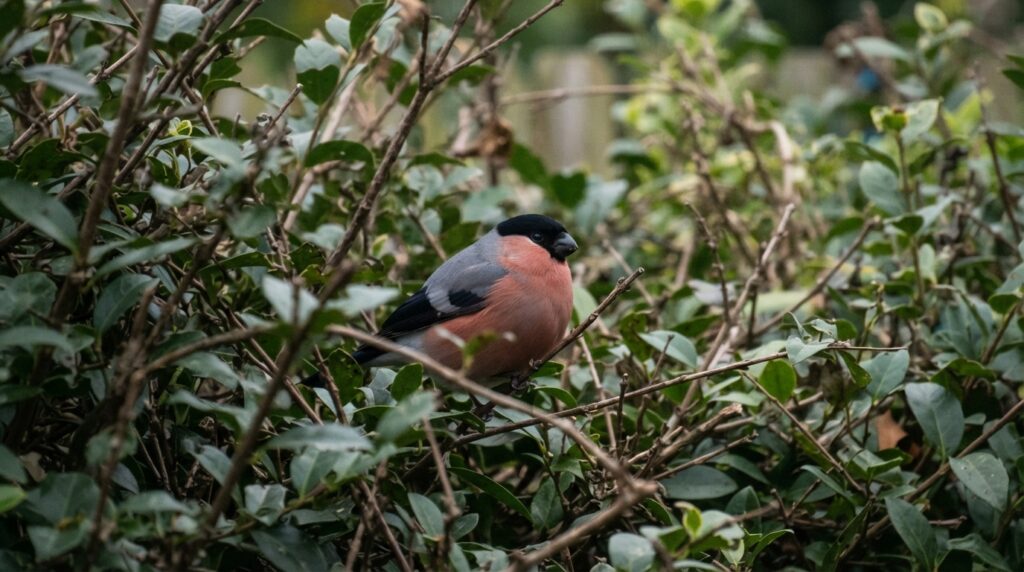
A male bullfinch has a rose-pink breast, black cap and thick black bill; the female is greyish-buff with the same black cap. Both show a bright white rump in flight,…
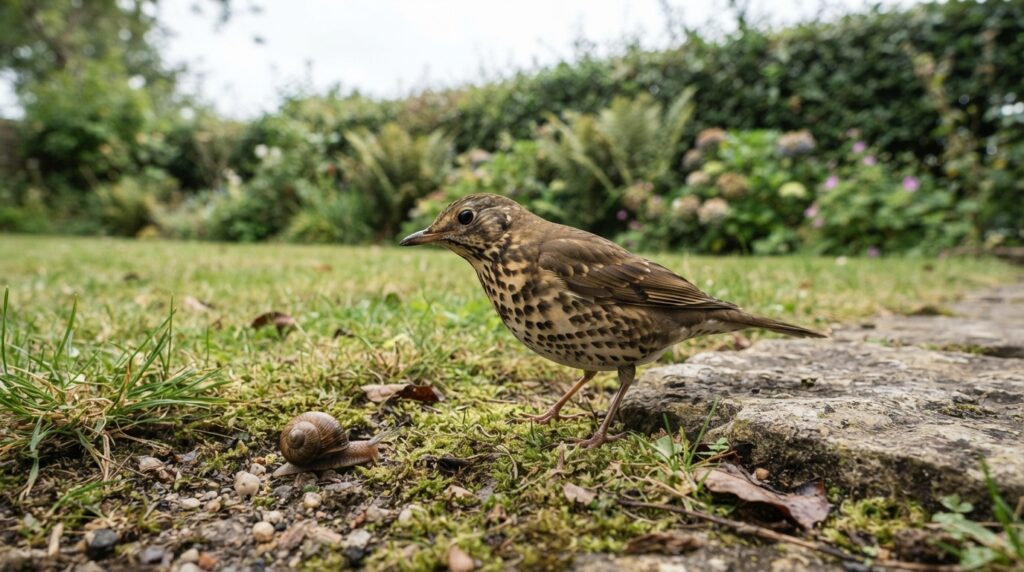
A song thrush has a cream breast covered in bold dark arrowhead spots arranged in rows. They feed on the ground, eat snails, and are Red Listed after a severe…
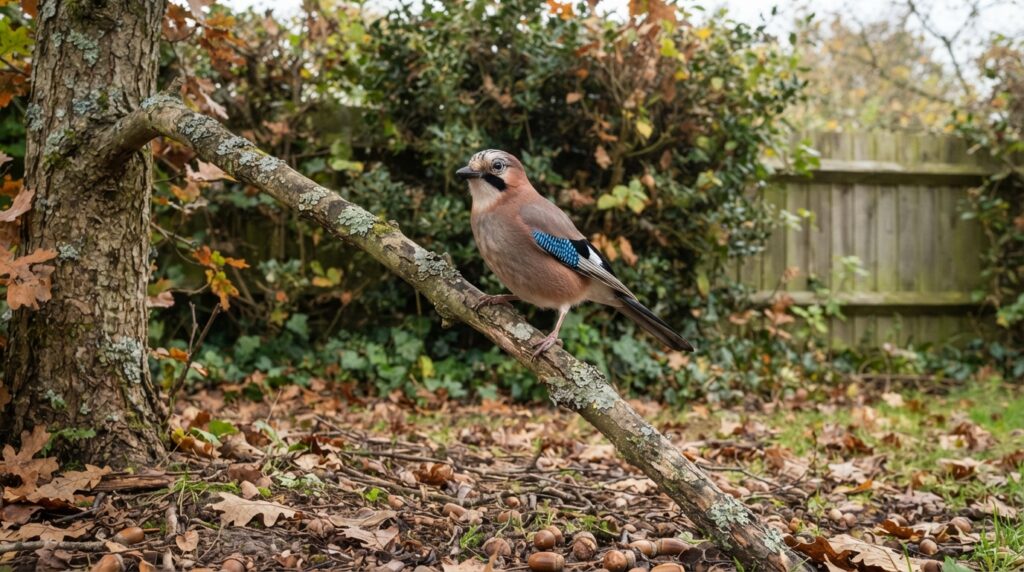
Jays are pinkish-brown with a bright blue barred wing patch and a white rump that flashes in flight. They’re shy woodland crows that visit gardens most often in autumn, when…
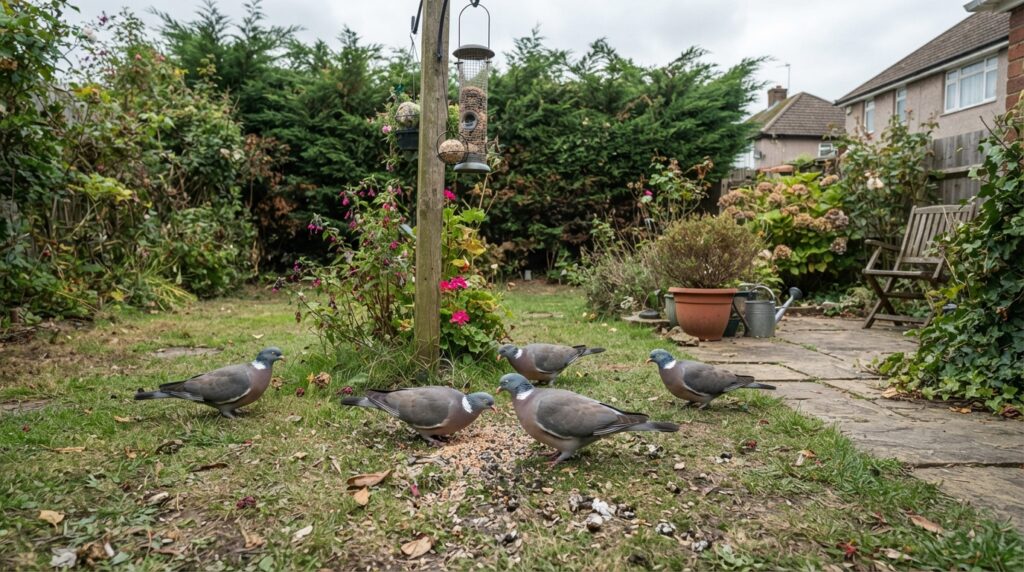
Pigeons are there for spilled seed on the ground, not the feeder itself. Switch to sunflower hearts (almost no waste), stop ground feeding, clear beneath the feeder, and use a…
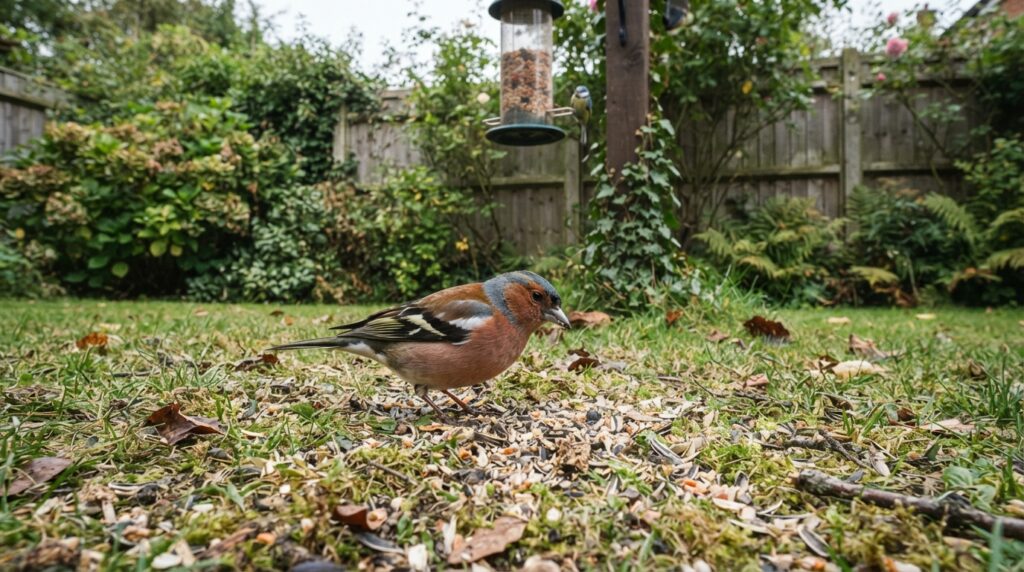
Two bold white wing bars identify a chaffinch — present on both sexes, unlike the male’s pink breast. They feed mainly on the ground beneath feeders rather than on them,…
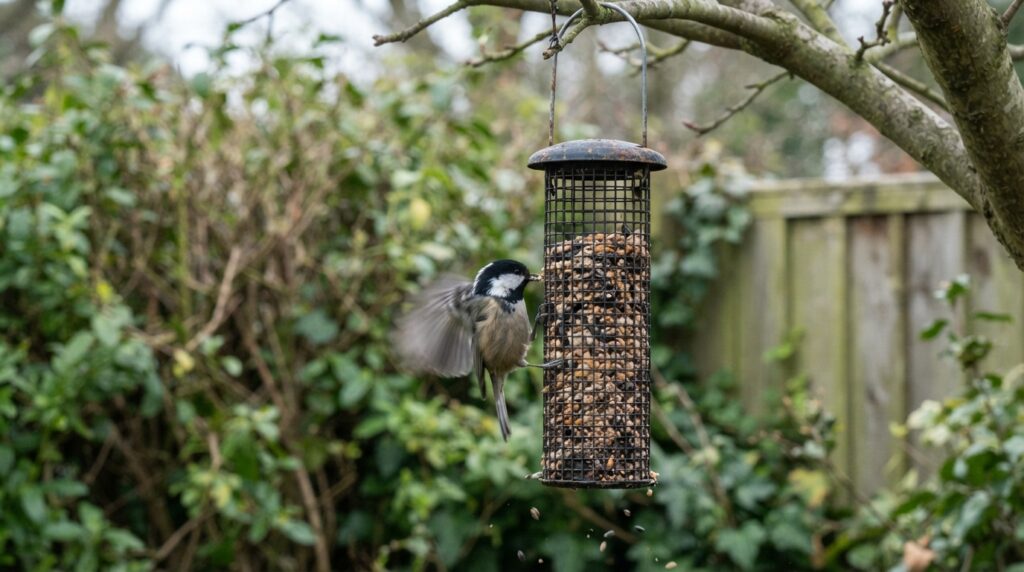
A coal tit has a white patch on the back of its neck — the single feature that separates it from marsh and willow tits. It’s the smallest UK tit,…