Affiliate disclosure: some links on this page go to Amazon. If you buy through one we may earn a small commission, at no extra cost to you. Full disclosure.
A male bullfinch has a rose-pink breast, black cap and thick black bill; the female is greyish-buff with the same black cap. Both show a bright white rump in flight, which is often all you see. They’re shy, quiet, and most likely at a feeder with sunflower hearts in late winter.
The bullfinch is one of the most striking birds that visits British gardens and one of the least often noticed — because it’s quiet, keeps to cover, and leaves at the first sign of movement.
Most people’s first bullfinch is a white rump disappearing into a hedge.
Bullfinch quick facts
- Size: about 16cm — chunky, bull-necked
- Male: rose-pink breast, black cap, grey back
- Female: pinkish-buff to grey-brown, same black cap
- Both: bright white rump, obvious in flight
- Status: UK Amber List after long-term decline
Identifying a bullfinch
Male: unmistakable. Bright rose-pink breast and cheeks, glossy black cap extending around the bill and eye, blue-grey back, black wings with a white wing bar, black tail.
Female: the same pattern in muted tones — pinkish-buff to warm grey-brown underparts, grey-brown back, and the identical black cap. Once you know the cap and the shape, females are easy.
Both sexes: a brilliant white rump that flashes as the bird flies away. In practice this is the most commonly seen field mark, because bullfinches usually leave before you’ve got a proper look.
Shape: notably stocky and thick-necked, with a short, deep, rounded black bill built for handling buds and seeds.
Juveniles lack the black cap entirely and are plain brown — which catches people out in late summer.
The call, and why they’re so easy to miss
Bullfinches are among the quietest garden birds. There’s no loud song to draw attention — the male’s song is a soft, creaky, almost inaudible warble.
The contact call is more useful: a soft, low, mournful single-note whistle, often described as a quiet “peu”. Pairs keep in touch with it constantly, and learning it is genuinely the best way to find them.
They also stay in pairs year-round rather than flocking, so you’re usually looking for two birds rather than a group.
The bud eating
Worth explaining, because it’s the reason bullfinches were once persecuted.
In late winter and early spring, when seeds run short, bullfinches switch to eating the buds of fruit trees — and they’re efficient at it, stripping large numbers.
Historically this made them deeply unpopular in commercial orchards, and for a long period they were legally controlled in fruit-growing areas.
That’s no longer the position. Bullfinch numbers fell substantially through the late 20th century, and the species is now on the Amber List of conservation concern. In an ordinary garden, bud damage is rarely significant, and the tree usually compensates.
If you grow fruit and it genuinely matters, netting individual trees in late winter is the appropriate response.
What to feed them
Bullfinches eat seeds, buds, and — importantly — they feed their chicks on seeds rather than insects, which is unusual among finches.
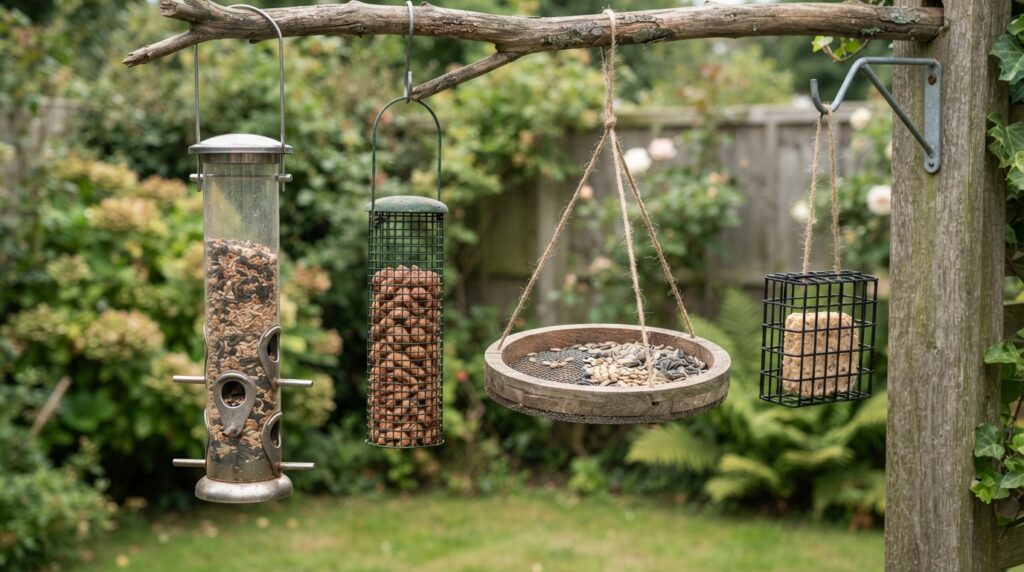
- Sunflower hearts — the most reliable feeder food
- Nyjer — taken, though less enthusiastically than by goldfinches
- Seed heads left standing — often more effective than a feeder
Timing: they’re most likely at feeders in late winter and early spring, when natural seed is exhausted. February and March are the best months to watch for one.
Placement matters more than for most birds. Bullfinches are wary and want a feeder close to dense cover — a hedge, thick shrub or bramble patch. A feeder in the middle of an open lawn is unlikely to get them, however good the food.
The disease concern
There is growing concern that bullfinches may now be affected by trichomonosis, the parasitic disease that caused the greenfinch collapse and has significantly affected chaffinches.
The same precautions apply: clean feeders at least weekly, move them to a fresh spot each time, clear beneath, feed in moderation, and only offer water if you can change it daily.
If you see a fluffed-up, lethargic finch struggling to swallow, stop feeding, deep-clean everything, and report it to Garden Wildlife Health. See our guides on sick birds and the greenfinch decline.
How to attract them
- Offer sunflower hearts in a feeder sited close to dense cover
- Keep a thick hedge — hawthorn, blackthorn or privet. Bullfinches nest in dense shrubs and won’t use a box
- Leave seed heads standing over winter — dock, nettle, ash keys and bramble are all taken
- Don’t tidy the borders in autumn
- Watch in February and March, when natural food runs out
- Learn the soft “peu” call — it’s how you’ll find them
- Stay still and indoors — they’re genuinely shy
Common questions
What’s the bird with a bright white rump flying into the hedge?
Very likely a bullfinch. The white rump is usually the only thing you see as they leave.
Is the brown one with a black cap a female?
Yes. Females have the same black cap as males but muted pinkish-buff or grey-brown underparts. Juveniles have no cap at all.
Are bullfinches rare?
Not rare, but declined and easily overlooked. They’re on the Amber List, widespread across the UK, but quiet and shy enough that many people never notice them.
Will they damage my fruit trees?
They eat buds in late winter, but in a garden the damage is rarely significant. If it matters, net individual trees rather than trying to deter the birds.
Do bullfinches use nest boxes?
No. They build a shallow twig nest in dense shrubs or hedges, so thick planting is the only way to provide for them.
Why do I only see two at a time?
Bullfinches stay in pairs year-round rather than forming flocks. Seeing a pair together is the norm.
Related guides
- Greenfinch: the garden bird that disappeared
- How to attract goldfinches to your garden
- Best plants to attract birds to a UK garden
- Sick birds at your feeder: spotting trichomonosis and what to do
Sources: RSPB species information and conservation status listings; British Trust for Ornithology population trends and Garden BirdWatch; Garden Wildlife Health; Woodland Trust.
Compare current prices on bird food and feeders at Amazon UK. Prices and stock change often, so it is worth checking before you commit.
Browse bird food →