Beakfeeder is reader-supported. If you buy through our Amazon links we may earn a small commission at no extra cost to you.
The yellow bird in your UK garden is most likely a great tit or a blue tit — both have a yellow chest. After those two, the commonest yellow-toned garden birds are goldfinch (yellow wing flash), greenfinch (olive-yellow all over), siskin (small streaky yellow-green), grey wagtail (long tail, bright yellow underneath) and — in rural gardens near farmland — yellowhammer, the “little bit of bread and no cheese” bird.
- Yellow chest, black stripe: great tit.
- Yellow chest, blue cap: blue tit.
- Yellow wing flash, red face: goldfinch.
- Olive-yellow, chunky: greenfinch.
- Small streaky yellow-green: siskin.
- Long-tailed, wags it, bright yellow belly: grey wagtail.
- Bright yellow head, on farmland: yellowhammer.
1. Great tit
The garden bird with the most yellow of them all. Great tits have a bold yellow chest split down the middle by a bold black stripe (broader and blacker on males). Their head is glossy black with white cheek patches. They’re bigger and bolder than blue tits, and their song — a metallic “teacher, teacher, teacher” — is one of the first spring sounds in the garden.
Where: almost every UK garden. Feed: sunflower hearts, peanuts, fat balls.
2. Blue tit
Yellow underneath, blue on top. A blue cap, blue wings, a blue tail and a lemon-yellow chest with a fine dark line down the middle. Smaller than a great tit and much more common at hanging feeders in family groups.
Where: everywhere. Feed: sunflower hearts, peanuts, suet.
3. Goldfinch
Not all yellow, but the yellow bar across each black wing is one of the most striking marks in the garden. The face is red, white and black; the body is warm brown. Goldfinches come in noisy “charms” of three to ten birds and love nyjer seed and sunflower hearts.
Where: most gardens, more in the south. Feed: nyjer seed, sunflower hearts.
4. Greenfinch
Olive-yellow all over, with brighter yellow flashes on the wing and tail. Chunkier than a goldfinch, with a thick pale bill. Numbers have crashed since the late 1970s because of trichomonosis, so any greenfinch is now a bird worth celebrating.
Where: less common than it was, mostly gardens with trees. Feed: sunflower hearts, black sunflower seed.
5. Siskin
Small, streaky, yellow-green with black wings and yellow wing bars — like a tiny, striped, more colourful greenfinch. Males have a black cap; females don’t. Siskins mainly visit gardens in winter and early spring, especially close to conifer plantations, alder or birch. They cling like tits to nyjer and sunflower-heart feeders.
Where: commoner in the north and west, and in winter across the UK. Feed: sunflower hearts, nyjer.
6. Grey wagtail
Despite the name, the grey wagtail is far more yellow than grey. A slim, long-tailed bird with a grey back and a brilliant yellow belly and undertail. The tail is constantly bobbing up and down (this is the wag). Grey wagtails visit gardens with a pond, stream or wet lawn.
Where: gardens with water, or near rivers. Feed: mostly insects — you don’t feed them at a feeder.
7. Yellow wagtail
The yellow wagtail is a much rarer summer visitor of open farmland and grazing pastures. Its body is a rich buttery yellow rather than washed yellow-and-grey. Very unusual in gardens; commonest in central and eastern England from April to September.
Where: farmland, not gardens. Feed: insects — not a feeder bird.
8. Yellowhammer
A striking bright-yellow-headed bunting of hedgerows and rough farmland. Males have almost a full yellow head, chestnut back and streaky breast. Their song is the classic country phrase “a little bit of bread and no cheeeese”. In gardens they appear mainly in rural areas, and mainly in winter when they visit ground feeding stations.
Where: rural gardens near farmland. Feed: mixed seed scattered on the ground.
Rare surprise: a very occasional golden oriole or serin appears in the UK, and canaries or escapee cage birds turn up now and then. If you think you’re seeing something exotic, take a photograph before deciding — the great tit is a common false alarm.
Which garden bird has the most yellow?
| Bird | Where the yellow is |
|---|---|
| Great tit | Whole chest and belly |
| Blue tit | Chest and belly |
| Yellowhammer (male) | Whole head and underparts |
| Grey wagtail | Belly and undertail |
| Siskin | Face, wing bars, tail base |
| Greenfinch | Wing and tail flashes |
| Goldfinch | Broad wing bar |
How to attract yellow birds to your garden
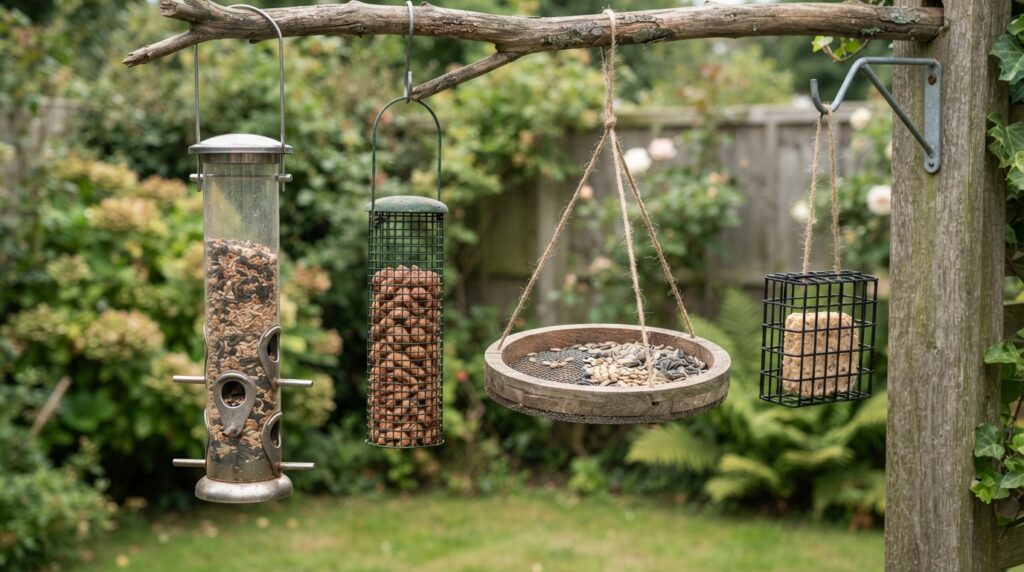
- Sunflower hearts — a magnet for tits, siskins, greenfinches and goldfinches.
- Nyjer feeder — the specialist finch food that pulls in goldfinches and siskins.
- A patch of long grass and seeding herbs — a wildflower corner produces the small seeds finches actually feed on in the wild.
- A shallow water dish — grey wagtails especially rely on water.
Common questions
What is the small yellow bird in my UK garden?
Almost always a blue tit or great tit. If it’s really small and streaky, siskin is the next candidate.
Is there a canary in my garden?
Wild canaries don’t live in the UK. An escaped pet canary is possible, but a greenfinch or siskin is far more likely.
What bird looks like a yellow sparrow?
A yellowhammer — sparrow-sized, brown-and-yellow, and often on the ground under hedges in rural areas.
Are all yellow garden birds finches?
No — tits, wagtails and buntings show yellow too. Look at the shape and behaviour as well as the colour.
Related guides
- Great tit guide
- Blue tit guide
- Goldfinch guide
- Greenfinch guide
- Siskin guide
- Brown birds in UK gardens
- Black birds in UK gardens
Sources: BTO BirdFacts; RSPB species profiles for great tit, blue tit, goldfinch, greenfinch, siskin, grey wagtail, yellow wagtail and yellowhammer.
Compare current prices on bird food and feeders at Amazon UK. Prices and stock change often, so it is worth checking before you commit.
Browse bird food →