Beakfeeder is reader-supported. If you buy through our Amazon links we may earn a small commission at no extra cost to you.
The commonest winter mistakes are letting water freeze, leaving mouldy food out, feeding stale seed from last summer, using cheap mixes packed with filler, and going away for a week with feeders empty. None of them take much to fix — a warm rinse of the bath every morning, clean feeders every week, small amounts of good food replaced often, and a friendly neighbour to top up if you’re away.
- Water: matters as much as food in a freeze.
- Cleanliness: current RSPB advice is weekly cleaning and moving feeders around.
- Peanuts: only from a supplier who tests for aflatoxin.
- Amounts: small and often beats a full feeder that sits and spoils.
- Legal note: nest boxes can be cleaned 1 Sept–31 Jan and left up for roosting.
1. Letting the water freeze
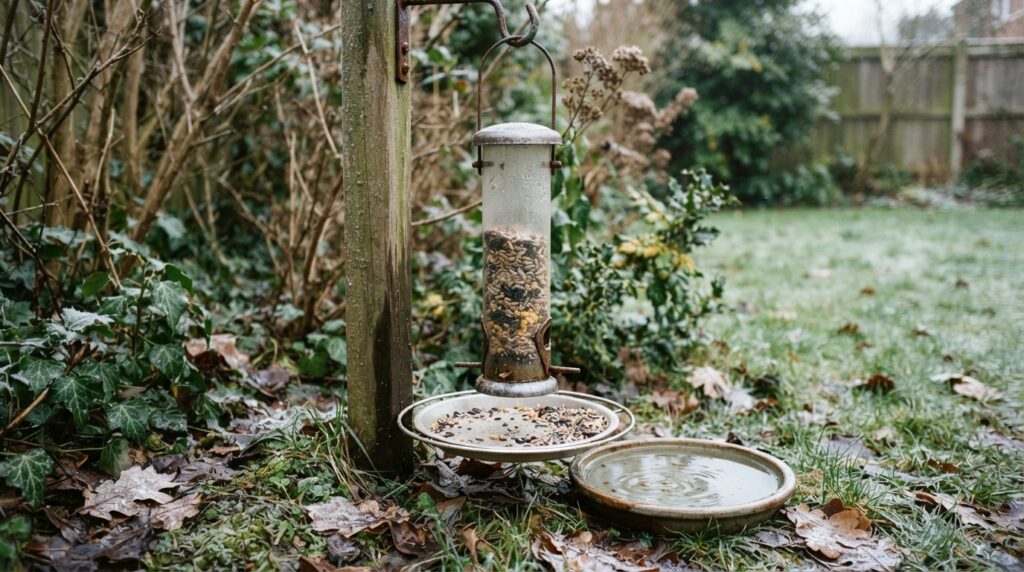
Birds can find snow and puddles for drinking in most winters, but a solidly frozen bird bath is no use to anyone. In freezing weather they burn extra energy to melt snow, and can’t bathe (a bird with clean, well-oiled feathers keeps warmer). Break the ice every morning with a jug of warm water, or use a floating ping-pong ball to keep a patch open on breezy days. Never add salt, glycerol, glycerine or antifreeze — all are harmful.
2. Feeding stale seed from last summer
Under RSPB guidance, seed and peanuts are paused from 1 May to 31 October. That means many gardeners restart in November with a half-open bag that’s sat in a shed all summer. Sunflower hearts and peanuts in particular go rancid, and damp peanuts can develop aflatoxin, a mould toxin that kills birds. Smell it before you fill: musty, sour or paint-like means bin it.
3. Filling one big feeder and forgetting it
A full feeder in winter feels like generosity but it works against you. Seed at the bottom stays damp for days, mould gets a hold, and one contaminated feeder can spread disease to every bird visiting. Fill smaller amounts, more often — what gets eaten in one to three days.
4. Not cleaning feeders
The RSPB’s April 2026 guidance stresses weekly cleaning of feeders and moving them around the garden regularly, to reduce the build-up of droppings and lower disease risk. Warm soapy water, a bottle brush, a rinse, dry fully. Don’t forget the tray under the feeder or the perches.
5. Buying cheap “wild bird mix”
Budget mixes are bulked out with whole wheat, split peas, lentils and dried rice — grains that most small garden birds can’t or won’t eat. Tits flick them out, they pile up under the feeder, they attract rats and sprout weeds. Sunflower hearts or a no-filler “no-mess” mix costs more per bag but almost all of it gets eaten.
6. Using flat-surface bird tables
The RSPB withdrew flat-surface feeders and tables from sale in December 2024 because birds stand in their own food and droppings, spreading disease. If you still have one, use it as a spot for a couple of hanging feeders instead of putting food directly on it, and clean the top weekly.
7. Feeding whole peanuts loose
Loose whole peanuts on a table, or in a dish where a parent bird can carry one off, are a choking risk to nestlings. In winter this is less of an issue, but many gardeners keep the same setup all year. Use a mesh peanut feeder so birds have to peck small pieces off, and buy only from suppliers who test for aflatoxin.
8. Fatty leftovers you shouldn’t put out
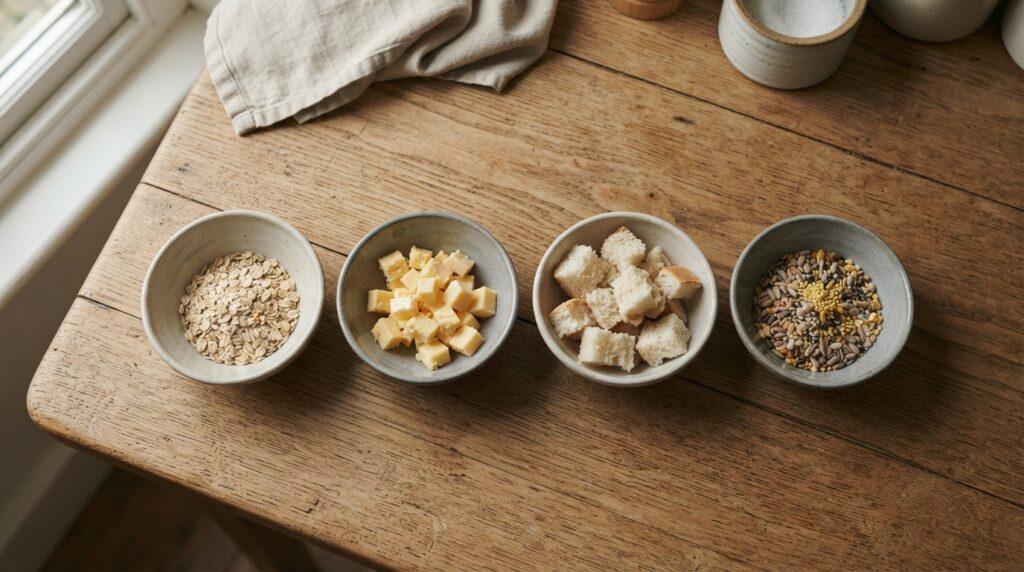
The old advice about bacon rind and hot fat is out of date. Cooked fat from roasting a joint absorbs meat juices and salt and goes rancid quickly; it can also smear on feathers, ruining insulation. Salted nuts, salted crisps, salted popcorn and anything with a lot of butter or gravy should not go out. Suitable Christmas leftovers include unsalted plain roast potato, pastry crumbs, mild grated cheese, plain rice and unsalted uncooked oats.
9. Going away without a plan
If you’re away for a week over Christmas, birds that came to depend on your feeder in a cold snap will have to find food elsewhere fast. Ask a neighbour to top up two feeders every couple of days. If that’s not possible, tail feeding off over the days before you go rather than stopping suddenly, and rely on planted berry shrubs and windfall apples on the lawn.
10. Forgetting the nest boxes
Nest boxes aren’t just for spring. Wrens, tits, sparrows and starlings roost in them on cold nights. Clean any old nest out between 1 September and 31 January (it’s an offence to disturb an active nest outside that window), scald the box with boiling water, dry it fully, add a small handful of clean wood shavings and put it back up.
Bonus mistake: siting the feeder in a windy corner. Small birds hate a swinging feeder — you’re getting fewer visits than you should. Move it to a sheltered spot near cover, about 2 metres from the nearest thick shrub.
Common questions
Should I feed birds every day in winter?
Yes. Once birds start relying on your garden, keep it up — especially through cold snaps.
Can I put out bread in winter?
Better not. Bread fills birds up without giving them the fats and proteins they need in cold weather. A few soft crumbs are harmless; a whole slice is a waste of stomach space.
How do I stop feeders freezing shut?
Bring the feeder in overnight in extreme cold, or tip out any wet seed and rinse the tube before refilling. Sunflower hearts don’t clump the way whole seed can.
Why are birds not coming to my winter feeder?
Common reasons: too new to trust yet, too exposed, too close to cats, cheap food they don’t want, or a good berry crop nearby. Give a new feeder two to three weeks.
Related guides
- How to help birds in freezing weather
- General bird feeding mistakes
- How to clean bird feeders
- How long bird seed lasts
- Christmas leftovers birds can eat
Sources: RSPB garden bird feeding guidance (April 2026 update, including flat-surface feeder withdrawal); BTO Garden BirdWatch; Wildlife and Countryside Act 1981.
Compare sunflower hearts and suet at Amazon UK. Prices and stock change often, so it is worth checking before you commit.
Browse bird food →