Beakfeeder is reader-supported. If you buy through our Amazon links we may earn a small commission at no extra cost to you.
They’re picking out the bits they want and binning the rest. Cheap seed mixes are bulked out with wheat, split peas, lentils and dried rice that most garden birds won’t eat, so tits and finches flick them out to reach the sunflower hearts underneath. The fix is to buy a mix without fillers — or switch to straight sunflower hearts — and add a seed tray under the feeder.
- Main cause: filler grains in budget seed mixes.
- Worst offenders: great tits, blue tits, goldfinches and house sparrows.
- Best fix: sunflower hearts — no husks, no fillers, almost no waste.
- Knock-on problems: rats, pigeons, sprouting weeds and mouldy piles.
Reason 1: filler grains
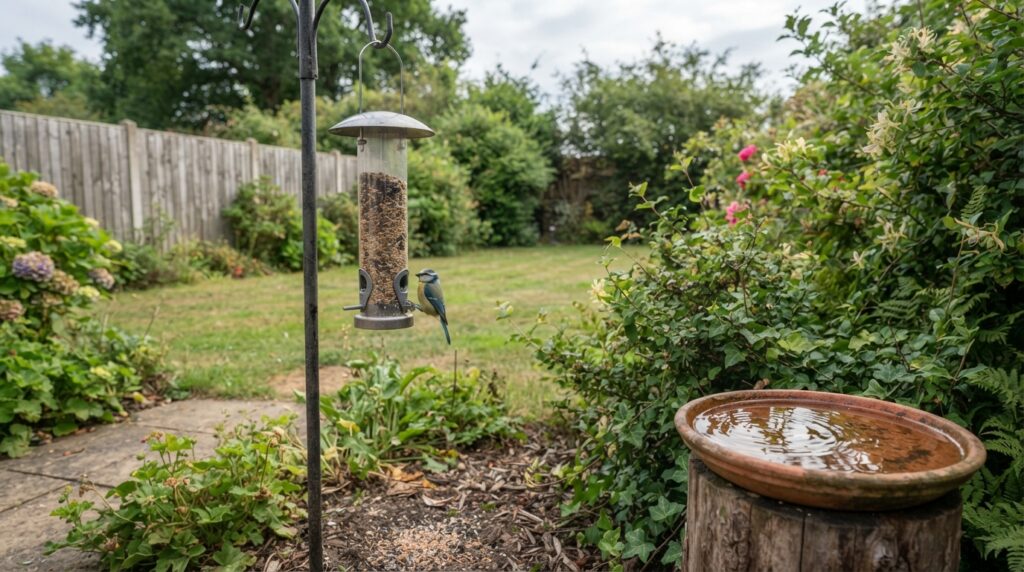
Look at the ingredients on a cheap bag of “wild bird seed”. Wheat, whole maize, split peas, lentils and rice often make up the bulk. These are cheap to produce, add weight and look like good value — but small-billed garden birds can’t use most of them. A blue tit working through a feeder will toss aside several unwanted grains for every seed it keeps. What you see on the ground is the stuff you paid for and they didn’t want.
Reason 2: they’re choosy by nature
Even with a good mix, birds select. Great tits want sunflower; goldfinches want nyjer and sunflower hearts; greenfinches like black sunflower seed. Tits in particular grab one seed and fly off to eat it elsewhere, rummaging with their beaks first — and rummaging spills seed. It’s normal behaviour, not a problem with your feeder.
Reason 3: husks
Some of what falls isn’t whole seed at all. Birds de-husk black sunflower seed at the feeder and drop the shells. A carpet of shells under the feeder is a sign they’re eating well. Shells don’t feed anything and can suppress grass underneath over time.
Reason 4: poor feeder design
Wide ports, short perches and feeders that let seed pour out when tipped all add to spillage. So do feeders hung where they swing hard in the wind.
Who cleans up — and why that matters
Ground feeders like dunnocks, chaffinches, blackbirds and robins will pick up some spilled seed, so a little mess isn’t all waste. The trouble is volume. A pile of spilled seed that sits for days becomes mouldy (a risk for any bird that eats it), sprouts into weeds and brings in rats, woodpigeons and feral pigeons. With current RSPB advice stressing clean feeding stations to limit disease, stopping heavy spillage is worth doing.
Five fixes that work
- Switch to sunflower hearts. They cost more per bag but almost all of it gets eaten, so the cost per mouthful is often lower. No husks, no fillers, no sprouting.
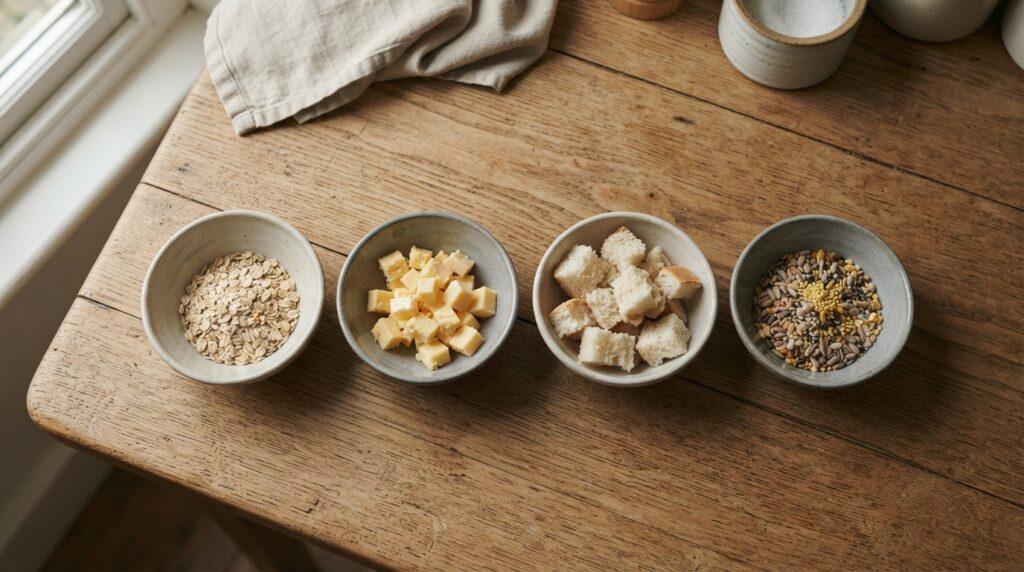
- Buy a no-filler mix. If you want variety, check the label for a mix based on sunflower hearts, kibbled peanuts, millet and oats with no whole wheat, lentils or split peas. “No-mess” and “no-grow” mixes are designed for this.
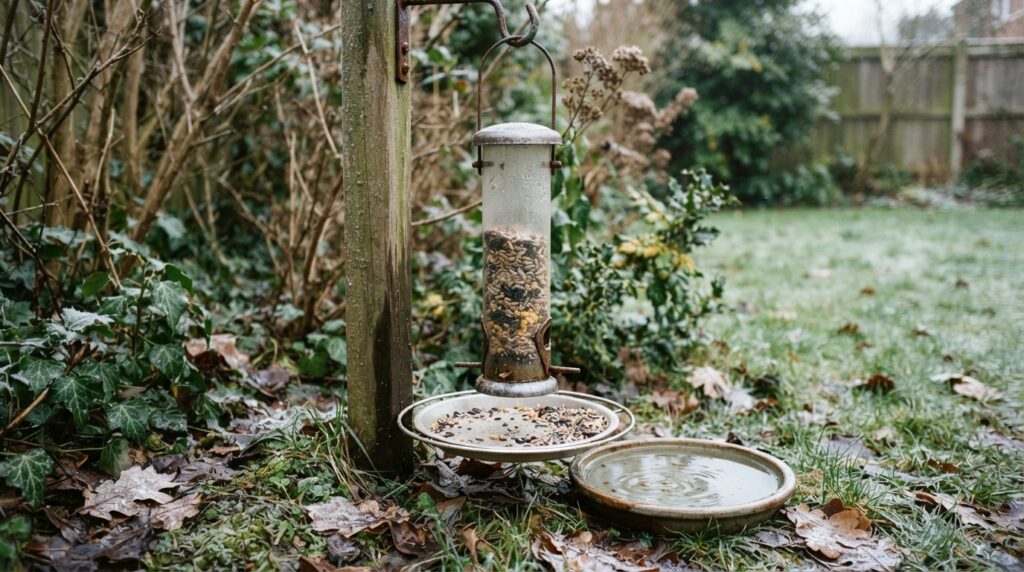
- Fit a seed tray. A tray that clips under a hanging feeder catches most of what’s flicked out and gives ground feeders somewhere to use it. Empty and clean it regularly.
- Use separate feeders for separate foods. A nyjer feeder for goldfinches and a sunflower-heart feeder for tits means no one has to dig for what they want.
- Put out less, more often. Fill feeders with what’s eaten in a day or two. Fresher seed, less spillage, less for rats.
Budget tip: if a cheap mix is all you can afford, sieve out the whole wheat and split peas before filling the feeder and scatter them for pigeons elsewhere, or just use them sparingly. You’ll immediately see less on the ground.
Cleaning up what’s already there
- Rake or sweep up piles every few days, and bag them rather than composting if they’ve gone mouldy.
- Move the feeder a short distance every so often so the ground underneath gets a rest — this is also current RSPB advice for reducing disease.
- Put a slab, gravel patch or old tray under the feeder so spill is easy to clear.
Seasonal reminder: under the RSPB’s 2026 guidance, seed and peanuts are paused from 1 May to 31 October. As seed feeding restarts in November, start with a small amount of clean, filler-free food and build up.
Common questions
Is it bad that birds throw seed on the ground?
A little isn’t. Heavy, rotting piles are — they bring disease risk, rats and weeds.
Why do blue tits throw seed out?
They’re hunting for the one seed they want, usually sunflower or peanut, and throw aside anything else in the way.
Will sunflower hearts sprout under my feeder?
No. Hulled hearts can’t germinate, which is one reason they’re the tidiest option.
Is millet a filler?
Partly. House sparrows, dunnocks and chaffinches eat it, but tits mostly don’t. In small amounts it’s fine; as the main ingredient, expect waste.
Related guides
- Bird seed sprouting under the feeder: how to stop it
- Rats under bird feeders: what to do
- The best bird food for UK gardens
- Bird droppings under the feeder
Sources: RSPB garden bird feeding guidance (April 2026 update); BTO Garden BirdWatch guidance on bird foods; British Trust for Ornithology.
Compare hanging bird feeders at Amazon UK. Prices and stock change often, so it is worth checking before you commit.
Browse bird feeders →