Yes, but with care. The key is keeping wild birds away from your poultry’s feed, water and run — not stopping feeding altogether. Site feeders as far from the chickens as your garden allows, feed poultry undercover, and check current Defra requirements, which change with the disease situation.
Keeping a few chickens and feeding garden birds are both common, and both good things. Putting them in the same garden raises a genuine question about disease, and the answer isn’t “stop one of them”.
This is general guidance, and the rules change. Avian influenza requirements in the UK are revised in response to the disease situation, sometimes at short notice, and differ between England, Scotland, Wales and Northern Ireland. Always check the current position on GOV.UK or with your devolved administration before relying on anything here.
The essentials
- Register your birds — required in Great Britain even for a single hen
- Separate the feeding areas as far as your garden allows
- Feed poultry undercover, never in the open
- Cover water so wild birds can’t access it
- Check current rules — housing orders come and go
Register your flock
Start here, because a lot of people don’t realise it applies to them.
In Great Britain, all bird keepers must register their birds with the Animal and Plant Health Agency — including keepers of a single pet hen. The threshold that previously applied only to flocks of 50 or more was removed, and registration is now a legal requirement regardless of numbers.
Registration is free and exists so that keepers can be contacted quickly if disease is detected nearby. Northern Ireland operates its own scheme.
If you keep chickens, ducks, geese or any other poultry and haven’t registered, that’s worth sorting out today.
Why wild birds matter here
Highly pathogenic avian influenza — bird flu — circulates in wild bird populations, particularly waterfowl, gulls and other water birds. Those species are the main reservoir and the main route by which it reaches kept poultry.
Transmission generally happens through droppings contaminating feed, water, bedding or ground that poultry then access, rather than through direct contact.
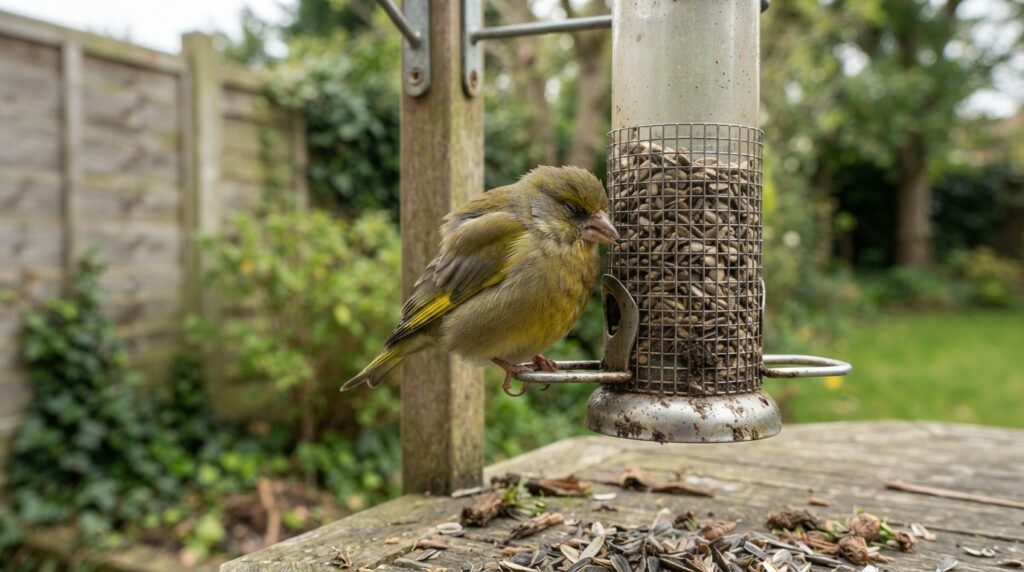
Worth keeping in proportion: garden songbirds are considered a much lower risk than waterfowl and gulls. Tits, finches and sparrows at a feeder are not the primary concern. But the practical measures are simple enough to be worth taking regardless.
Practical separation
The principle is straightforward: wild birds and your chickens should not be sharing food, water or ground.
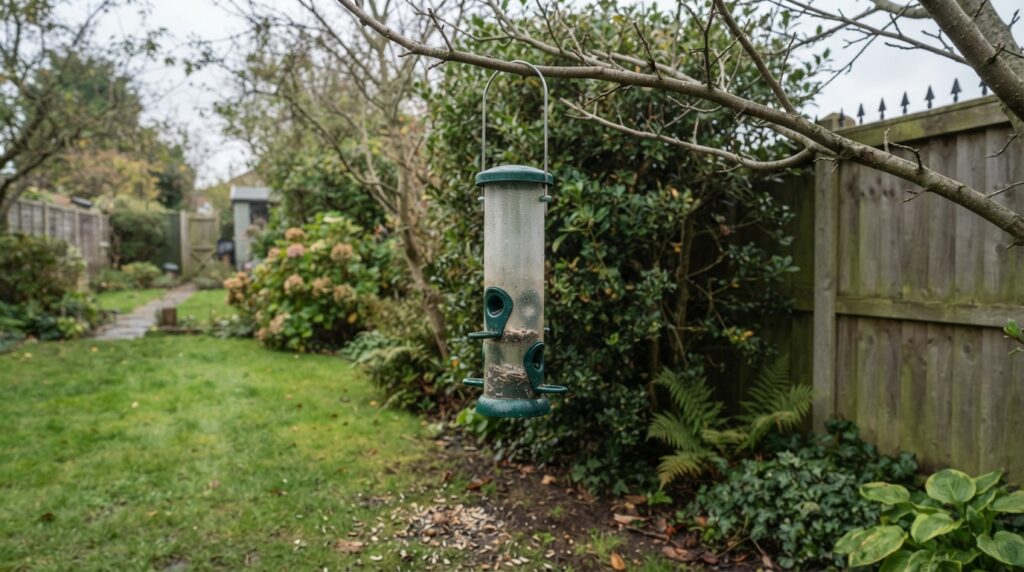
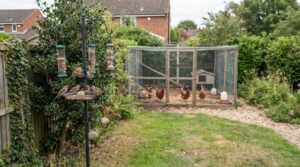
- Site bird feeders as far from the chicken run as your garden allows, and ideally where droppings can’t fall into or near it
- Never hang a feeder over or beside the run — that’s the single worst placement
- Feed poultry undercover, inside the coop or under a solid roof, so wild birds can’t reach the feed and can’t foul it
- Cover poultry drinkers, and don’t use open troughs that wild birds can drink from or defecate into
- Clear spilled poultry feed promptly — it attracts wild birds and rodents alike
- Store all feed in sealed containers
- Keep the run free of standing water, which attracts waterfowl
None of this requires giving up feeding garden birds. It requires thinking about geometry.
Footwear and hygiene
The other main transmission route is you.
- Keep dedicated footwear for the chicken run, and don’t wear it elsewhere
- Use a disinfectant foot dip at the run entrance, with a Defra-approved product at the correct dilution
- Wash hands before and after handling poultry
- Don’t wear the same clothes for filling bird feeders and tending chickens without washing in between
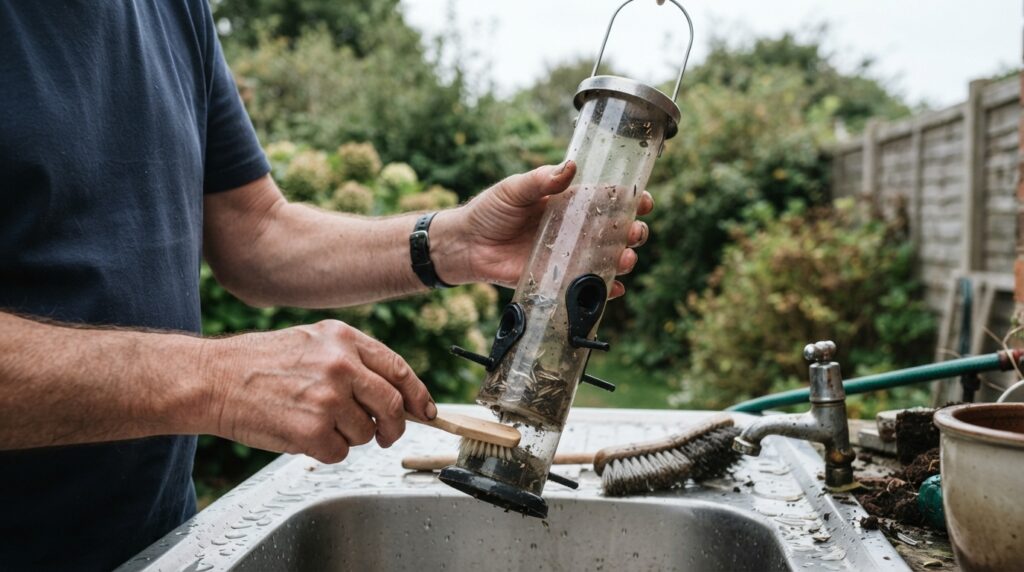
- Clean and disinfect equipment rather than sharing it between wild bird feeders and poultry kit
Keep separate brushes, buckets and gloves for the two jobs. It’s a small amount of duplication for a meaningful reduction in risk.
Housing orders
When the risk level rises, Defra and the devolved administrations may declare an Avian Influenza Prevention Zone, sometimes with a mandatory housing order requiring all kept birds to be housed indoors or otherwise kept separate from wild birds.
These are legal requirements, apply to backyard keepers as well as commercial flocks, and can be introduced at short notice — sometimes nationally, sometimes in specific counties.
What to do: check GOV.UK periodically during autumn and winter, when risk is typically highest, and make sure your registration details are current so you’re notified.
A housing order applies to your chickens. It does not require you to stop feeding wild birds — though if one is in force, keeping feeders well away from the poultry area matters more than ever.
Do you have to stop feeding wild birds?
Generally no.
Current UK guidance does not ask the general public to stop feeding garden birds because of avian influenza. Garden feeding of songbirds is considered low risk, and the RSPB has continued to advise feeding under normal hygiene rules.
The exception is if you keep poultry, where the sensible approach is separation rather than cessation — and where, during a serious local outbreak, you might reasonably choose to pause feeding near the run entirely as a precaution.
If you’re within a declared protection or surveillance zone around a confirmed case, follow whatever specific instructions apply to that zone.
Signs to watch for, and reporting
In poultry: sudden death, swollen head, discoloured comb or wattles, breathing difficulty, diarrhoea, or a sharp drop in laying.
Suspected avian influenza in kept birds must be reported immediately. In England, Wales and Scotland, contact the Defra Rural Services Helpline; in Northern Ireland, DAERA. It’s a notifiable disease and failing to report it is an offence.
Dead wild birds: report findings of dead waterfowl, gulls or birds of prey, or several dead wild birds of any species in one place, using the GOV.UK reporting service. Don’t handle them.
For garden songbirds specifically, our guides on sick birds at the feeder and what else visits your feeder cover the more common issues, which are usually trichomonosis rather than anything notifiable.
Keeping both, sensibly
- Register your birds with APHA
- Put feeders at the opposite end of the garden from the run
- Feed and water poultry undercover
- Keep separate footwear and equipment
- Clear spilled feed promptly, both wild and poultry
- Clean wild bird feeders weekly as usual, and move them regularly
- Check GOV.UK periodically, especially in autumn and winter
- Have a plan for housing your birds if an order is declared
Common questions
Do I have to register three pet hens?
In Great Britain, yes — registration applies to all bird keepers regardless of flock size. It’s free.
Can wild birds give my chickens bird flu?
It’s the main route by which poultry become infected, usually via droppings contaminating feed, water or ground. Waterfowl and gulls are the principal reservoir; garden songbirds are considered lower risk.
Should I take my bird feeders down?
Not usually. Move them well away from the poultry area and keep poultry feed and water covered. During a serious local outbreak you might choose to pause feeding near the run.
Is it safe to eat eggs from my hens?
Properly cooked poultry and eggs remain safe to eat. Food safety guidance is issued by the Food Standards Agency, and it’s worth checking their current position.
What if a housing order is declared?
Your birds must be housed or otherwise kept separate from wild birds. It applies to backyard keepers too. Check GOV.UK for the current requirements in your area.
Can I keep chickens and feed birds at all, then?
Yes — a great many people do both. Separation, covered feed and water, and good hygiene are what make it workable.
Related guides
- Sick birds at your feeder: spotting trichomonosis and what to do
- How to clean a bird feeder — and why it now matters more
- Rats under the bird feeder: how to stop attracting them
- What’s eating the bird food at night?
Sources: GOV.UK avian influenza guidance and bird keeper registration requirements; Animal and Plant Health Agency; DAERA (Northern Ireland); RSPB guidance on garden bird feeding during avian influenza outbreaks. Requirements change with the disease situation — check current guidance before relying on this page.
Compare sunflower hearts and suet at Amazon UK. Prices and stock change often, so it is worth checking before you commit.
Browse bird food →