A bald-headed blackbird or a ragged-looking bird in July, August or September is almost always moulting, not ill. Most birds replace all their feathers after breeding, and some — blackbirds and starlings especially — occasionally lose their head feathers all at once. It looks alarming and regrows within weeks.
Every summer, gardens fill with birds that look like they’ve had a very hard time: patchy, dishevelled, and occasionally completely bald about the head.
It’s one of the most common worries people have about garden birds, and in the great majority of cases nothing is wrong at all.
The short version
- When: mainly July to September, after breeding
- What: the annual moult — replacing every feather
- Bald heads are most often seen in blackbirds and starlings
- Feathers regrow over a few weeks
- Worry if: the bird is also lethargic, fluffed up, or struggling to swallow
What moulting is
Feathers wear out. They’re made of dead material and can’t repair themselves, so birds replace the whole lot — usually once a year, after breeding.
The timing is deliberate. Breeding is over, the young have fledged, natural food is abundant, and the weather is still mild. That’s the cheapest moment in the year to fund an energetically expensive process.
Most birds moult gradually and symmetrically, dropping matching feathers from each wing so they can still fly. That’s why a moulting bird looks scruffy rather than flightless.
Moulting takes a lot of energy. Birds become quieter, less active, and stay in cover more — which is the main reason gardens go so noticeably quiet in July and August. It isn’t that the birds have left. They’re moulting and lying low.
The bald head
The specific thing that alarms people, and it’s most often seen in blackbirds and starlings.
Head feathers are the ones a bird can’t preen with its own bill — it relies on scratching with a foot, or on a mate. For reasons not entirely settled, some individuals shed their head feathers all at once rather than gradually, producing a completely bald, sometimes greyish or black-skinned head.
The result looks genuinely shocking — a blackbird that appears to have been scalped, or a starling that looks like a small vulture.
It’s not usually a disease. The feathers regrow over a few weeks, and the bird otherwise behaves entirely normally — feeding, moving and reacting as usual.
Feather mites or lice can contribute in some cases, and very occasionally a nutritional issue is involved. But a bald head on an otherwise healthy-looking bird in late summer is, far more often than not, simply an untidy moult.
How to tell moulting from illness
This is the useful part. The distinction is in behaviour, not appearance.
| Moulting | Possibly ill | |
|---|---|---|
| Behaviour | Normal — feeding, alert, flies off when approached | Lethargic, sits still, slow to react |
| Posture | Normal | Hunched, fluffed up for long periods |
| Feeding | Eating normally | Struggling to swallow, drooling, food falling from the beak |
| Breathing | Normal | Laboured, beak held open |
| Feathers | Patchy but clean | Wet, matted, especially around the beak |
| Timing | July–September | Any time of year |
The combination to watch for is fluffed-up and lethargic and struggling to swallow. That points towards trichomonosis, which is a genuinely serious matter requiring you to stop feeding and deep-clean everything. See our guide to sick birds at the feeder.
A scruffy bird that’s eating well and flies off when you open the door is moulting.
Other things that look worrying and aren’t
Juveniles
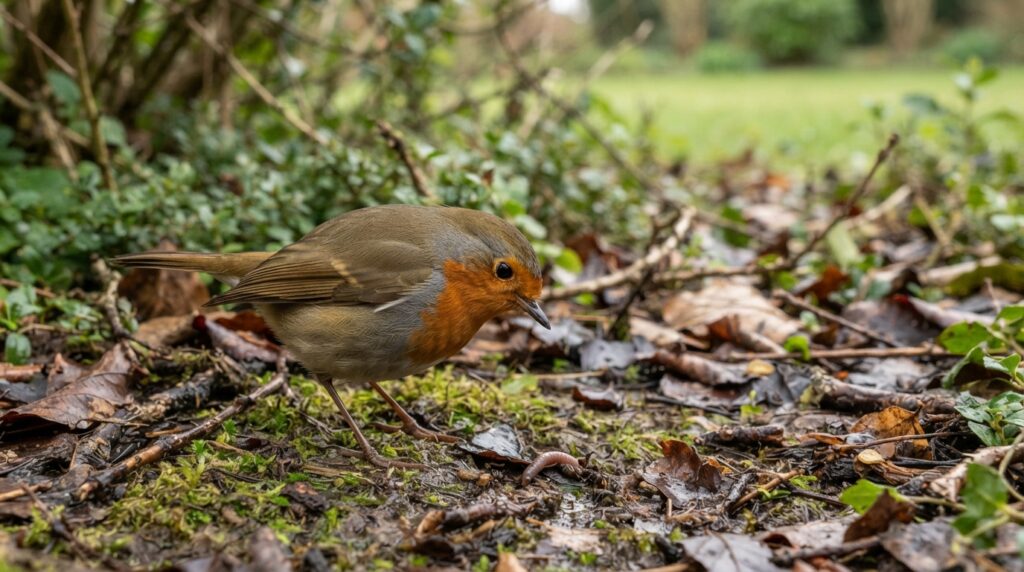
Recently fledged birds look shabby by nature — loose, fluffy plumage and short stubby tails. Young robins have no red breast at all and are brown and spotted; young starlings are plain dull grey-brown with no iridescence. Both are routinely reported as sick or unusual birds.
A yellow gape at the base of the beak is the giveaway for a recently fledged bird.
Wet birds
A bird that’s just bathed looks appalling — flattened, spiky and half its normal size. Perfectly normal, and bathing matters more in cold weather rather than less, because clean feathers insulate better.
Sunbathing
Birds sometimes lie flat with wings and tail spread, beak open, looking as though they’ve collapsed. This is deliberate sunbathing, thought to help with feather maintenance and parasite control. Leave them to it.
Anting
Less common, but genuinely odd to watch — some birds deliberately allow ants to crawl through their plumage, or rub ants on their feathers. Likely a parasite-control behaviour. Also normal.
Partial leucism
Patches of white feathering, common in blackbirds. Harmless, permanent, and makes an individual recognisable in a garden for years.
How to help a moulting bird
Moulting is demanding, so this is a period where feeding genuinely helps — though the current seasonal guidance shapes what you offer.
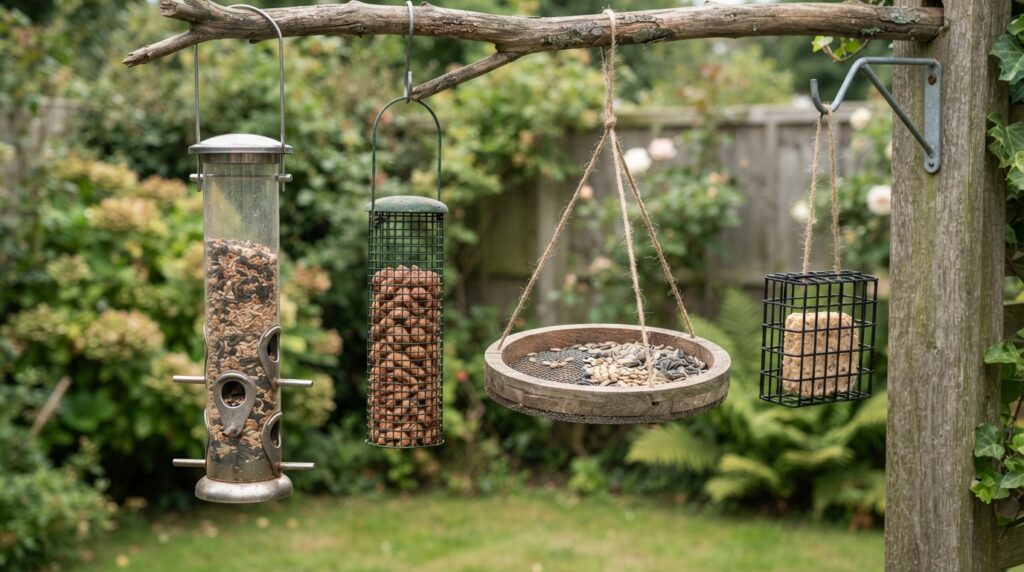
- Suet, fat balls and mealworms are approved year-round and are exactly what’s useful now — protein and fat for feather growth
- Seeds and peanuts are paused between 1 May and 31 October under current RSPB guidance, which covers most of the moult period
- Water matters — bathing helps with feather maintenance. Shallow dish, changed daily with fresh tap water
- Leave cover in place — moulting birds hide more, and cutting hedges in August removes exactly that (and risks late nests)
- Keep cleaning feeders weekly, since late summer is peak disease risk
Our seasonal feeding guide covers what’s appropriate month by month.
When to actually seek help
Contact a wildlife rescue or vet if a bird:
- Has been caught by a cat — urgently, even with no visible injury, because bacteria in a cat’s mouth cause rapidly fatal infection
- Has visible wounds, blood or a drooping wing
- Can’t fly or stand
- Is unresponsive when approached
- Has crusted or swollen eyes, or wart-like growths on the face
In England and Wales, the RSPCA; in Scotland, the Scottish SPCA; in Northern Ireland, the USPCA. Local independent wildlife rescues are often faster, and many vets accept wildlife without charge.
Common questions
Will a bald blackbird’s feathers grow back?
Usually yes, within a few weeks. If the bird is otherwise behaving normally, it’s very likely just an untidy moult.
Why has my garden gone silent in August?
Moulting. Birds become quiet and secretive while replacing feathers, and natural food is abundant so feeders are less needed. Normal every year.
Is a bald head contagious to other birds?
Moult isn’t. If feather mites are involved they can spread, which is another reason to keep to the weekly feeder clean.
Should I feed extra during the moult?
Protein and fat help — suet, fat balls and mealworms, all approved year-round. Seeds and peanuts are paused until 1 November under current guidance.
Do all birds moult at the same time?
Roughly, but not exactly. Most garden birds moult after breeding, from about July, though late-nesting species run later. Some species also have a partial spring moult into breeding plumage.
Can birds still fly while moulting?
Most garden birds can — they drop matching feathers from each wing gradually. Wildfowl are the exception and become genuinely flightless for a period, which is why ducks and geese hide away mid-summer.
Related guides
- Sick birds at your feeder: spotting trichomonosis and what to do
- Why have the birds stopped coming to my feeder?
- What do blackbirds eat? How to feed and attract them
- When to feed garden birds: the new UK guidance explained
Sources: British Trust for Ornithology guidance on moult and Garden BirdWatch observations; RSPB species information and advice on unwell birds; Garden Wildlife Health; RSPCA guidance on injured wild birds.
Compare dried mealworms at Amazon UK. Prices and stock change often, so it is worth checking before you commit.
Browse mealworms →