Affiliate disclosure: some links on this page go to Amazon. If you buy through one we may earn a small commission, at no extra cost to you. Full disclosure.
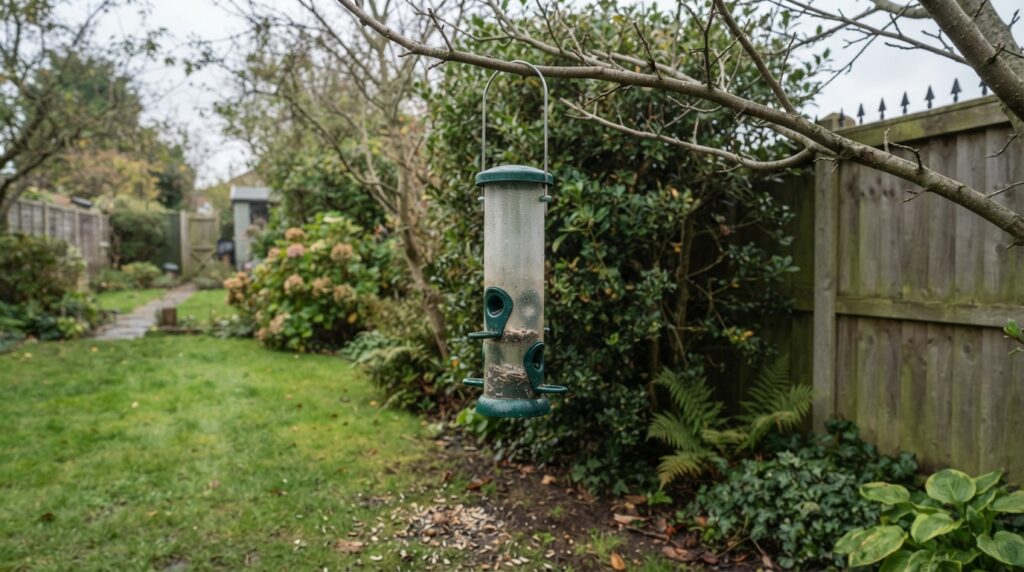
Stop treating shade as a problem. A damp, shaded garden is effectively a woodland edge, which is the natural habitat of robins, blackbirds, wrens, dunnocks and song thrushes — the ground-feeding insectivores that do best in leaf litter. Plant holly, ivy, hazel and ferns, leave the leaf litter, and feed at ground level as well as on a hanging feeder.
North-facing gardens get written off. The advice is usually about coping with it — shade-tolerant plants that tolerate rather than thrive, and a resigned tone throughout.
For birds, that framing is backwards. Several of Britain’s most-loved garden birds are woodland species, and a shaded garden with damp soil and leaf litter is closer to what they actually want than a sunny lawn is.
What a shaded garden is good for
- Damp soil — earthworms, which is what blackbirds, robins and thrushes want
- Leaf litter — invertebrates for wrens and dunnocks
- Dense evergreen cover — nesting and winter roosting
- Ivy — thrives in shade and is one of the best wildlife plants in Britain
- Less drought stress — soil stays workable in summer when sunny gardens bake hard
Which birds actually prefer it
Worth knowing who you’re catering for, because it changes what you provide.
- Robin — a woodland-edge bird that follows disturbance for invertebrates. Damp, shaded borders suit it perfectly
- Blackbird and song thrush — ground feeders after worms, and damp soil is where worms are near the surface
- Wren — works the base of hedges and log piles for spiders and insects. Leaf litter is its larder
- Dunnock — shuffles along under shrubs, alone and quietly. Dense low cover is exactly what it needs
- Coal tit and goldcrest — conifer specialists, and conifers cope with shade
- Nuthatch and great spotted woodpecker — if you have mature trees, which is often what’s causing the shade
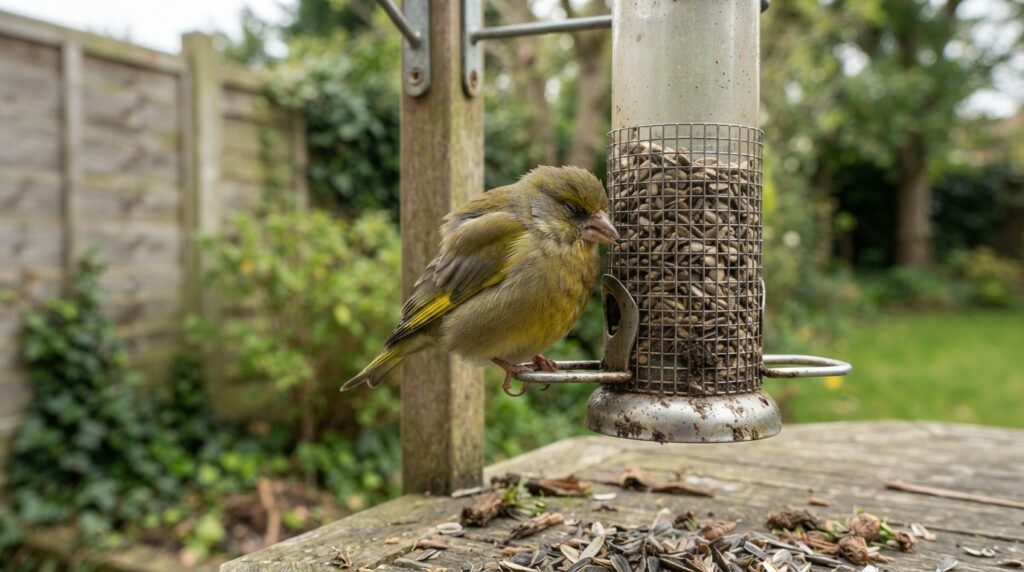
What you’re less likely to get in quantity are the open-ground and seed-head species — goldfinches, linnets, and birds that want sunny borders full of teasel and knapweed. That’s a genuine trade-off rather than something to fix.
Leave the leaf litter — the single biggest thing
The most valuable thing a shaded garden has is what most people rake up.
Leaf litter under shrubs and hedges supports enormous numbers of invertebrates — woodlice, beetles, spiders, worms — and that’s the food supply for wrens, dunnocks, robins, blackbirds and thrushes.
What to do:
- Don’t clear leaves from borders. Rake them off paths and lawn, and pile them into the borders rather than binning them
- Leave a rough corner entirely alone
- Build a log pile in the shadiest, dampest spot. It’ll be full of invertebrates within a year
- Mulch with compost or leaf mould rather than bark chips where you can — it builds worm populations
- Don’t use slug pellets. Song thrushes eat snails, and a shaded damp garden is precisely where both live
What to plant
Shade-tolerant and genuinely useful, rather than just surviving.
| Plant | What it gives |
|---|---|
| Ivy | The best of the lot. Dense evergreen cover for nesting and roosting, late autumn flowers for insects, and berries in late winter when almost nothing else is available. Thrives in deep shade |
| Holly | Evergreen cover, thorny protection for nests, berries. Tolerates shade well. Needs a male and female plant for berries |
| Hazel | Copes with shade, supports many insect species, and produces nuts for nuthatches and jays |
| Hawthorn | Tolerates partial shade. Dense thorny nesting cover plus berries — arguably the best single wildlife shrub in Britain |
| Honeysuckle | Climbs in shade, flowers for insects, berries, and dense tangled growth birds nest in |
| Yew | Deep evergreen cover, excellent for goldcrests and coal tits. Note the berries and foliage are toxic to people and pets |
| Ferns and shade perennials | Ground-level humidity and cover for invertebrates |
| Elder | Fast, tolerant of poor shaded conditions, heavy berry crop |
Our plants guide covers the wider list.
On ivy specifically: it has a poor reputation and mostly doesn’t deserve it. Ivy flowers in autumn when little else does, feeding late insects, then fruits in late winter when birds most need it. It doesn’t damage sound masonry — it’s a self-clinging climber rather than a parasite, though it will exploit already-damaged mortar. On a shaded fence or wall it’s close to the ideal wildlife plant.
Feeder placement in shade
A few adjustments are worth making.
- Find the brightest spot you have. Birds prefer to feed where they can see approaching danger, and deep gloom under a dense shrub is uninviting
- Keep the 2m rule — about two metres from cover, so they can bolt but nothing can ambush
- Watch for damp. Shaded gardens are wetter, and seed goes mouldy faster. Fill part-way and check more often
- Feed at ground level too. The species a shaded garden suits — robins, blackbirds, dunnocks, thrushes — mostly won’t use a hanging feeder. Scatter small amounts of sunflower hearts or suet pellets near cover, in a different spot each time, cleared by dusk
Water and nest boxes
Water is less urgent in a damp shaded garden than a baking sunny one, but still worth providing — birds need it for bathing as much as drinking. A shaded bath also goes green more slowly, which makes the daily change easier to keep up. See our guide to keeping a bath clean.
Nest boxes suit a shaded garden well, because the standard advice — face them between north and east, away from strong afternoon sun and driving rain — is easy to satisfy when the whole garden already faces that way.
A shaded garden with mature trees is also good for open-fronted boxes for robins and wrens, provided they’re low and genuinely hidden in dense growth.
The genuine limitations
Being straight about what shade costs you:
- Fewer flowering and fruiting plants, so less natural food overall than a sunny garden with berry shrubs and standing seed heads
- Fewer pollinators and flying insects, which are warmth-dependent
- Fewer seed-eating finches — goldfinches in particular want open, sunny, seed-head habitat
- Damp seed in feeders, needing more attention
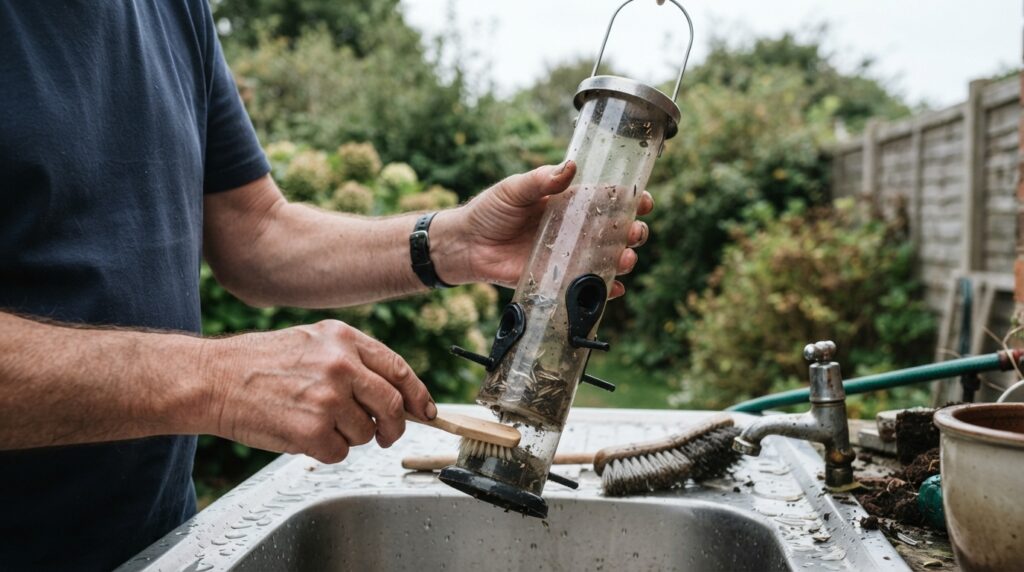
- Moss and algae on everything, which means more scrubbing
The reasonable response is to lean into the ground-feeding insectivores rather than chasing the finches. A garden full of robins, blackbirds, wrens and dunnocks is a good garden.
Common questions
Is a north-facing garden bad for birds?
No — it favours different birds. Woodland-edge species like robins, wrens, blackbirds and dunnocks do well in damp, shaded, leafy conditions.
What’s the single best plant for a shaded garden?
Ivy. Evergreen cover, autumn flowers, late-winter berries, and it thrives in deep shade where little else does.
Should I clear the leaves?
Off paths and lawn, yes. Out of borders, no — leaf litter is the invertebrate supply that feeds most of the birds a shaded garden attracts.
Why won’t goldfinches come?
They want open, sunny habitat with seed heads. A shaded garden is unlikely to hold them regardless of what’s in the feeder — that’s a genuine trade-off rather than something to fix.
Does ivy damage walls?
It doesn’t damage sound masonry — it’s self-clinging rather than parasitic. It will exploit mortar that’s already failing, so check the wall is in good order before letting it establish.
Where should the feeder go?
The brightest spot you have, about 2m from cover. Birds avoid feeding in deep gloom where they can’t see what’s coming.
Related guides
- Best plants to attract birds to a UK garden
- Wrens in your garden: Britain’s most numerous bird
- Song thrush: the bird that smashes snails on stones
- When to put up a nest box (and exactly where to site it)
Sources: RSPB guidance on gardening for wildlife and feeder placement; Royal Horticultural Society plants for shade and for wildlife; Woodland Trust native species guides; British Trust for Ornithology nest box guidance.
Compare current prices on bird food and feeders at Amazon UK. Prices and stock change often, so it is worth checking before you commit.
Browse bird food →