Beakfeeder is reader-supported. If you buy through our Amazon links we may earn a small commission at no extra cost to you.
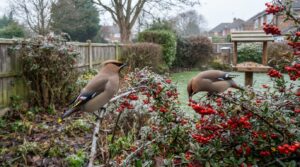
A waxwing is a starling-sized, pinkish-buff bird with a swept-back crest, a black mask, a yellow tip to the tail and small waxy red tips on the wing feathers. They arrive in the UK from Scandinavia and Siberia in autumn only in “irruption years”, when the northern rowan crop fails. When they come, they descend on supermarket car parks, retail estates and gardens with rowan, cotoneaster or crab apple.
- Size: about 20 cm — starling-sized.
- Key features: crest, black mask, yellow tail-tip, waxy red wing spots.
- Arrival: October–November in irruption years; usually gone by March.
- Favourite food: berries — rowan, cotoneaster, guelder rose, crab apple.
- Best place to look: berried trees in car parks and supermarket forecourts.
How to identify a waxwing
Even people who have never held a bird book know a waxwing when they see one. They look, at a glance, like nothing else in Britain:
- Body: soft pinkish-buff, cinnamon-warm on the head.
- Crest: a long, pointed crest that sweeps back over the head.
- Face: a black bandit-mask through the eye and a small black bib.
- Wings: grey-brown with a yellow stripe, a white stripe and — in adults — tiny red waxy spots at the tips of some feathers (the “wax” the name comes from).
- Tail: ends in a broad bright yellow band.
- Voice: a high, ringing “sirrrr” trill — often heard before the flock is seen.
What is an “irruption year”?
Waxwings breed in the boreal forests of Scandinavia, Finland and northern Russia and eat berries all winter — rowan, in particular. When the rowan crop up there is heavy, they mostly stay put. When it fails, huge numbers move south-west in search of food, sweeping across Scotland first and often reaching down through England to the south coast. These movements are called irruptions, and they happen every few years — sometimes big, sometimes small.
The east coast usually sees waxwings first, from mid-October, and gets the biggest numbers. In a strong irruption they turn up in almost every county before the winter is out.
Where to check first: supermarket car parks, industrial estates, retail parks and hospital grounds — anywhere with ornamental rowan or cotoneaster planted for landscaping. That’s where you’ll see the biggest flocks.
What waxwings eat
Almost pure berries in winter, gulped down whole:
- Rowan / mountain ash — their first choice.
- Cotoneaster — the reason car parks fill with them.
- Guelder rose, hawthorn and pyracantha.
- Crab apples when other food runs low.
- Hips and haws in the coldest weather.
A flock will strip a mature rowan in a day. In summer, back on the breeding grounds, they switch to catching insects on the wing.
How to attract waxwings to your garden
You can’t summon waxwings — but if you happen to be near an irruption and your garden holds the right food, they can turn up. Plant with them (and every other winter bird) in mind:
- A rowan tree if you have room — small, elegant, works in most gardens.
- Cotoneaster — either as a shrub or trained against a wall.
- Pyracantha — evergreen and fiercely thorny, tolerates hard clipping.
- Guelder rose — hangs on to berries later than most.
- Crab apple — as an ornamental tree that also feeds birds.
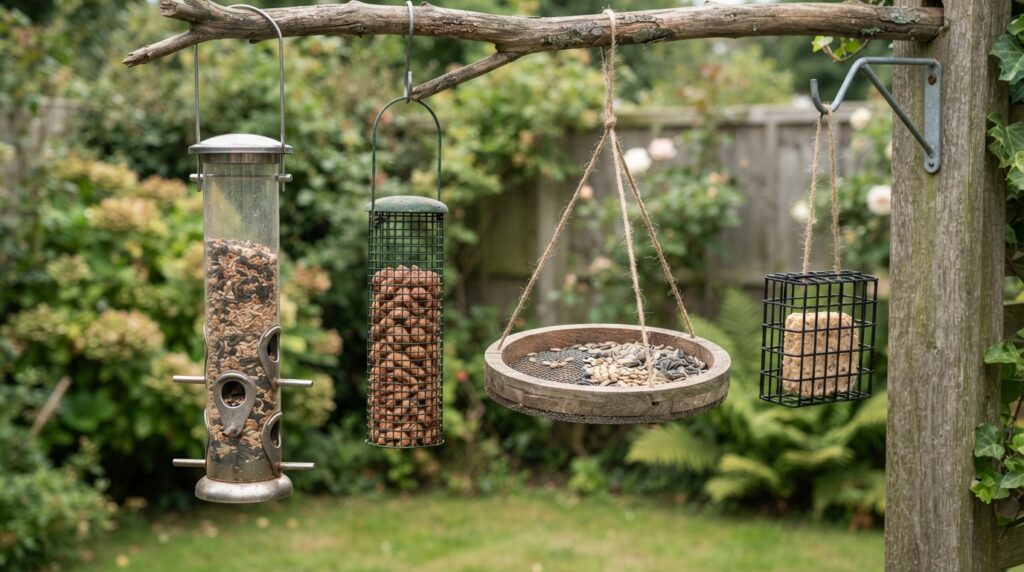
Waxwings almost never come to feeders — they’re berry specialists. Sunflower hearts and fat balls won’t tempt them.
Who waxwings look nothing like
| Bird | Difference |
|---|---|
| Starling | Similar size but darker with white spots in winter; no crest, no yellow tail. |
| Bohemian jay | Not a UK bird. |
| Redwing | Streaky brown with a cream eye stripe; no crest. |
| Great crested tit / other tits | Much smaller; different colours. |
Waxwings are famously fearless around traffic and windows, and can hit glass in feeding frenzies. External stickers or vertical tape on windows near berry shrubs help reduce strikes.
How to know if it’s an irruption year
The best real-time signal is birding social media and the BTO’s news. From October, follow the terms “waxwing”, “waxwings” and “waxwing irruption” on Bluesky, X or Facebook birding groups — a big year lights up within days. Local birdwatching Facebook groups usually post flocks the same afternoon.
Common questions
How often do waxwings visit the UK?
Some arrive most winters in the north and east of Scotland. Big, widespread irruptions happen every few years — the pattern isn’t fixed.
Do waxwings drink alcohol from berries?
Fermenting berries in late winter can, unusually, make waxwings tipsy — there are records of birds staggering after gorging on frost-fermented rowans.
Do waxwings breed in the UK?
No — they breed in the boreal forests of Scandinavia and Russia. Every waxwing here is a visitor.
Will waxwings come to my bird feeder?
Almost never. They want berries. Occasionally they’ll take apple; seed and fat aren’t on the menu.
Related guides
- Winter visitors to UK gardens
- Best UK native berry shrubs for winter birds
- Redwing, fieldfare or song thrush?
- UK bird migration in winter
Sources: BTO BirdFacts; RSPB species profile for waxwing; BTO WaxwingsAlert history and irruption reporting.
Compare current prices on bird food and feeders at Amazon UK. Prices and stock change often, so it is worth checking before you commit.
Browse bird food →